
Less than a month away from the first tests of this year’s Baccalaureate, the skills tests, the Ministry of Education is preparing a series of recommendations regarding the organization of the exams. Secretary of State Sorin Ion specified that the 12th grade graduates who study in one shift will be able to take the tests in the morning, and in the afternoon they will come to classes according to the timetable of that day. On the other hand, in schools that teach in two shifts, principals should reorganize the schedule so as not to disrupt the course. To find out how effective these measures are, we consulted three high school principals, who commented on the proposals and explained to “Adevărul” how they will organize the Baccalaureate in the schools they lead.
Three weeks separate the students from this year’s Baccalaureate exam. Archive
2024 CEO: “There are at least three major issues we will face”
Daniela Claudia Orășanu is the director of the “Unirea” Railway Technical College in Pașcani, Iași county. Last year, the teacher received the distinction “Director of the year 2024” offered during the eighth edition of the Awards Gala for the directors of the year, organized by the Association for Values in Education. The teacher believes that the ministry’s proposals do not really stand up and comes with some explanations in this regard. “Let’s start with the example of students learning in a single shift. The child enters the exam at 8:00, stays for an hour, and then, until the afternoon, what does he do? Does he go home and come back to school at 1pm? If he’s from the city, he can do that. But don’t we think about the students who commute? What will they do? Will they stay in school all day to come to the afternoon classes as well? Or will they go home and come back?”, asks the teacher.
Then, another effort that students will make relates to the actual time they will spend at school. The law clearly states: a child cannot stay at school for more than 6-7 hours. However, under the conditions of the upcoming exam, there will be students who will exceed this time limit. “Technologists, for example, have seven hours a day. If we add up the morning hours spent in the exam, the hours spent on the way home and back, the afternoon class hours, how many do we get? What will these children do? They will stay, practically, from morning to night at school”, explains the director.
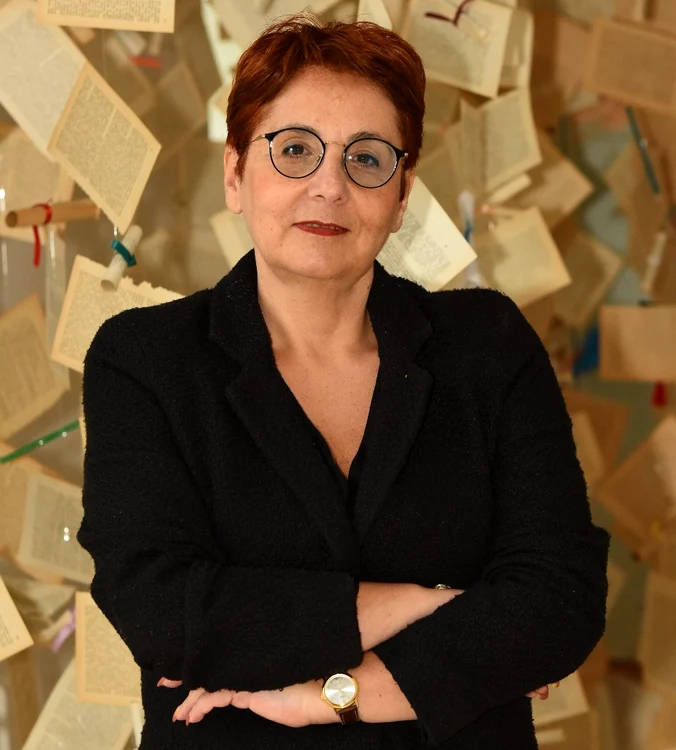
Claudia Orășanu, director of the “Unirea” Railway Technical College from Pașcani. Archive
The headmistress raises another problem: what will be done in the situation where the teachers are part of the examination board but, at the same time, they also have classes in the lower classes? “Automatically, the timetable must be changed in such a way that these teachers who are part of the commissions do not have hours in the time slot allocated to the Baccalaureate. And students from the 9th, 10th and 11th grades should not miss the class of that day. Let’s not forget that we are talking about very important subjects such as the Romanian language and literature”, says the teacher. There is also the option for teachers who are not part of the committees to also cover these “widowed” classes, but “what if you don’t have enough teachers that day? Maybe they get the flu or have other personal problems and don’t come to classes”draws the director’s attention.
As for the schools where they learn in two shifts, in general the technological high schools, the situation will be downright dramatic, she also said: “There is no way to change the timetable so that those who give the Baccalaureate in the morning come to classes in the afternoon, because they overlap with those who study from 13.00-14.00. So the situation will be very complicated”.
Principal: “I will sacrifice practical training hours”
Claudia Orășanu explained to us that this problem must be solved by each director individually, depending on the school he oversees, the number of students enrolled in the Baccalaureate and the space he has: “To begin with, I will distribute the hours of practical training of the students, hours that they have in the school curriculum, in the interval when the children will take the competency tests. It’s a trick, an artifice that I will resort to. I will sacrifice these hours of hands-on training where students are working on their certification projects.” Then, continues the teacher, at the technological high school in Pașcani, two laboratories and a classroom will be allocated to this exam. “I am no longer saying that these exams can be organized even in the classroom of the 12th graders,” the teacher added.
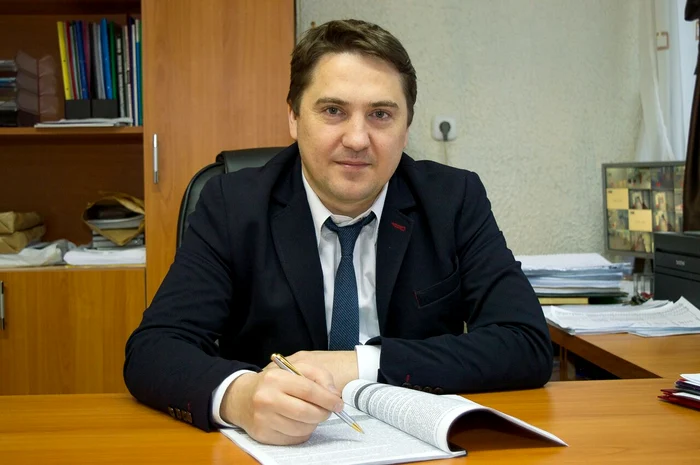
Marius Perianu, director of the “Ion Minulescu” National College in Slatina. Archive
How the Baccalaureate will be organized at the best rated high school in Slatina
Marius Perianu, the director of the “Ion Minulescu” National College in Slatina and the coach of the junior Olympic team in Mathematics, stated for “Adevărul” that the school he oversees is in a happy situation. “We learn in one shift, so, suddenly, our situation is much simplified”, the teacher told us. “We have some rooms that we will make available for these exams. In that area of the building, access will be blocked, and only candidates will be allowed to enter. The classes where communication tests will be given in the Romanian language, the mother tongue and the foreign language are located in the main building of the school. As for the Digital Skills test, it will be held in the computer lab, in a separate body”continues prof. Marius Perianu.
The skills tests of the winter Baccalaureate will be taken by almost 200 students. “We have a freer amphitheater where one of the tests could be held, we move some more classes to the computer lab, free up one more floor and that will be it,” the teacher explains.
However, he admits that the students’ schedule will be turned upside down: “It is inconvenient to say the least for students to take their exams in the morning and then come to school in the afternoon. It is an additional intellectual effort for them, but also a physical effort. Physical fatigue. On the other hand, the exam given last summer also represented a great effort, when the children had to endure very high temperatures. In any action there are advantages and disadvantages”.
Director Perianu believes that each school should be left to organize its own Baccalaureate: “In general, I don’t agree with passing the responsibilities on the managers’ shoulders, but in this situation, that would be the best. Let everyone organize themselves as they see fit”. Although, the teacher admits, “organizing something in a school is a big hassle.”
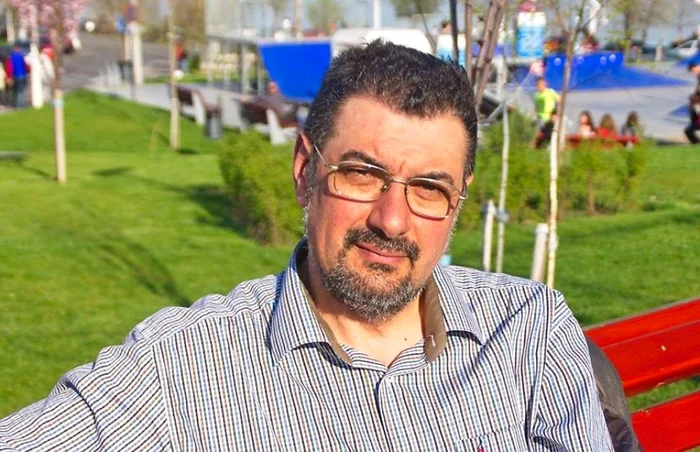
Romeo Zamfir, director of the “Vasile Alecsandri” National College in Galati. Archive
The director of a high school in Galati: “A big problem will be the assignment of teachers to committees”
Professor Romeo Zamfir, the director of the “Vasile Alecsandri” National College in Galati, explained that since the beginning of November last year, the building of the educational unit entered into rehabilitation, which is why the students were relocated to the Marine Technological High School: “Here we will be provided with several spaces where the tests will take place. Most likely, children will take the exam in the same classes where they study. So space would not be the problem. We have approximately 200 students who will take this oral exam. Quite a large number of students are asking for a larger number of assessment boards and, obviously, de teachers. And here is our big problem. Namely: these people have no way to divide between the exam and the hours they have in the classroom during that time period”.
Prof. Romeo Zamfir will have to think of a variant by which these teachers’ hours are covered, and the students in small classes do not suffer;“Most likely, the commissions will include teachers who do not have morning hours, between 08.00 and 11.00. Or we will call on the teachers who are not on the committees and could supervise the students, possibly give them something to do so they don’t miss that hour”.
The director of the college in Galati stated that he is waiting with great interest for the instructions that will come from the Ministry of Education and, depending on them, he will think about the organization of the exam in such a way that the recommendations are also effective.
