
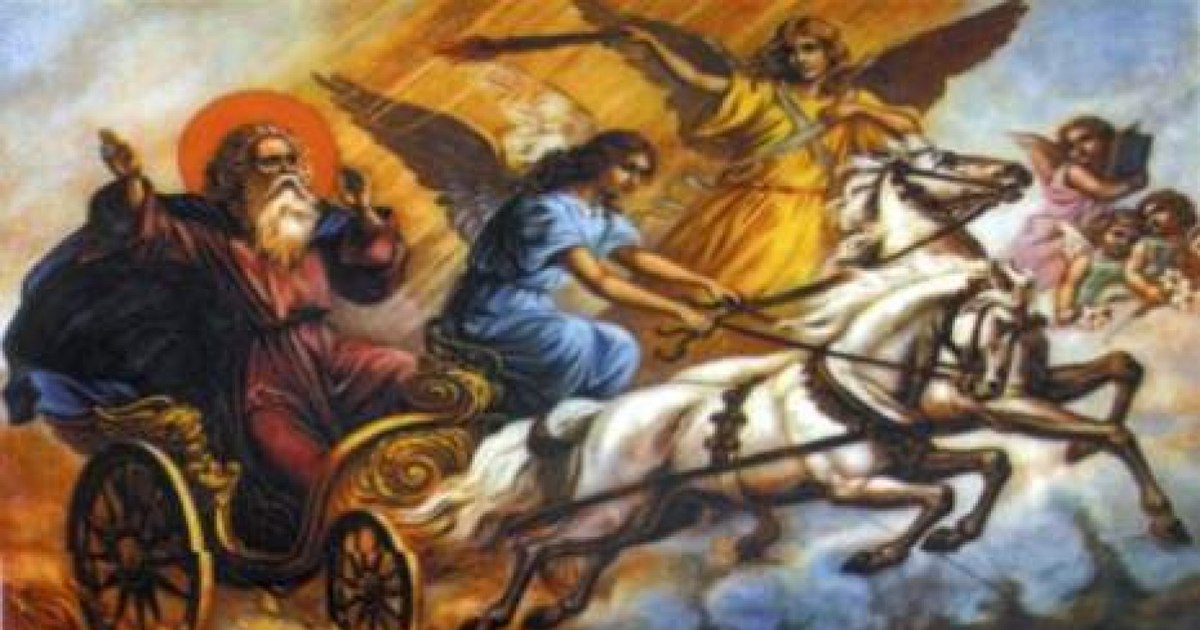
Christians celebrate Saint Ilie Tesvitean on July 20, considered a drought, but also the one who owns thunder and lightning.
On July 20, Christians celebrate Saint Elijah. Photo: Archive
On Sunday, July 20, the Romanian Orthodox Church celebrates Saint Ilie Tesvitean, considered the protector of rain, thunder and lightning, but also miracle worker.
Born over 800 years before Christ, in the Tesvi County of Galaad, Saint Elijah came to the world in a family of priests, in a time when the people of Israel had moved from God and worship the idols, at the time of King Ahab. According to tradition, at his birth, his father had a vision in which he saw people dressed in white who wrapped the baby in diapers and gave him to eat a flame, a symbol of the eagerness to God, who would guide his whole life.
In the popular legends, Saint Elijah is described as a man man, with a fierce nature. It is said that, because of a difficult sin, he would have asked for forgiveness to God, receiving instead a cart and a whip to fight against the devils. In the popular faith, he is depicted traveling in the sky in a fire car, with flame wheels, tuting and lightning, hitting the demons with the fire and bringing the rain to the ground, when people pray in drought. It is also said that Saint Elijah did not die, but was raised to heaven in a fire car and will return to the end of the world to fight with evil spirits.
Habits and traditions
The day of Saint Elijah is marked by numerous traditions and customs in the Romanian villages. People avoid working on this day, fear that hail will not destroy their crops. Also, on this day there is no apple, so that Saint Elijah does not bring hail of their size. Women go to church and share apple from the fruits of the household for the souls of those who passed to the Lord.
In the morning of this day, cure plants are collected, especially basil, which is then dry or taken to the church to be sanctified. The holy basil is burned, and the ash is used in households, being considered blessed.
Of Saint Elijah, people especially remember the children passed to the Lord. It is customary for women to call foreign children under an apple, to shake the tree, and fallen apples are apple.
The churches are filled with dishes brought to commemorate the dead, also called “Sant-Ilie estates”, and in the houses of the households are organized feasts.
The pastoral summer
This day is also related to an important moment in the life of beekeepers. The honey bees are harvested by Saint Elijah, and this activity is performed only by men dressed in holiday clothes, helped by a child. After harvesting, the family and neighbors are invited to taste the new honey and serve honey sweetened with honey, to bring plenty.
Also, this holiday marks the core of the pastoral summer, at which time the shepherds can return for the first time in villages, bringing with them gifts for spouses or loved ones, consisting of wood fork forks, worked with migal.
In the area of Suceava, the famous Balci of Sânt-Ilie from Fălticeni attracted, since 1814, traders from all over Europe, being considered the second largest after the one in Leipzig. Before two or three weeks of July 20, the streets of Fălticeni were filled with the world from all over the world, and the city became a lively and business.
Also on July 20, there are organized fairs and parties in several areas of the country, such as the girls’ fair on Mount Găina (Alba county), “Nedeia Mocăneă” from Covasna, “Fair Fair” from Săcele, “Nedeia from Polovragi” and “Săzătoarea”.
On July 21, the day after the feast of Saint Elijah, the Romanians celebrate Ilie-Pălie, the visit that leads the saint’s chariot, thus continuing the tradition related to the control of the weather phenomena, with respect and prayer for the protection of harvests and the blessing of the households.
