
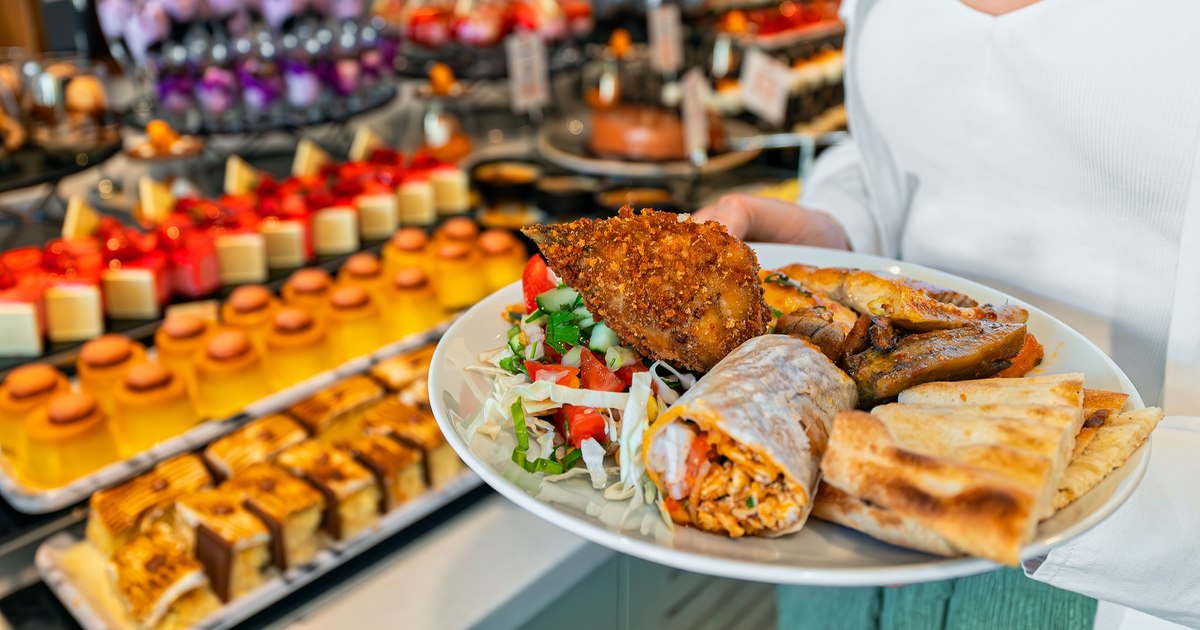
Turkey’s government would like to remove the all-inclusive system from hotels, to replace it with a model “A la carte”, According to the Turkish press. It is expected that an official proposal will be presented to President Recep Tayyip Erdoğan within two months, before being transmitted to relevant institutions.
Switching to a La Book System in hotels would reduce Shutterstock photo waste
The measure comes from a report of the Foundation for the prevention of food waste, which shows that, in Turkey, about 23 million tons of food are wasted, and 35% of fruits and vegetables reach the garbage, reports Sabah.com.t.
In order to combat this waste, which also contributes to the increase of food inflation, the Presidency Council for Agricultural Policy has prepared a report against the food waste, which will be presented to President Recep Tayyip Erdoğan. Once the subject is discussed in Parliament, legislative measures will be taken that will end the waste and prevent the number of people to the “breakfast served” tables.
The favorite of tourists, varied breakfast: from attraction to problem
Ramazan Bingol, a member of the Presidential Council for Agriculture and Food Policies, explained that almost 50% of the meals served in the current all-inclusive system are thrown.
The situation is amplified by the restaurants that impose a fixed number of portions according to the occupied places.
“This food waste is exacerbated by the premises that impose a fixed number of guests. For example, three or four friends could be satisfied with a mixed breakfast for two people, but many places impose a fixed number of guests. They bring more dishes. Some are taken from the table and are not reached. he said.
Bingöl says that once the report in Parliament, legislative measures to prevent waste can be introduced, such as passing in hotels from the “all-inclusive” system to an “à la carte” system, in which each customer orders as effectively eating, thus reducing the food thrown.
“People would order as much as they want to eat. Instead of taking everything and not eating, they would leave the table with the products they choose and with which they will fill their stomach,” stressed Bingol. In addition, the authorities want to introduce regulations that allow customers to share the portions, without the restaurants being able to refuse this.
Also, if the legislation prohibits the number of people in restaurants and cafes, then customers will be able to order flexible. If a local refuses this, customers will be able to claim the situation at the Ministry of Commerce, and the unit will be sanctioned.
The problem of foods thrown on the streets
The Council’s report also draws attention to throwing debris on the streets to feed the animals without a master.
“The streets become outbreaks of infection. Veterinary doctors frequently receive similar complaints. In no European country you can throw food to give it to animals without a master. This disrupts the natural balance,” Bingol said, recommending that the debris be sent directly to shelters.
Another example of food waste comes from the consumption of bread. 12 million breads are thrown in Turkey daily. “The wheat produced here with much effort, as well as the work of farmers and bakers, is wasted. To prevent this, there should be limits, especially in terms of bread served in restaurants”, added Bingol.
However, a source in the hotel sector in Turkey has confirmed that there are no real political or legal mechanisms to apply such a prohibition – only hotel owners can decide whether to change their service model, according to pravda.ru.
