
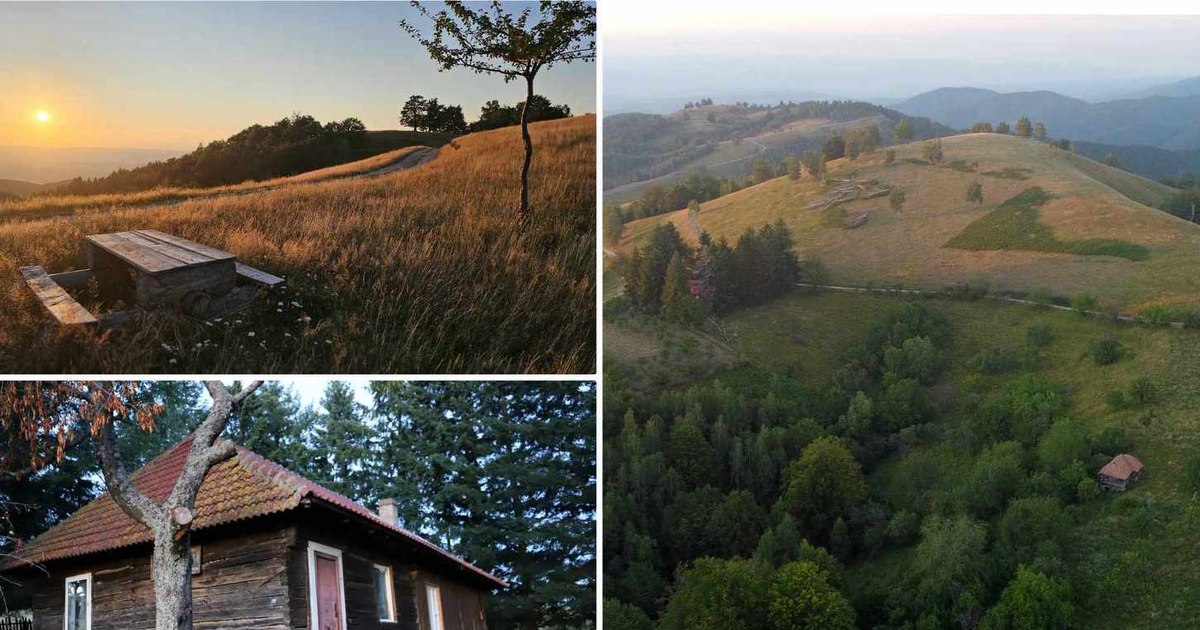
Urșici, one of the smallest villages in western Romania, has remained isolated due to its extremely degraded road, but tourists who venture on it to reach the archaic village in the ancient land of the Dacians find reasons for satisfaction.
Urșici village from Hunedoara. Photo: Daniel Guță. TRUTH
Four or five families live in the village of Urșici in Hunedoara, one of the most isolated settlements in western Romania, but also an extremely picturesque place for tourists.
The village of Urșici in Hunedoara was founded by shepherds, on the Luncanilor Platform in the Șureanu Mountains – a hilly expanse with heights of 900 – 1,000 meters, on which the remains of some Dacian settlements were discovered (video).
The fir-wood building of the old school in Urșici, degraded after the students no longer crossed its threshold, is located at a crossroads of dirt roads that connect the households of the locals located one to two kilometers from each other, each on a hill.
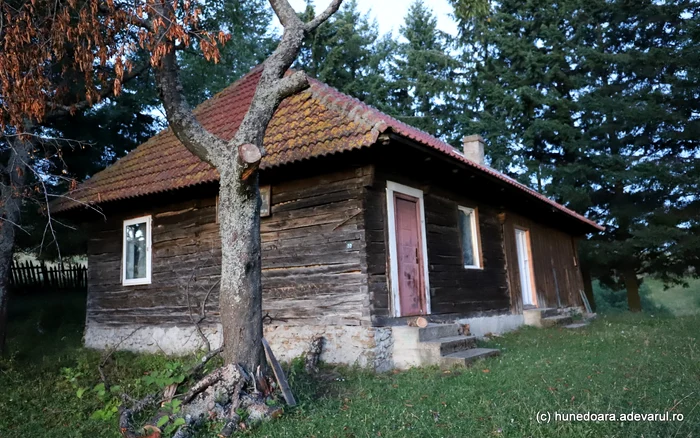
The school in Urșici. Photo: Daniel Guță
“We didn’t have a church and we had to walk two to three hours to the one in Luncani and even further, to the one in the village of Târsa. But it was school. However, it was abolished, because there are eight families left and there are no more children. I went to school here. My parents would send me with the books in my bag and, after finishing the lessons, I would go to the sheep. There, I would put the books on my knees and study“, recounted one of the village elders (video).
Now the old school in Urșici has become a stopping place for amateurs of photography and nature trips. However, the number of guests of the village decreased over time, many of them being discouraged by the condition of the forest road of about 10 kilometers, which goes up from the Luncani valley, from the edge of the villages of Boșorod and Luncani in Hunedoara, towards Urșici (video).
“Last time when I came to Urșici, I left the car, almost seven kilometers from the first houses in Urșici, because the road was very bad, and I went up to the village in a few hours. From here we admired, at sunset, the view dominated from a distance by the ridges of Retezat and Parâng. It’s a wonderful place. This time I had more courage, believing that the road was repaired. but it remained extremely bad. It is full of ruts, pits, bumps, caused by water and, probably, logging machinery”reported a tourist who came to Urșici.
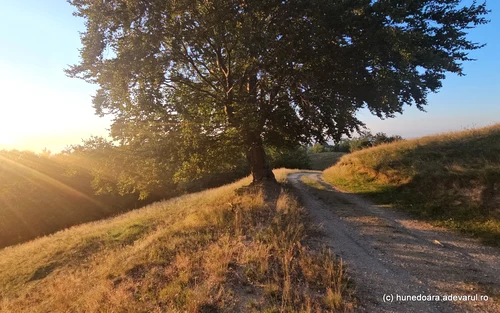
Image 1/15:
Urșici Village from Hunedoara Photo Daniel Guță THE TRUTH (33) jpg
The locals often complained about the state of the forest road, which was repaired from time to time by the municipality of Boșorod. The 10-12 villagers, most of them elderly, who raise animals, also complain about the insufficiency of water, which they have to bring from the springs hidden among the hills. Electricity is provided by a few solar panels, some of which are insufficient for the needs of the families remaining in Urșici.
In summer, tourists go up to the picturesque village in the Șureanu Mountains, delighted by its patriarchal appearance and the panorama of the settlement. Some of them stop at the abandoned village school (video)
The Luncani plateau, on which the villages of Urșici, Târsa and Cioclovina are located, stretches over almost 10,000 hectares in the Orăştiei Mountains and is known for the Dacian fortresses of Costeşti, Piatra Roşie and Blidaru, but also for the Cioclovina Cave.
The Luncani platform from Hunedoara, full of secrets
Small communities of a few families still live here, which have kept the tradition of raising sheep, but also some old customs, such as that of burying the dead in the yard, in graves decorated with flowers and solar symbols.
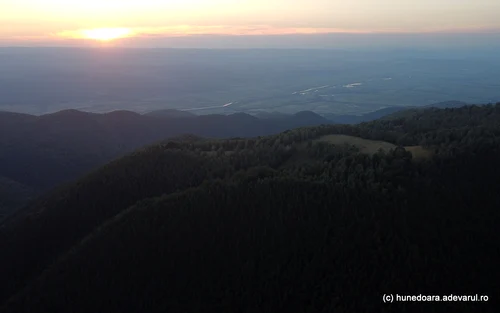
Image 1/15:
Urșici Village from Hunedoara Photo Daniel Guță THE TRUTH (17) JPG
At the end of the 19th century, the occupations of the locals in Urșici were similar to those of today. Urșici, Cioclovina (video) and Târsa, the archaic settlements on the Luncani Plateau in Hunedoara, then included in the Luncani commune, were picturesque and full of secrets, because the Dacian fortresses around them were too little explored in those times.
At the beginning of the 20th century, the Luncani commune included about 200 houses, inhabited by families who raised animals and, some, worked in the forest and in the guano mines of the Cicolovina Cave, opened after the First World War.
A lot of historical vestiges from the time of the Dacians and Romans, located near the settlements on the Luncanilor Plateau in Hunedoara, but also some archaic traditions, made people aware of the ancient origins of the communities and consider themselves descendants of the Dacians.
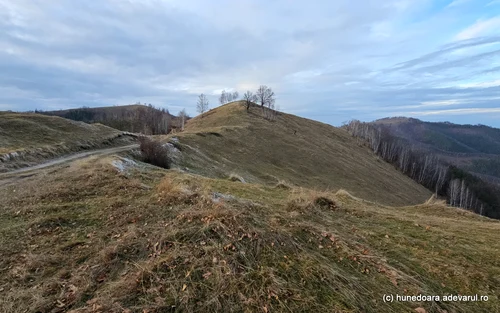
Image 1/19:
Urșici Village from Hunedoara Photo Daniel Guță THE TRUTH (29) jpg
The locals in the mountain villages kept feast days dedicated to bears, during the summer, and wolves, at the beginning of winter, animals with a strong symbolism in the land of the Dacian fortresses. In addition to the holidays dedicated to animals, a lot of superstitions have been passed down from generation to generation, regarding wild animals, but also supernatural beings, such as elk and sánzien, with a rich presence in local traditions. The isolation of the settlements helped to protect the old traditions of the area.
Villages with ancient traditions
The circulation among the households on the Luncanilor platform led over time to the establishment of some practices that prove valuable traits of moral behavior of the locals, reports the ethnologist Lucia Apolzan, who researched sateel from the Luncanilor platform.
“On the outskirts of the village of Ursici, on the way to Bilugu Mare mountain, there is a place called La Butoara. What does it mean, I asked. There was an old beech tree here, I was told, in the trunk of which a woman who lived nearby put a pitcher of cold water, on the days when she knew that people were passing by to the fairs in Pui si Haţeg. The passers-by had gotten used to it, they knew that at the end of the road was the barrel with the jug full of water. The pitcher had established the hikers’ stop and after many stops they called the place La butoara cu Apă. After the woman passed away, the old tree fell and the jug ended up in pieces, the place definitively entered the toponymy of the village. At Butoara…”, ethnologist Lucia Apolzan pointed out.
Urșici hamlets, Cioclovina, Târsa (video), Prihodiste and Alunu remained scattered on the tops of the mountains, surrounded by groves and stables, with old houses built far from the road, in the middle of patches of agricultural land and orchards. Their houses were connected by roads of ancient origins, marked here and there by the memories left by past generations.
“Plai roads traversed for millennia, the roads of the Dacians, foreshadowing the traffic network from the sacred citadel of Sarmizegetusa Regia, with multidirectional ramifications. Roads maintained until now, related to their economic and social functionality. A permanence of journeys on the peaks with specific names, real road signs, preserved by the chronicle of generations, each handing over to the next the well-kept pastures, the clean fountains, inviting for all weary hikers, the chair and the table next to it, a table of silence and especially of of humanity — they all come to talk about this Romanian land and about the man imprinted in this landscape, with the dominance of his superior spirituality“, pointed out the ethnologist Lucia Apolzan.
The villages on the plains of the Șureanu Mountains have depopulated over time, and the number of shepherds whose herds animate the mountain landscape has further decreased.
