
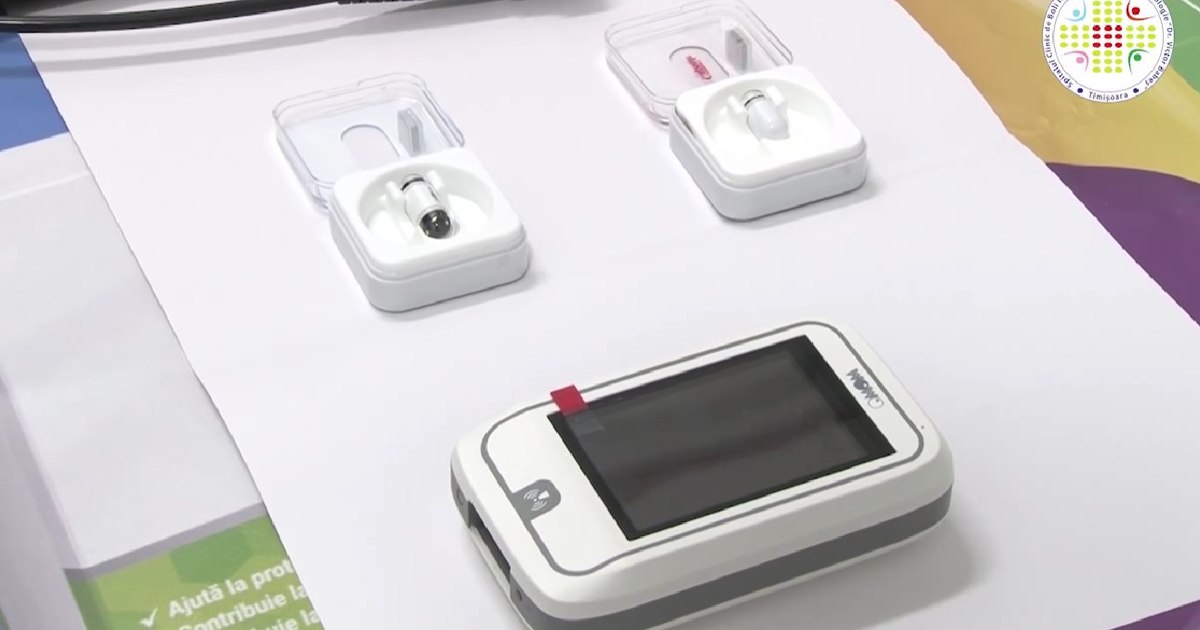
The “Victor Babeș” Infectious Diseases Hospital in Timișoara introduces an innovative method for investigating the small intestine: the endoscopic capsule, a device in the size of a vitamin tablet, equipped with a miniaturized video camera.
The endoscopic capsule, the device for investigating the slim intestine photo: video capture, facebook
“Endoscopic capsule is a device the size of a vitamin tablet. It is provided with a miniaturized, high -performance video camera, with a light source and a battery. The capsule records and stores images while crossing the digestive tract, the images being transmitted to a fixed device, through a belt, on the patient’s abdomen”, It is stated in a press release of the medical unit.
This method represents the most advanced technique for the investigation of the small intestine, an area difficult to analyze by traditional methods such as endoscopy or colonoscopy.
“The endoscopic capsule is intended for patients with unknown digestive bleeding, those with intestinal tumors, refractory celiac disease, Crohn disease located in the small intestine, patients with feripriva anemia, with familiar adenomatous polyposis, those with vascular anomalies”, Explains Dr. Diana Popițiu, primary gastroenterologist at the hospital.
The patient swallows the endoscopic capsule with a glass of water, under the supervision of the gastroenterologist. Once ingested, the device transmits images to an external device fixed to the abdomen, which the patient must wear during the investigation. “After about 30 minutes, the capsule reaches the small intestine, where for 4-5 hours it captures thousands of images that they transfer to the external device, attached to the belt. Within a range of approximately 12 hours, the capsule will be eliminated with the seat“Deticians Dr. Popițiu.
In order for the results to be accurate, patients should follow a liquid diet and preparatory treatment 24 hours before. Intense physical activities are also forbidden to prevent the quality of images.
This minimally invasive method provides increased comfort to patients, because it does not require sedation, unlike colonoscopy or gastroscopy. However, there are some contraindications: “It is not given to children, patients with swallowing disorders, patients with intestinal occlusion history or stenosis in the digestive tract“Adds Dr. Popițiu.
The investigation is available for a fee, following a gastroenterological consultation. The initial consultation is free for patients who have a referral ticket from the family doctor.
