
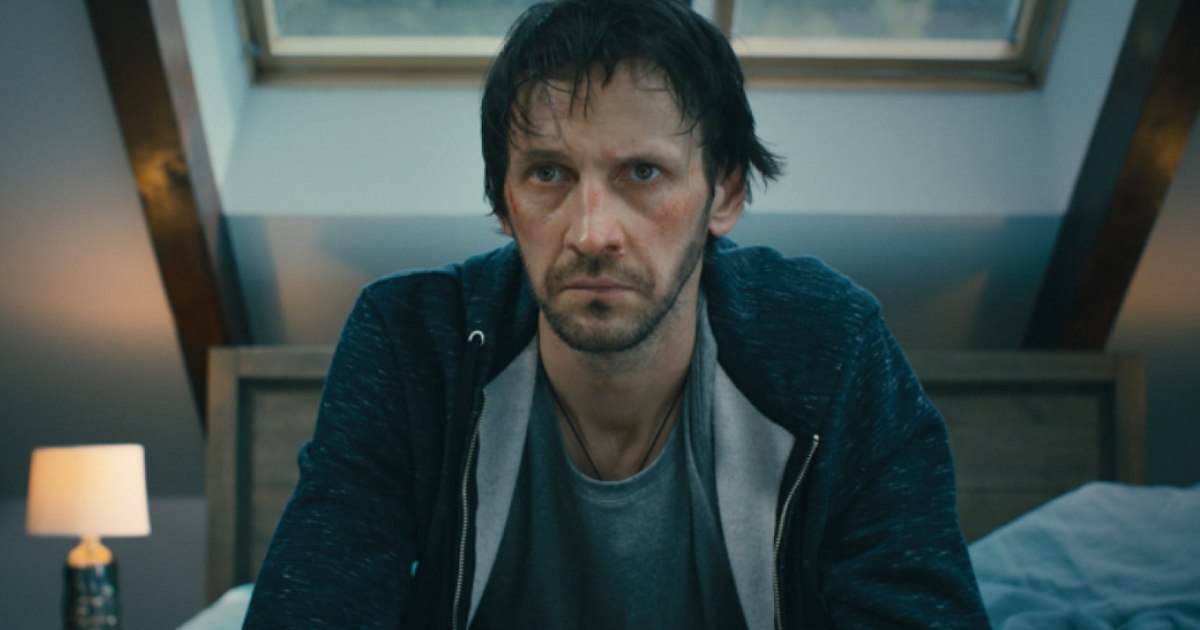
The actor Bogdan Fărcaș speaks in a podcast about Romanians’ nostalgia for communism: “I can no longer hear this about the external debt: Ceaușescu paid the external debt. We paid it through hunger, through cold.”
Bogdan Fărcaș, theater and film actor born in 1980, shares on the “Vin de o poveste” podcast his vivid and often disturbing memories of a communist period defined by shortages, fear and intense propaganda. His perspective as a child, then as a critical adult, offers a complex picture of life under the Ceaușescu regime and its lasting impact on society.
Fărcaș remembers his father, university assistant, who “he was sitting with his hat in his hand at the one from Aprozar.” Why? Because “that one from Aprozar was God. He decided who gets olives, who doesn’t, who gets an orange, who gets two bananas.” The shortage was so severe that “I haven’t seen bananas since ’84.”
The communist education system, often idealized by nostalgics, is described by the actor as a tool of indoctrination and sometimes brutality. He recalls the school routine: “We started classes at 8 o’clock, we had classes on Monday, Tuesday, Wednesday, Thursday, Friday, Saturday. We had to be at school at 8:00 p.m. to sing the anthem and about Ceaușescu.” The “taming process” followed by forced participation in congresses: “We couldn’t wait for the congress, because they took us out of class… to listen to the congress with japca. I mean, we liked that we didn’t have any more hours. And we had to hear Ceaușescu. We sat for two hours and listened to him eat c…t at the congress. With achievements and such.”
“Dad was obsessed with telling me: Don’t say what you heard in the house”
He disputes that he was “schooled”, noting that many of the people who comment uncommented on his posts are in their 50s and 60s and learned back when “school was”.
Beyond the propaganda, physical violence was a shocking reality. Fărcaş recounts a traumatic incident from the fourth grade: “The teacher beat a colleague of mine until he bled on his hands… Then he slapped him and bled him on the nose. He broke his nose. And he was also angry and said, ‘go to the bathroom so you don’t bleed in class.’ This is an image that I don’t forget.” Another tragic event happened at the school, where “a kid died…because we were playing soccer and he held on to the goal and the goal wasn’t locked…and the goal came into his head and cracked his head.”
Fear was a constant of everyday life. Bogdan says that people “they couldn’t stand the cold anymore. And they could no longer be afraid and humiliated.” His father was “obsessed” to tell him: “Don’t say what you heard in the house”. “As good as the world was“, he adds. This fear was justified, given the network of informants: “You find out after that what your neighbors have done to you.”
He remembers her parents giving meditations and asking students not for money, but for “a chicken or a piece of cheese,” because you had nothing to do with money.
“We were allowed 14 degrees in the house and dad improvised a stove”
Even the block he lived in had “more security guards on the stairs.” People could only advance in their careers through political affiliation: “Nu could only get a position if you were from the party. You couldn’t get promoted. There was nothing you could do. If you were from the party, things happened.”
He says that when they went to the seaside, his father would take the seats out of the car so he could buy as much gas as possible. “I was walking with my sister on petrol canisters. His father used to take a day to stand in line at the gas station.”
Fărcaş remembers when his father bought a 5-speed Dacia 1410 and it had to be treated every autumn to prevent rust: “Everybody was turning the car around and antiphoning it to keep water out. New product…”
The actor remembers that every night the power went out: “My mother had candles until they were dead in Iași. We were allowed 14 degrees in the house and my father improvised a stove. One wall was covered with mold.” When the hot water came, Saturday from 3 to 5 and Wednesday from 7 to 9, everyone bathed: “It annoyed me that I could no longer leave the house on Sundays, so as not to get dirty”.
He does not agree with some nostalgics, who say “no one was starving.” “Is that your ideal? We’re just not dogs.” he says. Fărcaş remembers that “wealth” was calculated in the number of oranges you had at Christmas: “I was afraid to say that we have two oranges. I said we only have one”.
“We paid the foreign debt through hunger, through cold”
Fărcaș says that he is exasperated when he hears that “Ceaușescu paid the foreign debt”. “I can’t hear this anymore with the foreign debt: Ceaușescu paid the foreign debt. We paid for it through hunger, through cold”.
He denounces the human sacrifice behind grandiose projects: “Well, he said to become a Transfăgărășan, but who did the work? Army. Those kids worked it. She died on the head. The 18-19 year olds died.”
The mentality of the regime is compared to that of a “peasant” in charge: “He made it the people’s house, which cost a lot, or the canal, which cost a lot… you make the most beautiful villa in Europe… and then you turn on the light in the house. Cut the light, cut everything, cut the hot water, cut everything… But it’s important to see the villa.” Another example of the human cost of communist dogmatism is the HIV scandal in Iași in 1989, when “160 something kids were infected with HIV… because the system wasn’t allowed. That is, communism does not accept that AIDS exists in Romania and HIV. It was a capitalist disease…he had also banned HIV textbooks with the same syringe. Through and through.”
“Will chocolate be found?”
The revolution and its echoes The revolution of 1989 represents a crucial moment in the narrator’s memory. While “all Romania was boiling”, he, being a child, could only understand that his mother, “emotional cabbage”, came home happy, shouting: “Ceaușescu falls, mother, Ceaușescu falls.” His first question was: “will chocolate be found?” To which the mother replied: “yes, mother, it will be all right.” Neighbors “they were drunk because they cooked with communism.”
Bogdan and his neighbor tore the obligatory portraits of Ceaușescu from the textbooks and put them on the window of the “grocery store.”
Fărcaș firmly opposes those who idealize the communist period. Regarding those who praise “how much Ceaușescu built,” he answers them ironically: “to see how much they built Tutankhamun.” His criticism also extends to the “majority of the agrammatic” who, although “they have no idea how to write,” they give their opinion on everything, including communist education. He believes that a society that justifies domestic violence cannot be a model of a “better world.”
Who is Bogdan Fărcaș?
Actor at the “Toma Caragiu” Theater in Ploieşti, Bogdan Fărcaș stood out more and more in cinematography, and his outstanding roles brought him important awards.
One of the most appreciated Romanian actors in recent years, Bogdan Farcaş, has played in Hollywood productions, alongside celebrities such as Mark Nicholson, Wesley Snipes, Rachel Wood, Jean-Claude Van Damme or Shia LaBeouf, and now he has struck with a memorable role, for which he won the Special Jury Prize at the Warsaw International Film Festival. It is about the main role in the movie “Unidentified”, where he plays a sociopathic policeman.
Films in which he acted: 7 Seconds – directed by Simon Wheeler, The Detonator – directed by Po-Chih-Leong, Raptor Island 2: Raptor Planet – directed by Gary Jones, PU 239 (The Half Life of Timofey Berezin) – directed by Scott Z. Burns, Last night, Regina, Life on Top, Portrait of a young fighter – directed by Constantin Popescu, One In The Chamber, The Necessary Death Of Charlie Countryman, Chira Chiralina, 6 Bullets, The Timber, The Keeping Room, A Good Man, Aleksey Against the Dark, Miss Christina, Miracol, Vlad, Forensic expert, I forgive you, And if, however, Unidentified, J’irai Mourir Dans Les Carpates, Manour House, The Cleansing Hour, Backdraft 2, The Hard Way, Cartels, Kyra Kyralina, La pomăna, Walking with the Enemy
