
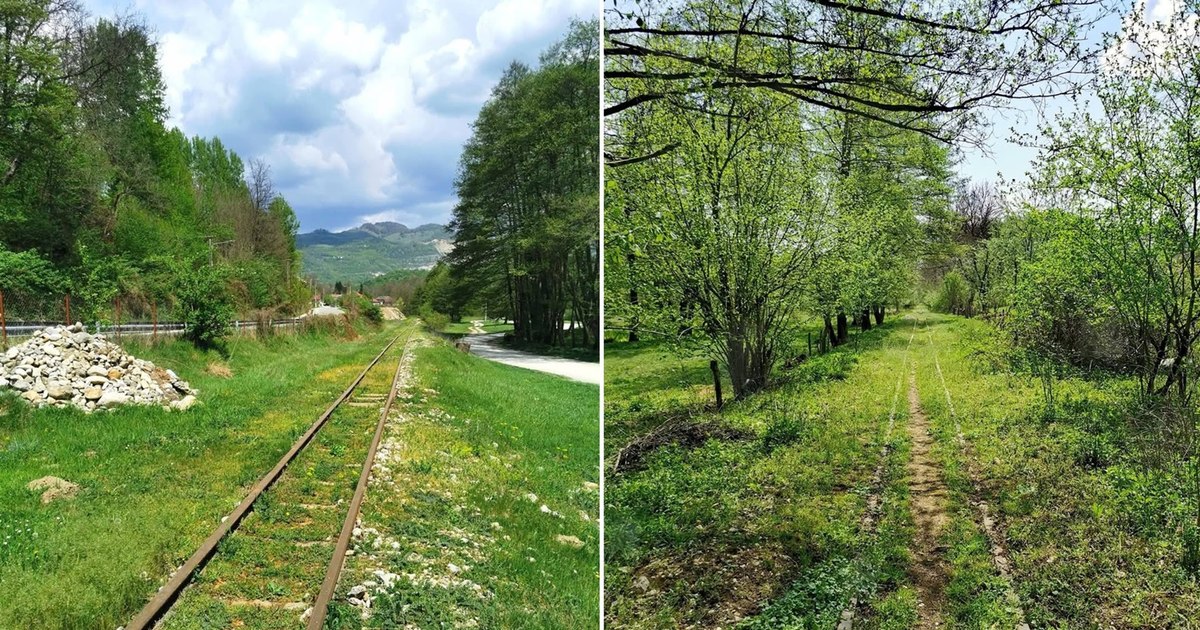
Hidden between the hills of Valcii, a former industrial railway could become a unique tourist attraction in the southern half of the country – if the authorities choose to save it from the scrap iron.
After years of silence, a forgotten railway line from Oltenia under the mountain could come to life again – not to transport stone, but to tell stories.
The route of Mocăniței from the Bistrita Valley from Oltenia under Mount Florin Stoican Facebook
Mocănița Olteneas, a project supported by the Kogayon Association, promises to turn an industrial relic into a sustainable tourism symbol. The route, which connects localities with tourist potential to the entrance to the Buila – Vânturarița National Park (the smallest national park in Romania), has the chance to become the first tourist mockery in the south of the Carpathians. It all depends on the involvement of the authorities and the support of the community.
The Bistrita Valley of Oltenia, brought back to life under its most beautiful variant
In a spectacular corner of Valca, where the peace of forests and monastic history meet, a narrow railway, asleep for years, could become the soul of the tourist rebirth for the whole area.
This is the first Oltenia Mocăniță, a brave project proposed by the Kogayon Association, with the potential to transform radically “Oltenia from below the mountain” – an already aspirant region for the status of UNESCO Geopark.
Spread on less than 1,000 kmp, Oltenia below the mountain houses a rare concentration of natural and cultural treasures: secular forests, spectacular keys, monasteries loaded with history and crafts kept with sanctity.
Here is the ceramics of Horezu, included in the UNESCO immaterial cultural heritage, a true symbol of Romanian folk art. Also in this area is the only museum in Europe dedicated to the Trovvins – the mysterious “living stones” that seem to grow and turn over time.
Oltenia de Sub Munte also means adventure: Buila – Vânturarița National Park, the smallest national park in Romania, is a paradise for hiking, mountaineering and biodiversity lovers. The area also houses the oldest Culă in Romania – Cula Greceanu, part of the Măldărești Museum Complex, but also the only traditional borangic tissue workshop in the country, in Stoenești, where it takes natural silk after methods transmitted for hundreds of years.
Also here is the Băile Olănești Spa resort-with the most mineral springs in Romania-and the oldest wooden church from the South of Carpathians, the Marița church in Vaideeni, dating from the sixteenth century.
This year. Oltenia de Sub Munte represented the surprise of the year in Romanian tourism, being included in Top 10 destinations in Romania.
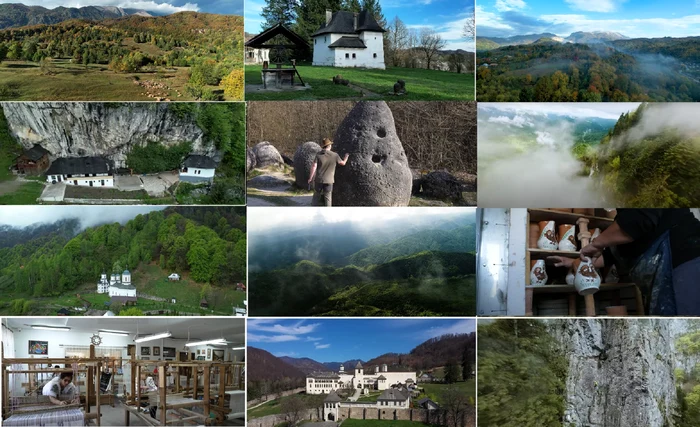
Treasures of Oltenia de Sub Mountain in Vâlcea county Collaj Discover Oltenia
From scrap iron to tourist attraction
The route of the tourist train would revive an old industrial railway, built for the transport of limestone from the Bistrița-Costești quarries-located at the foot of the Buila-Vânturarița National Park-to the Chemical Platform (former Oltchim) in Râmnicu Vâlcea.
Although abandoned in 2019, the 44 -kilometer line, with a narrow gauge of 760 mm, crosses spectacular landscapes and charming localities: Mihăești, Băbeni, Frâncești, Tomșani and Costești. Once in operation, Mocănița could become one of the most unique tourist trains from the south of the Carpathians, being, in fact, the only one.
Florin Stoican, the president of the Kogayon Association and supporter of the numerous conservation and ecotourism initiatives, draws attention to an imminent danger, but also offers a firm promise: “The railway is no longer used in the autumn of 2019 and risks reaching the scrap iron, despite the enormous potential for the Bistrita Valley. This line is not only a relic with a significant industrial history, but also a project with a remarkable future, if a solution will be found to turn it into a mockery-even as a mockery-even as a moc.
The promise consists in the possibility of a remarkable tourist future for this infrastructure, if it will occur in time and will not be allowed to deteriorate, as has happened with many other infrastructures in the country.
The picturesque route: Travel through history and nature
The legendary train route really crosses picturesque areas and reaches the gates of spiritual and cultural landmarks, such as the Bistrița and Arnota monasteries, which are just “A throw of stick” by the Horezu Monastery – the only place of worship included in the UNESCO World Heritage South of the Carpathians – emblematic places for Oltenia’s Heritage under the mountain.
Along the line there are four stations where trains could intersect, and a round trip would take about five hours-enough time for any tourist to fall in love with the landscapes in the area.
“We consider that the local and county authorities in Valea Bistriței and the whole of Oltenie de Subte Mount must associate and open discussions with the current owners of the line to identify a form of public-private partnership. It is an opportunity for regional development to be missed,” adds Stoican.
In the video I attached below you can see the mocănița loaded with stone, during the period when it was still functional, on the Bistrita Valley, in Costești commune, Vâlcea county.
“Save this infrastructure, do not let it reach the scrap iron”
From industrial use to the engine of the ecotourism, the dream of Oltenești Mocăniţa now depends on the common will of the community, authorities and investors.
Florin Stoican draws attention to the major risk: without fast interventions, the line could be completely decommissioned, especially after it was recently purchased by companies focused on collecting and capitalizing on waste: “We make a clear call to the Vâlcea County Council and to all the authorities in the area: save this infrastructure, do not let it reach the scrap iron. Investments to bring the line to the standards needed for passenger transport are possible and now.”
According to the same source, the railway is no longer used since the Soda Plant Govora interrupted its activity. Taken over in 2006 by the Polish group Ciech SA, through Ciech Soda Romania, the company and implicitly the line were recently sold to the companies of Alooref SRL from Alba Iulia and ASCOM International SRL in Bucharest. Alooref is specialized in collecting and capitalizing on ferrous and non -ferrous waste.
Online petition for Oltenia mocănița de under mountain
Kogayon Association and Community “Oltenia from under the mountain – UNESCO aspirant geopark“ They showed their public support for starting the project, initiating an online petition that has already collected about 1,000 signatures. Anyone who wants to support the rebirth of this soul railway is invited to sign the petition on the site campaniamea.declic.ro.
Oltenia de Sub Munte is waiting for the train of the future – a train that no longer carry stone, but memories.
On narrow rails, through mountains and time: Romania’s mockens
On the narrow rails that cross the wild corners of the Carpathians, Romania’s mockens tell old stories over a century – stories about people, wood, steam clouds and dream landscapes. Once the spine of transport in the forest areas, today these historical trains are live treasures, able to wear tourists not only through spectacular places, but also through time-directly in the heart of Romanian traditions and nature.
Of the ten moccanites entered in the tourist circuit after the revolution that weave lives today between the past and present, only eight is actually circulating. In Covasna – Commandau, the mocănița reactivated in 2019 was meanwhile closed and transformed into an open -air museum. In contrast, Mocănița Transilvaniei in Cluj County has come to life as a scene for thematic events and a filming set for a Hollywood production, rediscovering the charm of the old age, a wagon wagon.
I documented these “Treasures on wheels” In a large report of the brand Weekend the truthpublished on the site in the series “Romania’s mockens ””with details about routes, programs and how such an authentic experience can be experienced. From the last steam railway with steam from the Carpathians-the legendary train on the Vaser Vaser in Maramureș, to the most spectacular mountain line in southeast Europe-the Banat semmering or Mocănița Montan, which travels through Caraș-Severin on a 160-year-old route, all the eight active Romanians are in Romania. to a vintage wagon, on rails that did not give up the story.
It is also about Mocănița from the Hârtibaciului Valley in Sibiu, also known as the iron road in the heart of the Saxons; Mocănița from Sovata – from the resort with three world records; Huțulca from the green heart of Bucovina; And the mocăniţei from Apuseni – Mocănița Crișului, the one on the Abrud Valley and the one on the Arieș Valley, which crosses the counties of Alba and Hunedoara.
In Oltenia below the mountain, the mocănița proposed by the Kogayon Association is waiting to be restored to the rails. It could become the first of its kind south of the Carpathians who join this unique railway family in Romania.
