
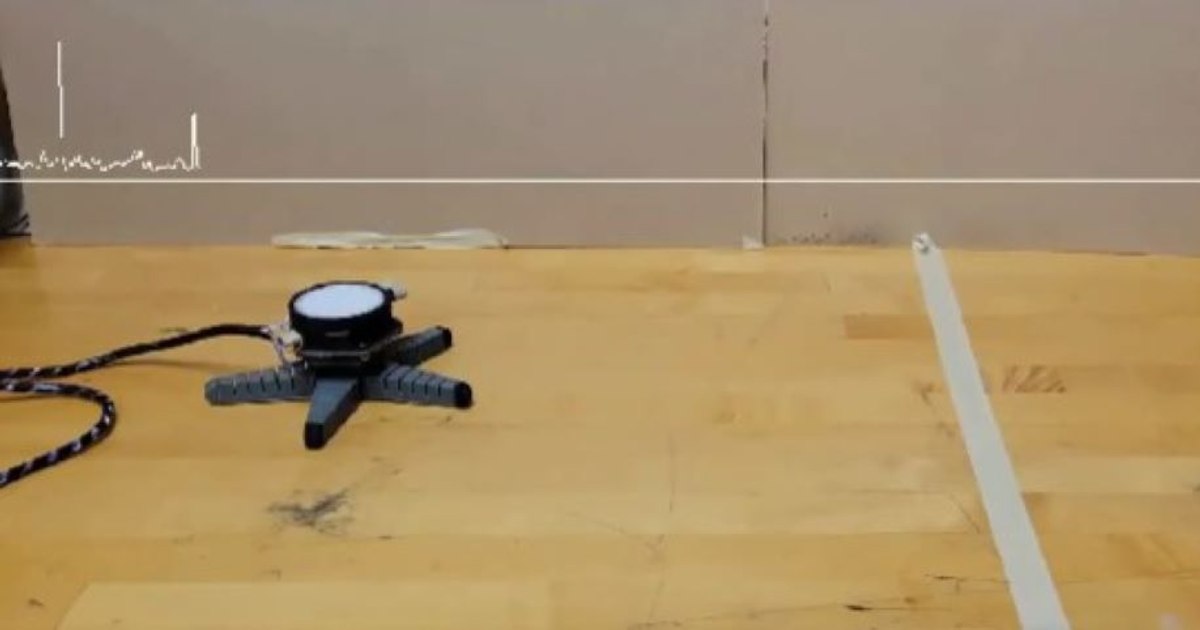
Amazing new inventions appear. Scientists have discovered that mycelium, the root-like structure of a mushroom, can control a robot by using electrical impulses to trigger movements, according to the Telegraph.
The robot could be used to detect chemicals in the soil. Photo Video capture X
Researchers at Cornell University and the University of Florence have created two new robots, one that looks like a starfish and one that sits on wheels, and put mycelium in their electronics.
The fungal material remains alive and can grow in harsh conditions, making it an ideal material for controlling robots in unusual environments.
Scientists say they hope the “biohybrid” robots could be used in the future to detect chemicals in the soil and help with other agricultural processes.
However, there are concerns that partially living devices could harm the natural environment and raise ethical issues regarding the production of living devices.
According to new research, variations in light trigger natural electrical impulses inside the mushroom that make the robots move.
Different sources, such as ultraviolet light, alter their movements. The footage showed the starfish-like robot walking and appearing to dance in response to the mushroom’s signals. The other robot was able to roll on its wheel system.
“Living systems respond to touch, they respond to light, they respond to heat, they even respond to some unknowns like signals”said lead study author Anand Mishra of Cornell’s Organic Robotics Laboratory.
“So we’re thinking, OK, if you wanted to build robots in the future, how can they function in an unexpected environment? We can capitalize on these living systems, and to any unknown signal, the robot will respondMishra also said.
By incorporating living material, machines are able to better mimic the way living creatures move, function and identify their environment, which improves their level of autonomy.
“In this case, we used light as the source, but in the future it will be chemical,” said Rob Shepherd, professor of mechanical and aerospace engineering at Cornell Engineering.
