
NASA has issued an alert about a “potentially hazardous” asteroid that will come close to Earth on Tuesday. It will only be visible through a telescope, but a true celestial spectacle will be visible across Europe and Africa.
Asteroid 2024 ON measures 290 meters in diameter and will approach less than a million kilometers from Earth, according to the Jet Propulsion Laboratory of the American Space Agency, writes The Independent.
The space object last flew past Earth in 2013 and will do so again in 2035, according to NASA data.
The space rock was first spotted by NASA’s Near-Earth Object Observation (NEO) Program, which uses observatories around the world.
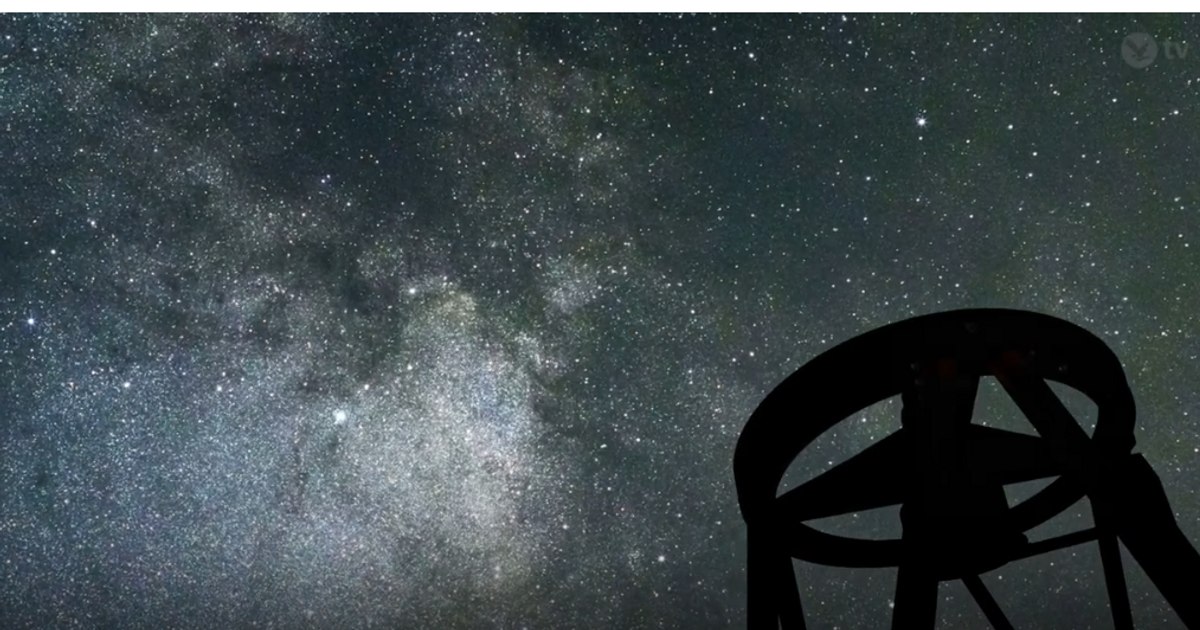
The asteroid is being tracked by the Virtual Telescope Project. PHOTO Youtube / The Independent
On September 9, the Virtual Telescope Project, which tracks its movement, captured the asteroid “potentially dangerous” traveling at about 40,000 kilometers per hour.
“A small deviation could have major consequences”
The minimum distance it will be from Earth is 2.6 times the Earth-Moon distance, which is why 2024 ON poses no risk to Earth on its current trajectory, but even a small deviation could have consequences major, shows the quoted source.
Asteroid 2024 ON is 99% larger than any other near-Earth object, but it won’t pass close enough to be seen without a telescope.
A full supermoon
However, on Tuesday, the day it will be closest to Earth, viewers will instead be able to see a rare partial lunar eclipse that will coincide with a full supermoon.
The celestial spectacle will be visible across Europe and Africa, but will also be visible in parts of North and South America, as well as Asia, according to The Independent.
A temporary “mini-moon”.
Also during September, a smaller asteroid (2024 PT5) will become a “mini moon” temporary, being pulled into orbit around the Earth for two months.
Asteroid 2024 PT5 measures just 10 meters in diameter and was once part of the Moon, according to a new study published in the scientific journal Research Notes of the AAS.
According to the study, this asteroid will remain in Earth’s orbit from September 29 to November 25.
