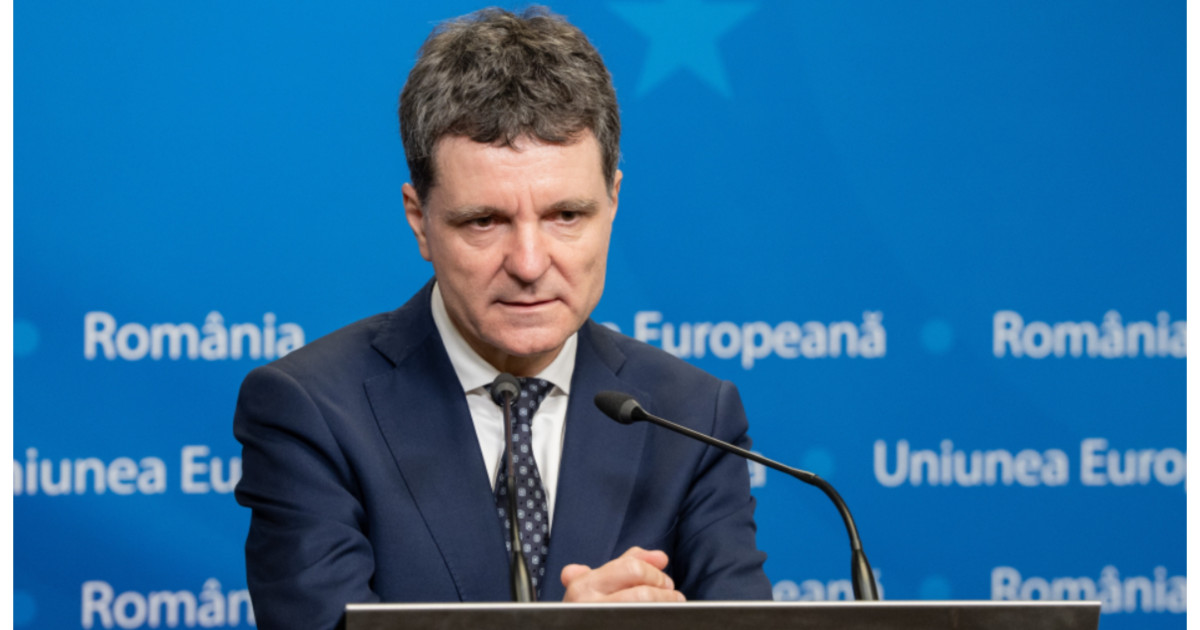
Artificial intelligence can bring important gains in competitiveness and efficiency, but it also raises issues related to accountability, jobs and education. President Nicușor Dan spoke about the challenges of this new industry after attending the informal meeting of the European Council in Dublin, where EU leaders discussed Europe’s position in the global competition in the field of artificial intelligence.
The head of state emphasized that artificial intelligence represents a true economic revolution, and the development of the industry depends on several factors, including the capital market, business regulation at the level of the European Union and, essentially, access to energy and its cost.
“We are experiencing an economic revolution with artificial intelligence. Time is very important, and the development of this new industry is linked to many economic elements, such as the capital market, the regulation of business within the European Union and, very importantly, energy. There is a very high dependence of the efficiency of this new industry on the quantity and price of energy,” said Nicușor Dan.
The president also spoke about the risks that artificial intelligence can generate, especially in terms of liability for possible accidents caused by systems that operate without direct human control.
“There was talk about the risks that artificial intelligence can create and a lot about responsibility and how it should be regulated. If, in a decision-making chain where there are several artificial intelligence operators, without each of them being subject to human control, an accident occurs at the end of the process, there must be responsibility”, explained the head of state.
Nicușor Dan drew attention to the fact that regulation must be done in such a way as to ensure safety, without affecting Europe’s ability to compete in an area where economic competition is expected to be very intense.
Risks for the labor market and for education
Another important topic of discussion was the social impact of artificial intelligence. According to the president, although new technologies can increase the competitiveness and efficiency of companies, they could also lead to the replacement of employees in certain fields of activity.
“Artificial intelligence brings competitiveness and efficiency to companies. On the other hand, in the not-too-distant future, there will be economic specializations in which man will be replaced by artificial intelligence, and this will raise social problems,” said Nicușor Dan.
The head of state also spoke about the effects that the use of artificial intelligence could have on education. He warned that there is a risk that pupils and students use technology to get answers and results directly, without going through the necessary steps in the learning process.
“The essential element in education is the human ability to generate a cognitive process, with stages, with connections and with a final result. If we forget about this process and are tempted to go directly to the final result that artificial intelligence offers us, at the level it has reached today, the risk to the level of education can be very high,” said the president.
Nicușor Dan stated that discussions about artificial intelligence will continue in the European Council in February.
Read also: Nicușor Dan will go to Cambodia for the Francophonie summit. Romania’s stake: the candidacy of Dacian Cioloș to head the OIF