
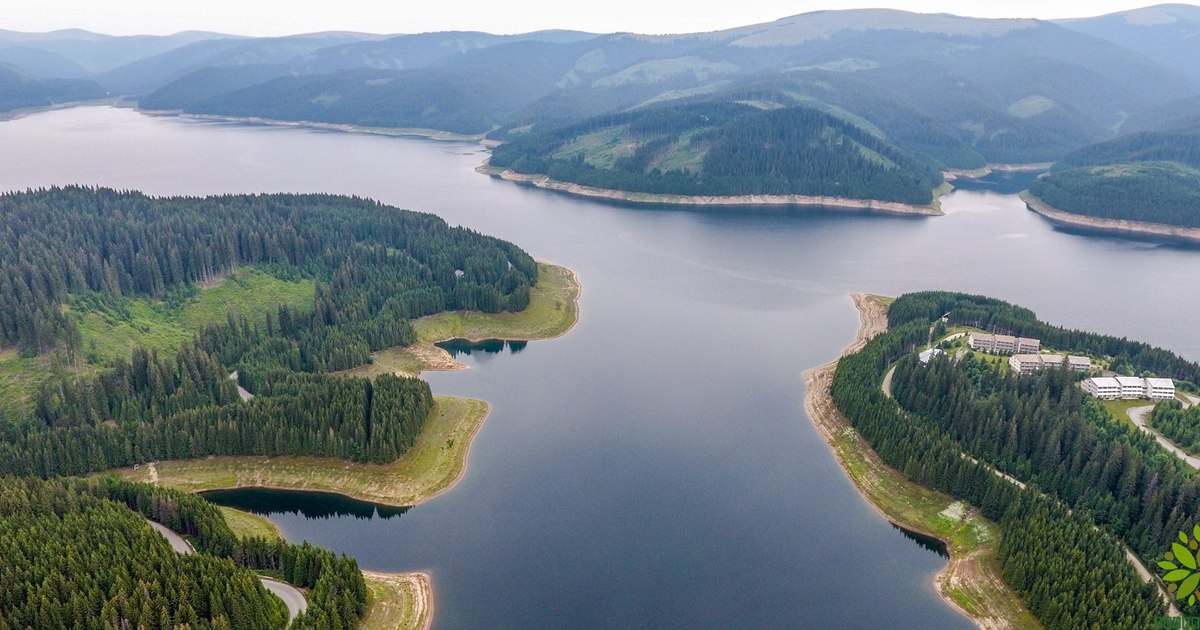
Less known than the resorts on Valea Prahova or Poiana Brașov, the mountain resorts built in the 70s near the Oașa, Vidra and Gura Apei lakes have remained a curiosity of the Carpathians. They were established in wild lands, around large dams and hydropower plants.
Vidra Voineasa resort in Vâlcea county aerial view Photo Water and its friends
In the early 1970s, the Romanian state realized that the large hydropower projects planned in the Carpathian Mountains had touristic and economic potential and decided to change the way they were built.
Until then, around large hydropower projects, such as Bicaz, Argeș, Secu, Trei Ape or Văliug, “cardboard cities” with barracks were erected, which offered minimal comfort to the workers, and were demolished after the completion of the works. Later, in the same areas, tourist resorts and recreational areas were established, which increased the state’s expenses.
Resorts instead of “cardboard cities”
According to the specialists, the conditions imposed by the mountain area and the 5-10-year duration of the works on the hydropower facilities required that the new colonies be made with sustainable constructions and with an accessible level of comfort, so that the workers do not leave them during the works.
“In addition to this direct participation in the tourist investment, there are also a series of indirect participations, through the works carried out in the area, both within the basic works of the hydropower plant, and through those required by the activity of the site, such as: roads, electricity and water supplies, transformer stations, telephone lines, television network, centralized site organization, such as: ballasts, concrete stations, high-capacity machines, etc. The economic calculations show that these indirect participations represent approximately half of the cost of some mountain tourist resorts that would be run independently and in an exclusive organization”, informs the magazine Architecture.
Instead of the “cardboard cities”, starting from the 70s, workers’ colonies were planned that would be transformed into resorts. The first ones were established at the beginning of the 70s in Vidra and Voineasa during the hydropower development on the Lotru river. Other resorts were planned together with the hydropower developments in the Olt Gorge (Cozia, Paușa, Arutela resorts), in the Sebeș Mountains (Oașa and Miraj resorts), on the Drăgan – Iad rivers in Apuseni and on the Răului Mare valley in Retezat.
“The site organizations effectively participate in the realization of the new tourist resorts, building and using the accommodation and public food facilities within the resorts, the final beneficiary, the Ministry of Tourism, having to proportionally complete the basic tourist capacities with urban, household, leisure, sports facilities, with spaces for trade and services, with means of mechanical transport by wire, to finalize the networks and arrangements; he also has to finish and equip the objects used in the first phase of the construction site. These additions and equipment represent about half of the total values of the final investment resulting from the collaboration system”, iinforms the magazine Architecture.
Lotrulu resorts, former workers’ colonies
Four mountain resorts were planned at the end of the 60s, around the Lotru – Ciunget hydropower complex. The ambitious plans of the Ceaușescu regime even aimed at transforming the wild land of the Lotru Mountains into a place that could host, in the following decades, an edition of the Winter Olympics.
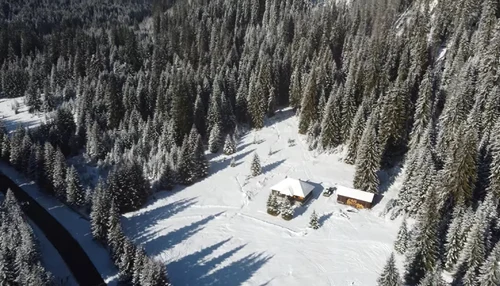
Image 1/7:
Lotrului Voineasa from Vâlcea and accommodation infrastructure Photo Daciana Stoica
“Due to the fact that the Lotru Valley is oriented from east to west, being framed by four parallel mountains that strictly control the influences of the microclimate, the northern slopes of this valley present the phenomenon of long persistence of snow – about eight months a year, – and the shape of the alpine plateaus, as well as the relief in general, ensures the organization of hundreds of kilometers of tourist slopes and for winter sports of all types of difficulty”. informs Contemporanul magazine.
The roads leading to the construction sites in the mountains were laid out, and in the alpine areas, where the temperatures dropped to minus 20 degrees Celsius in winter, the first buildings were established to accommodate the workers. In the mid-1960s, more than 8,000 people arrived in the area where the Vidra reservoir, the dam and the hydroelectric plants on the Lotru were to be built.
The underground hydropower plant Lotru – Ciunget was inaugurated in 1972 and has an installed power of 510 MW. The Vidra lake dam, included in the project, is the first large dam made of rock deposits in Romania, and is located at the highest altitude in Romania, almost 1,300 meters above the sea.
Transalpina ski area
The first resort, Voineasa, initially hosted several thousand workers at the hydropower complex in the Lotrului Mountains. The plans of the communist regime proposed to transform it into a climatic resort, with about 5,000 places.
30 kilometers from Voineasa, Lake Vidra was developed in the 70s, at an altitude of almost 1,300 meters. The lake that feeds the Ciunget hydroelectric power plant covers an area of 1,000 hectares and is nine kilometers long, surrounded by spruce forests. Vidra, Alba and Mura resorts were planned around it.
By 1969, a group of hotels from Vidra and the road between Vidra and Voineasa were completed. However, some hotels in Vidra fell into ruin after 1990. At the end of the 2000s, with the modernization of DN 67C (Transalpina – video) and DN 7A, the tourist attractions of the Parâng, Șureanu and Lotrulu Mountains have returned to the attention of Romanians, and the recreational areas for winter tourism have developed, through public and private investments.
From the shore of Lake Vidra, tourists can go up with the gondola to the Transalpina Ski Area, located at an altitude of 1,800 meters and then continue the ascent with the ski lift, towards the slopes of Vârful Bora, at over 2,000 altitude. In winter, however, access to the resort is difficult, and the number of tourists is low compared to that of the popular resorts on Prahova Valley.
The resort in the Șureanu Mountains, above Lake Oașa
Located 30 kilometers from Vidra, the Oașa lake was developed in the 70s, at the foot of the Șureanu Mountains, in an equally wild and isolated area, crossed by the Transalpina. Lake Oașa, located at over 1,200 meters above sea level, occupies over 450 hectares and is dammed by a dam over 90 meters high.
The hydropower project carried out in the 1970s in the Sebeș Valley provided for the construction of six hydropower plants, on the section between Oașa and Sebeș, but in the following years four were built, in Gâlceag, Şugag, Săsciori and Petreşti, with an installed power of about 342 MW, and by the end of the 2000s, two more microhydropower plants were built in Obrejii de Căpâlna and Cugir.
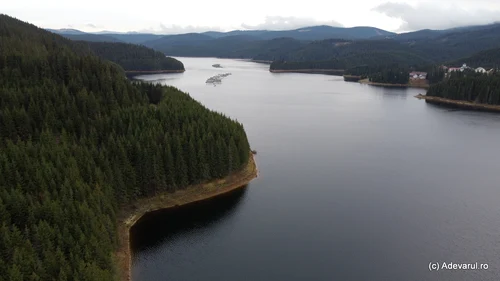
Image 1/21:
Lake Oasa, aerial images Photo Daniel Guță THE TRUTH (33) JPG
Above it, at over 2,000 meters, lies the Șureanu Ski Area, surrounded by the ridges of the mountains on which the Romans built some of their famous march castries, before the conquest of Sarmizegetusa Regia. The road to the resort starts from the Oașa dam, on the left bank of the lake. At its end, tourists find several slopes in winter, arranged between 1,700 and over 2,000 meters altitude.
The Oașa Monastery can be visited in the lake area, and several mountain trails start from here towards the crests of the Șureanu and Cindrel Mountains. After crossing the Oașa dam, the Transalpina descends to Obârsia Lotrului and then climbs, at over 2,100 meters, to the Rânca mountain resort, also located about 30 kilometers from the dam. In winter, however, the alpine segment of the road is inaccessible to cars.
Colony in Retezat, which became a resort
In Retezat, in another wild land of the Carpathians, the hydropower installations on the Râul Mare valley led, in the 70s, to the establishment of the workers’ colonies Brazi, Baraj and Râușor, as well as other tourist cabins, originally built for workers on the Râul Mare – Retezat construction site.
In the 70s and 80s, almost ten thousand Romanians worked on the huge construction site in the Retezat massif, at the Gura Apelor dam (video) and at the Retezat and Clopotiva hydroelectric plants, with an installed capacity of 349 MW.
Inaugurated in 1986, the Râul Mare – Retezat Hydropower Plant is an underground construction with a large drop (582.5 meters), with the volume of a 15-story building, in which two Francis turbines are housed, with an installed power of 335 MW.
At Râușor, the colony that later became a tourist resort, the first cabins were built together with the works on the Râul Mare – Retezat hydropower development. After 1990, more and more cabins and guesthouses were built in the new recreation area in Retezat, and in recent years the ski slopes were expanded.
In addition to winter sports, tourists arriving in the Râușor mountain resort can hike on the several mountain trails in Retezat that start from the recreation area. The most accessible ones cross the forest in the vicinity of the slopes, and the most spectacular, but extremely difficult in winter, climbs to the Retezat peak, at 2,485 meters.
