
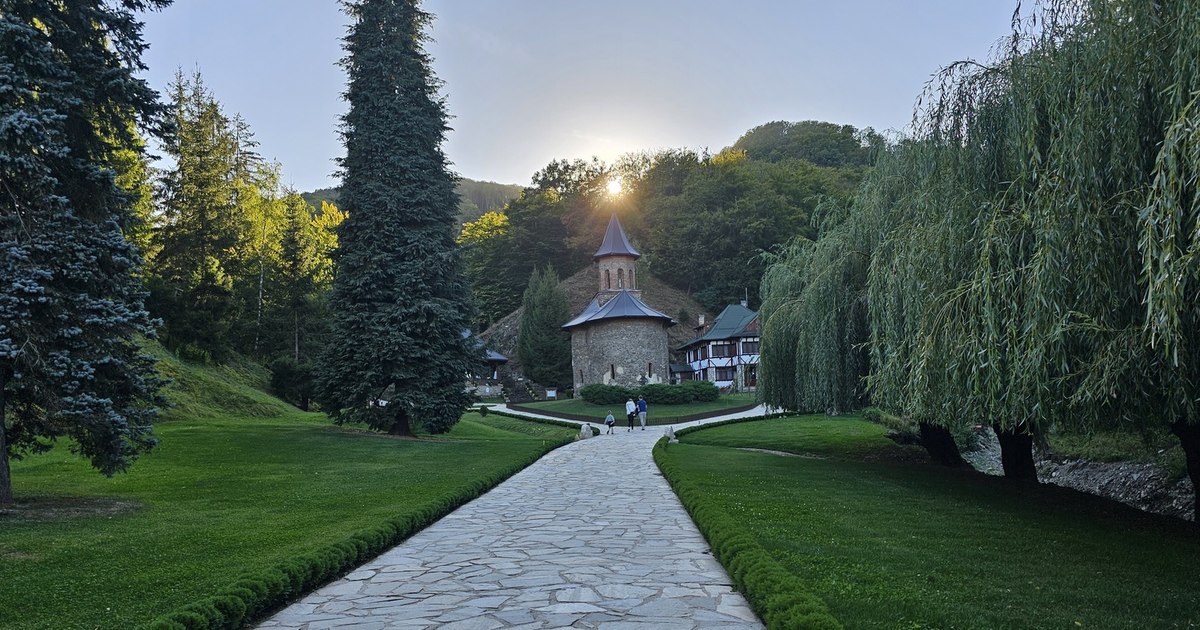
Friday was a day of celebration at the Prislop monastery in Hunedoara, where Saint John of Prislop, the monk who lived in a cave of the monastery, was canonized by the Romanian Orthodox Church, was commemorated.
Prislop Monastery. Photo: Daniel Guță. TRUTH
It was a celebration on Friday, September 13, at the Prislop monastery in Hunedoara, a legendary place sought by many pilgrims who come to the grave of the monk Arsenie Boca. The former abbot of the monastery was recently canonized by the Romanian Orthodox Church, but he is not the only clergyman declared a saint who lived at the monastery.
On September 13, Saint John of Prislop is commemorated, a monk who lived here four centuries ago, who became a legendary character of the settlement in Șara Hațegului. At the patron saint of the monastery, the service was held by priest Gherontie Hunedoreanul, archbishop-vicar of the Diocese of Deva and Hunedoara.
“He spoke of the prayer of the heart, the permanent weapon of the monks against temptations, which can also be said by the laity, as a method of keeping the unbroken connection with God. Also, His Eminence mentioned the use of the metanier, which helps the mind gather and stay focused during prayer”transmits the Bishopric of Deva and Hunedoara.
The Bishop of Deva and Hunedoara held a memorial service at the Hațeg church, which also has John of Prislop as its patron
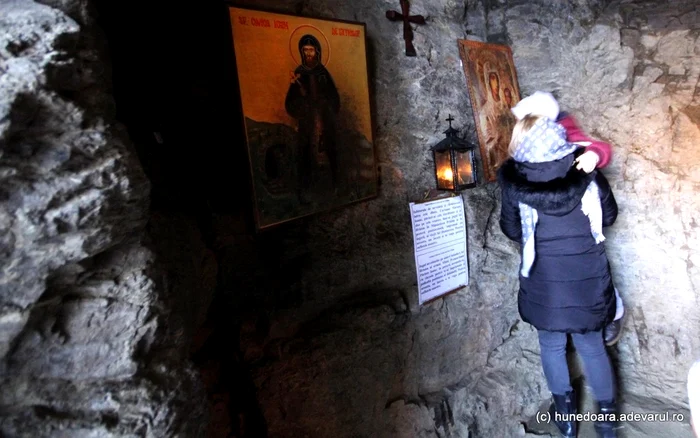
John’s Grotto from Prislop. Photo: Daniel Guță
“In the teaching speech, the Most Reverend Father Bishop Nestor, speaking about the life of St. Reverend John of Prislop, explained that the needs of monks, and especially of hermits, presuppose self-denial and the assumption of many sufferings, but the hope of salvation animates the soul seeking God “, informed the Bishopric of Deva and Hunedoara.
Who was John of Prislop
The monk Ioan de la Prislop was canonized by the Romanian Orthodox Church in 1993. He lived four centuries ago, in a cell he had carved out of the rock, near the medieval church and about a hundred meters from the place of of Arsenie Boca.
The grotto was known in the past as “the house of the saint” and the monk is said to have died here after being mistaken for a wild animal by hunters.
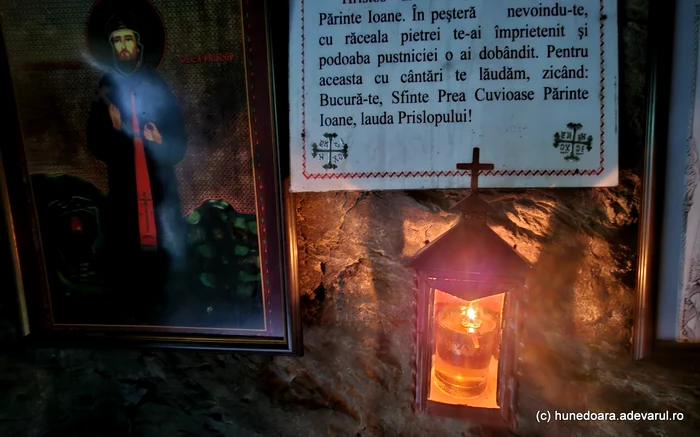
John’s Grotto from Prislop. Photo: Daniel Guță
“Popular tradition says that, while he was making a window in his cell, two hunters from the other side of the precipice shot him”said historian Mircea Păcurariu, author of the book “Sfinți Români”.
Another legend says that John was a young man from the village of Silvaș, neighboring the monastery, who had left the village together with the girl he had fallen in love with, and the two of them took refuge in the old cell of the monks of Prislop.
His lover would have died there, and also there, on her grave on the bank of the stream, at the foot of the grotto, John was also found dead. The locals considered the young man who had become a hermit, as a miracle worker and since then they called the cell “the house of the saint”.
“Tradition tells us of a monk named John who led a holy life, staying in the cave dug in the rock, which is still located on the side of the hill above the monastery. After his death, upon hearing the news, those from the Romanian Land would have come and taken his body away, leaving Silvaş with only one finger. To this day, the inhabitants of Silvaș de Dos do not like to be told about the sale of the saint. The index finger is kept in the church in Sânpetru (video) near Haţeg“, informed the newspaper Adevărul, in 1928.
John of Prislop and Michael the Brave
At the end of the 16th and the beginning of the 17th century, the Prislop monastery, led by this monk, is said to have gone through a flourishing period. It had become the most famous monastic settlement in Transylvania and a center of church culture.
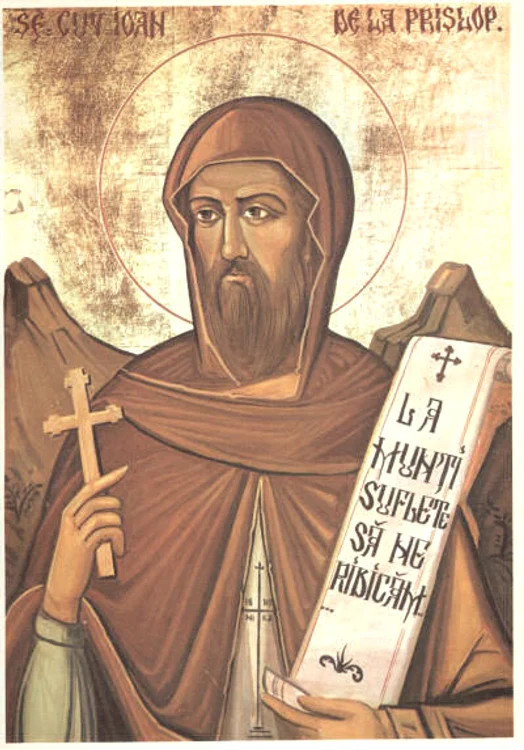
John of Prislop. Wikipedia
A church school operated here, for young people who were to be trained as priests and church singers. Also, religious books were copied and church volumes were brought from Muntenia and Moldova. According to some historians, one of the oldest Romanian letters from Transylvania has been preserved from Ioan de la Prislop.
The monastery had been rebuilt in the second part of the 16th century, with the support of Miss Zamfira (Saphira), the daughter of the mountain voivode Moise, settled in Transylvania. A legend says that the lady was cured, drinking from the water of the spring that passes through the courtyard of the monastery.
That’s when he decided to build the church, which he decorated with scents and later, he founded the school of church singers nearby. Her tomb was discovered in the 19th century, in the medieval church.
Ioan de la Prislop, the leader of the monastery from the time of Zamfira, had become the bishop of the Romanians in Transylvania, and in 1599 he had been brought by Mihai Viteazul to Alba Iulia and installed at the head of the Romanian “bishopric” that the mountain ruler had established, with the consent of Prince Sigismund Bathory .
“On March 20, 1585 the voivode of Transylvania Sigismund Báthory appointed Ioan de la Prislop (near Silvaș, Țara Hațegului) bishop over all the Romanian churches in Transylvania and the Hungarian parts, apart from the churches over which a bishop named Spiridon was the bishop. The other Transylvanian bishop, Spiridon, was also then bishop over the counties of Turda, Cluj, Dobâca, Solnocul din lâuntru and Crasna. Ioan de la Prislop was the Romanian bishop of Transylvania and the Hungarian parts and when Mihaiu Viteazul entered Alba-Iulia in 1599, because Mihaiu gave him a bishop’s crutch, on which the name of the bishop and the giver were written. This crutch was kept in Blaj until 1848”, informed the theologian Augustin Bunea, in 1905, in the newspaper Unirea, from 1906.
In his honour, Prislop Abbey has its patron saint on 13 September, and in the past thousands of people attended the services in which he was honoured.
