
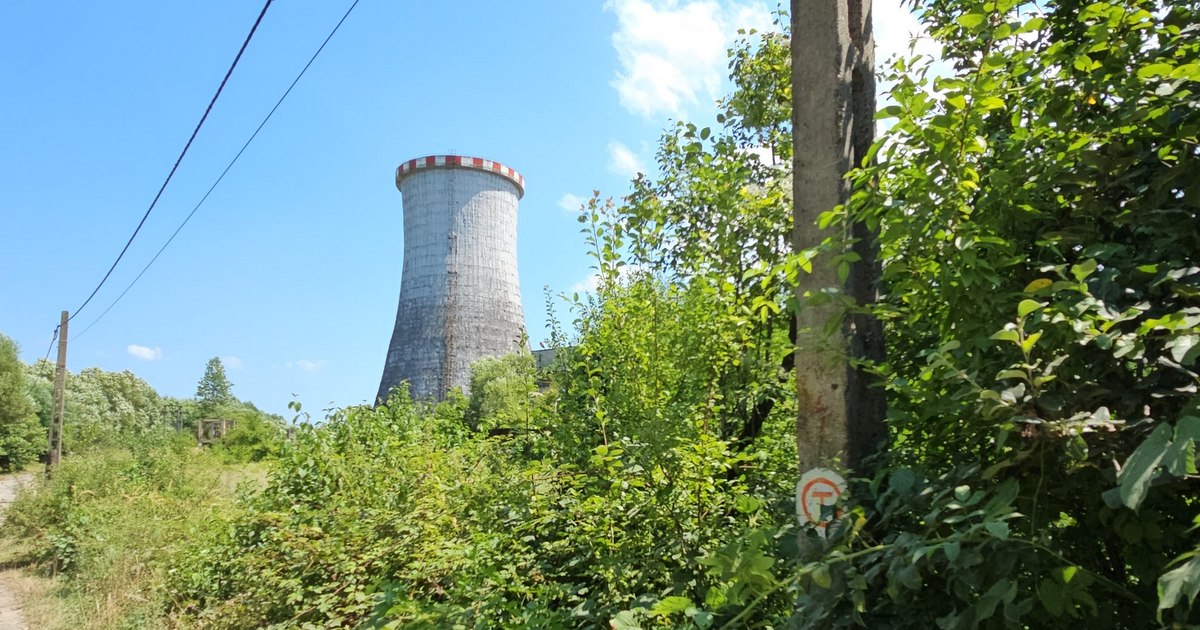
Banatul Montan, one of the richest regions in natural resources of Romania, has reached a dramatic situation, which is observed and described by Alin Ușeriu, one of those who explored it.
Red Otelu, crossed by Earth Banatica. Photo: Daniel Guță. TRUTH
Alin Ușeriu, the founder of the Tășuleasa Social Association, who in 2018 launched the project Via Transilvanica, described the problems on Earth Banatica, one of the most spectacular sections of the tourist route.
Part of the hiking route that crosses 1,400 kilometers from the north to the south of Romania, Terra Banatica comprises more than 230 kilometers. It starts from the Iron Gates of Transylvania, the legendary pass between the historical regions of Transylvania and Banat, following the former imperial route from Roman times, to Caransebeș (video), the city built on the ruins of the Roman settlement Tibiscum.
Then continues to Reșița (video), the city of the ancient metallurgical factories of Banat, and is sank in the lands of Banat Montan, which include former mining settlements established in the past centuries by Romanians and Swabians, but also secular forests.
“If you go through the forests of Terra Banatica, on Via Transilvanica, at one point you feel fully that the planet is alive. And you live in a forest that never ends, and you are part of it. Gagic, which would surely have given France in this place.says Alin Ușeriu, in a message published on his Facebook page, which has gathered thousands of reactions online.
At the beginning of the eighteenth century, when the Habsburg Empire began the massive colonization of Banat, its mountain area was largely a wild land, covered by forests and very little populated.
The natural resources of Banat Montan attracted here, along with Romanians, Swabians (generic term for German colonists from Swabia, Austria, Bohemia, Bavaria, Franconia), but also Czechs, Slovaks, Serbs, Hungarians and Jews.
“About 1700, here, after the Ottomans were withdrawn, it was wild. And then, the iron was pure gold. Nor could it be a more appropriate place from which this precious metal would be processed: the ore near, as you want enough water. They promised many advantages-and, at the peak, they were respected ”, notes Alin Ușeriu.
Habsburgs colonized the region in the seventeenth century
In the time of the Habsburgs, he adds, the inhabitants of the Banat region had to live like those in Transylvania, with the bacon held in a tower in a fortified church, where they had access once a week to cut from it and survive.
“And they did not have to defend themselves by the invaders, being under the protection of the emperor. So the Banat village has the walls in the middle of it and all the life was happening individually, in the back, where they kept their wealth,” Alin Ușeriu says.
When, in 1919, Banat became part of Great Romania, it was the richest region of the new country, he adds, and until 1989, the region continued to be advantageous by its resources and the tradition rich in mining, proudly receiving its epithet “E Frucea”.
From Banat is Fruncea, to deserted villages
The era of the steel (Video from Red Steel) It gradually and brutally extinguished after 1990, but the forests remained the great wealth of the Banat Montan. But the settlements here gradually began to depopulate, and many villages remained almost deserted.
“If, for example, we take Gărâna – which has a super brand through the jazz festival that turns 30 – it is as if Romania would have something very special inside: with quite many people from outside, who are called investors and who have repaired all the houses, without exception, from the villages there.
And if you want a tax receipt, you better leave you on the road than give it to you. But even so, unnatural, we would have had where to start. This is how Romania is like the rest of the Banat Montan: with empty villages, who have a few old people who work in a way that I do not think it is possible to work someone from the new generation. And, on the greatest heat, at noon, I do a field work that is rather for the titans ”, writes Alin Ușeriu.
Those who left the settlements in Banat come back a month a year, to repair and care for their homes, to spend with their family and close, and then return to the West.
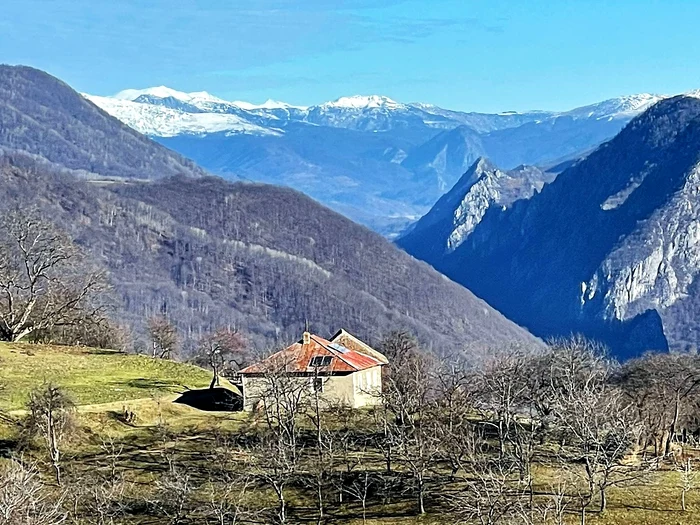
The village of Ineleț, almost deserted. Photo: Group via Transilvanica
“Because, now I know for sure: people have been driven from Romania. And without them, much can be done anymore”, Write this.
In some villages, like Glimboca, the hills are covered with ferns and, although they seem attractive in the landscape, they are the image of leaving these places, occupied in the past by thousands of cows and sheep.
The forests, exploited recklessly
The traveler compares the region with an almost empty palace, where people, proud, is almost impossible to accept the situation. And the Palace Park – Forest – remained the price resource that is intensely exploited, but often harmful.
“But I have already seen forestry cars with counties that I know too well, with equipment with diesel barks in red, yellow and blue, which do not get tangled in the details like it is a national park. The wood, without effort and without ecological disaster, now – with the sandy soil there – the lakes and channels are faster. add it.
The founder of the association that laid the base via Transilvanica advises the Romanians to go as often as possible on the paths of Terra Banatica.
“We need to start going from Severin on Via Transilvanica. The best option is to leave the bike there. If the hiker has to start from Putna, then the cyclists will have a very good experience with the other side. And I tell you that it is worth it.says Alin Ușeriu.
