
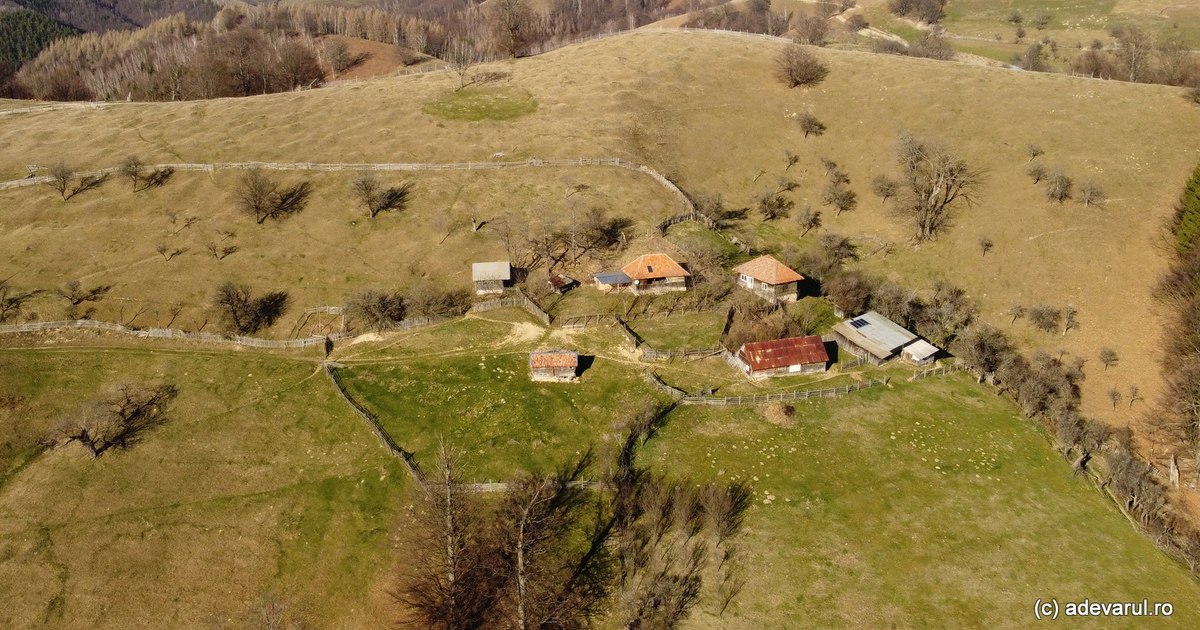
The Șureanu Mountains hide some of the oldest pastoral settlements on the territory of Romania, but the villages that took their place, appreciated for their archaism, are on the verge of extinction.
The Șureanu Mountains are crossed by several tourist routes, the most popular being the Via Transilvanica, a hiking route that crosses the pastoral hamlet of Măgureni, the Godeanu – Sarmizegetusa Regia area, the Luncanilor Platform, Târsa, Poiana Omului and Fundătura Ponorului, then descending into the Streiului Valley, at the foot of the Retezat.
The village school that disappears with the tradition of sheepherding
The popularity enjoyed by the Via Transilvanica project brought many tourists to the land of Dacian fortresses and archaic stables in the Șureanu Mountains. But the attractiveness of the area was not enough to convince the locals to stay in the mountain settlements like Urșici, Târsa, Cioclovina – on the Luncanilor Plateau, or the Măgureni or Ponorici hamlets, all founded by shepherds.
In Urșici, a pastoral village located over 1,000 meters in the Șureanu Mountains, the wooden building of the old school, established in the middle of the 20th century, reminds that in the past the settlement was animated by children’s voices. The school’s first teacher arrived here in 1943, and from then until the 2000s, the local school functioned, for fewer and fewer students. Some old accounts from the 1950s mention the construction of the school on top of the mountain.
“The school was built in the “center”, at an equal distance from each group of houses. It’s brand new. There were no schools here, nor in Ursici, the village that can be seen all at once, on that peak in the mountains, and it is 20 km to Boşorod. Looking at her and remembering the narrow and steep road on which you can hardly lead a halter horse, I felt a deep emotion overwhelm me; it was as if I saw the people of this end of the world carving, collecting lime, gelling and, above all, climbing on their shoulders and in their arms, six kilometers of hard climbing, this whole building, just so that both they and their babies could lean over the alphabet! Even here, and at Ursici, the people of the place climbed with their backs, to the top of the hills, the bricks and lime, the glass and the carpentry, the benches and the boards; they carried the carved beams and rafters on their shoulders, and in their palms, so they wouldn’t get wet or dirty, the maps, catalogs, pictures of animals and stuffed birds”, publicist Dragoș Vicol recalled.
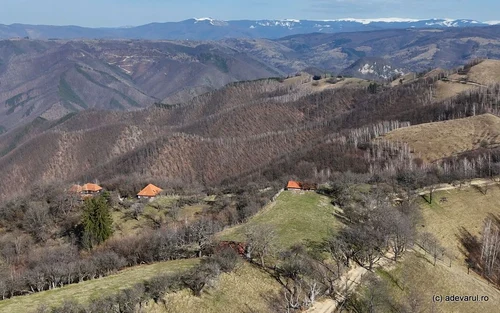
Urșici village was founded by shepherd families who settled on the Luncanilor Platform, and in the middle of the 20th century it had over 200 inhabitants. The old school was the center of the archaic community, with households scattered on the hilltops, sometimes several kilometers apart.
“We didn’t have a church and we had to walk two to three hours to the church in Luncani and even further, to the one in the village of Târsa. But there was a school. However, it was abolished, because there were about eight families left and there are no more children. I went to school here. My parents would send me with the books in my backpack and, after I finished the lessons, I would go to the sheep. There, I would put the books on my knees and learn”said a local.
Four or five families still live in the village of Urșici in the Șureanu Mountains, a settlement that is slowly disappearing along with the shepherding tradition. The village was not electrified, the road to the village remained unmodernized for the last ten kilometers that go up from the Luncanilor valley (Boșorod commune), the utilities did not arrive, and the solar panels installed on the houses in Urșici do not provide enough energy for the needs of the households during the winter. The village streets can cause problems for those who drive up here, due to potholes, landslides, fallen trees and steep slopes, and wild animals often cause damage.
The Șureanu Mountains, the land of the Dacian herds and fortresses
The number of local residents dropped to a few hundred in all the villages of the Șureanu Mountains, mostly included in the territory of the Grădiștea Muncelului-Cioclovina Natural Park, with an area of almost 40,000 hectares.
The mountain settlements have ancient origins, being established in the land of the Dacian fortresses, rich in valuable archaeological sites, such as the ancient capital Sarmizegetusa Regia, the Dacian fortresses and fortifications, the Roman forts or the medieval tower of Crivadia.
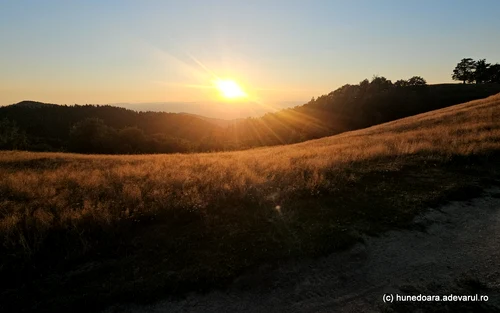
The most precious natural resources of the park are the forests, which occupy almost 70 percent of its surface and extend into the surroundings, on the slopes facing the valleys of Streiului and Mureșului.
Romanian military camps little known by Romanians. There are testimonies of the wars between Dacians and Romans VIDEO
The karst relief that dominates the Șureanu Mountains has favored the appearance over time of numerous spectacular natural monuments. Here are the Bottom of Ponorului and Ponorici, the Bolii, Șura Mare and Cioclovina caves, some of which have been inhabited since ancient times, the gorges of Crivadia, Băniței and Tăia, the mountain plateaus of Vârtoape, Luncani, Troianului and Comărnicelului, the Šipote waterfalls and Valea Rea-Cioclovina, but also the numerous ponos formed by the streams that cross the wild lands of Șurean.
People have animated these places since ancient times, and the pastoral settlements that adorn the mountains, although increasingly depopulated, remain the most attractive places of the Șureanu Mountains.
“People lived in the past especially on the gentle hills specific to this area, and where the slopes were too steep, extensive, impressive terraces were developed, many of which were swallowed up by the forests. Nowadays, scattered or clustered households can still be seen on the slopes and hilltops, often above the clouds. Although many houses are made of brick, old wooden dwellings can still be found in the villages Costești-Deal, Târsa, Prihodiste, Alunu, Cioclovina, Fizești, Federi, Merișor and Bănita”, shows the reservation administration.
The plateau of the Luncani, the ancient land of the sheep
The Luncani Plateau in Hunedoara, a separate land of the Șureanu Mountains, has been inhabited since ancient times, archaeological findings show.
In its extent of more than 20,000 hectares, the mountain platform comprises hills and mountains with heights of 800–1,400 meters, bordered by the deep valleys of the Strei, Luncani and Grădiștea rivers and mostly covered by forest.
In its center is the village of Târsa from Hunedoara, a settlement with less than a hundred inhabitants, founded by shepherds at the crossroads of the plain roads that connected the most important Dacian fortresses.
“Traces of Dacian fortresses and settlements are spread over the entire platform. In the village of Târsa, traces of a Roman camp and some Dacian civil settlements were found”informs the ethnologist Lucia Apolzan, who researched these places for over a decade.
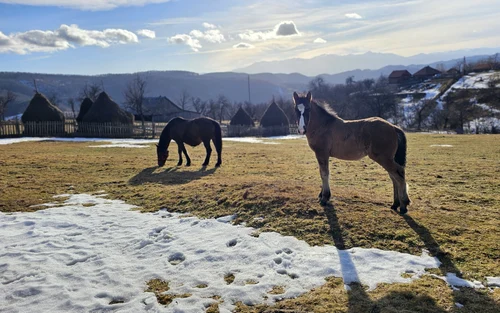
Near Târsa, at over 1,000 meters above sea level, Poiana Omului is an old communication node of the shepherds in transhumance from the lowland areas of the Carpathians to the alpine meadows of the Retezat, Șureanu, Parâng and Cindrel mountains. From Poiana Omului, other mountain roads, followed by shepherds and tourists, lead to Vârful Godeanu (1,659 m), the “holy mountain of the Dacians”, which rises above Sarmizegetusa Regia, or descends to Funătura Ponorului, also called “God’s Palm” for its beauty, and to Funătura Ponoriciului, which competes in the preferences of tourists.
Lined at the foot of the Godean, the peaks of Rudele, Meleia and Tâmpu were studded with seasonal Dacian settlements, which could only be inhabited for a few months a year, the rest of the time remaining under the snow. However, some scientists have shown that they functioned as Dacian stables or even as settlements related to the exploitation of some iron deposits in the area.
Villages in Orăștiei Mountains, magnet for tourists. How the land of the Dacian fortresses was transformed VIDEO
Animal breeding, ancient tradition
On the same plateau of the Luncani, the villages of Cioclovina and Ursici, with households scattered on the hills, have preserved their archaic appearance from more than a century ago, and other hamlets, almost deserted, also remind of the traditional occupation of the locals from ancient times.
“The main occupation of the inhabitants of the area is raising animals. The traditional elements, combined with modern techniques introduced to ease the work, have remained testimonies intended to attest to the antiquity of this occupation. The territory, in the past almost exclusively pastoral (the people of Luncăne being known as sheep), currently knows the introduction, in addition to cattle care activities, of agricultural occupations, through the cultivation of plants (corn, rye, potatoes, etc.) and utilization of fruit trees”, show the representatives of the reserve.
The pendular herding is practiced in the flocks located in the nearby mountains: Retezat and Șureanu. Beginning in May, families muster their cattle and sheep, sending them to the nearest sheepfold, a day or two’s walk away. Between May 15 and June 1, the herds climb to the mountain, and between September 1 and October 1 is the period when they come down from the mountain.
Numerous barns dot the Șureanu Mountains, and some have become tourist attractions. The closest to the tourist routes and local roads are those from Poiana Omului, Chicerii Vf., Porumbelu, Rudele, Steaua Mare, Scârna and Godeanu. Next to them, the mountains are dotted with numerous houses, also called huts or mansions.
“There are, in fact, other houses, of a temporary nature, belonging to the locals, located in the areas of meadows and mountain hay. These households are mainly used from the beginning of the pastoral season, in the area making the necessary hay for the winter season”, says APNGMC.
The villages that can be found near the tourist routes are: Chicera, Fundătura Ponorului, Ponorici, Bulzu-Paltinu and Ponoare-Porumbelu.
