
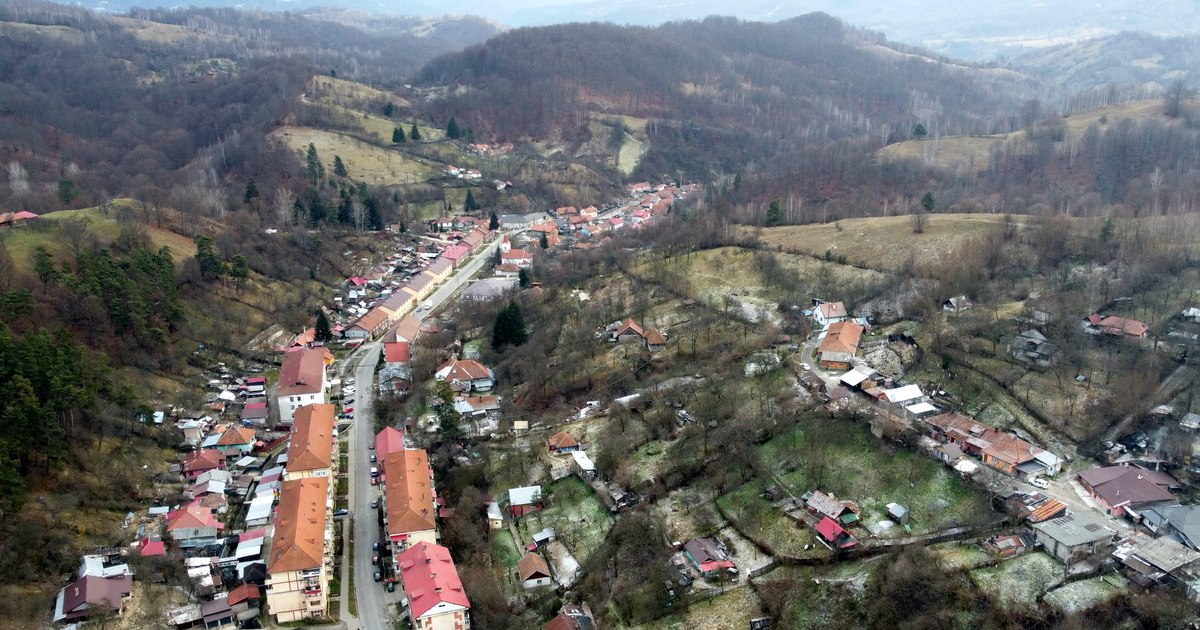
Three years have passed since the earthquakes that “hit” Aninoasa, one of the poorest cities in Romania. Several families continue to live in metal containers, used as temporary housing after being evacuated from run-down blocks.
About 4,000 people live in the town of Aninoasa in Hunedoara County, a former mining center in the Jiului Valley, developed around a coal mine that operated for over a century, until 2006.
The city struck by bad luck
Two decades after the closure of mining, Aninoasa remains one of the poorest towns in Romania, with a generally aging population and few local companies that can offer jobs to young people.
The closure of the mine was not the only setback for the residents of the town in Valea Jiului. On February 13 and 14, 2023, several earthquakes affected the locality, further shaking the old blocks, which remained unrepairable, from the Aninoasa worker colony, established at the end of the 19th century.
Some of the colony’s more than 20 storied buildings, neglected over time by the authorities and their tenants, were in danger of collapsing. The problems have been flagged for several years, when snowfall led to the collapse of several roofs and damaged the ceilings of buildings, but the effects of earthquakes three years ago mobilized the authorities.
Then, the County Committee for Emergency Situations (CJSU) Hunedoara announced the need to evacuate more than 400 locals from the colony, from the degraded homes.
“The technical condition of the buildings, built over 100 years ago, was never interfered with, so now, for the 182 families, the evacuation procedure must be applied”, inform CJSU Hunedoara, on February 22, 2023.
Life in a container
40 containers used as temporary housing were brought to Aninoasa, 11 being placed in the yard of the local high school, and the others in the yard of the former coal mine, closed for good in 2006. At first, almost 20 families moved into these boxes, fearing that a new earthquake will endanger their lives if they stay in the old buildings, with a fragile resistance structure. Over time, however, the number of tenants in containers decreased.
Some families could not stand the conditions in which they had to live.
“The space is small, we suffocate from the heat in the summer, it’s very cold in the winter and we get sick. When it rains, the water drains into the container. We don’t have a bathroom nearby. With a family and children, you can’t last long here”recounted a local woman moved into a container located in the courtyard of the high school.
Other families have found other housing more suitable for their needs, some preferring to return to the dilapidated buildings of the old colony. Some died in temporary housing.
“Four people have died in the three years since they moved us here”says a local woman.
Three years after the earthquakes, a few families continue to live in the metal boxes located in the yard of the city’s high school and in that of the former mine, waiting to receive social housing. The school facility’s gym and its bathrooms are shared by local residents and students.
In 2023, the Romanian state allocated funds for the emergency construction of 100 such homes in the city of Aninoasa, where the families from the vulnerable buildings of the old colony would be relocated.
“Three blocks are 99 percent complete and work is underway to erect three more,” recently stated the mayor Nicolae Dunca.
However, none of the blocks were completed, not having the necessary utilities for living. At the most recent meeting of the City Council, on February 12, the mayor again asked the people to be patient, two to three months. Some have resigned themselves to the status of “sinister”, but others say they can no longer resist.
“I’ve been staying here for three years. I sleep with the rats in the house and on the window. I can’t anymore. I’m afraid,” complained a local woman.
Some residents of Aninoasa claimed that they wanted their town to return to a commune, as it was before 1989, hoping that this would reduce administrative expenses and taxes.
