
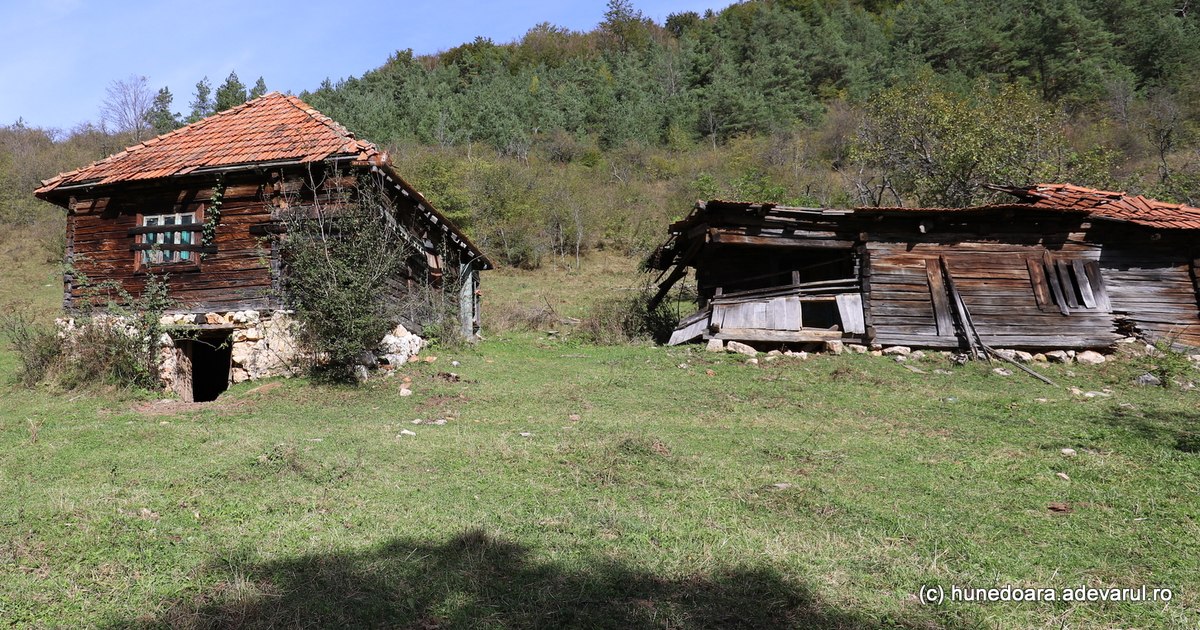
With the arrival of autumn, the hamlet of Ponorici in the Șureanu Mountains is abandoned by the few shepherds from the surrounding villages, who come here with their animals. The place, much livelier in the past, now with ruined houses, has inspired some strange legends.
Deserted houses from Ponorici. Photo: Daniel Guță. TRUTH
The village of Ponorici in the Șureanu Mountains (Hunedoara), located at about 900 meters above sea level, has been abandoned since the past decades, but the locals from the villages of Federi and Cioclovina, close to the settlement, bring their animals here during the summer.
Autumn, in the Ponoriciului meadow (video – truth), travelers can also meet the shepherds who pass through this place with their flocks of sheep or with their cows and horses left free to graze on the banks of the Ponorici stream, which forms numerous loops before disappearing under the mountain, to then emerge, at two or three kilometers, through the mouth of Cioclovina Cave.
The few old wooden houses, built on solid stone foundations more than a century ago, gradually fell into ruin. In recent years, the buildings have been used as animal shelters, which hastened their deterioration.
On the surrounding hills, surrounded by forest, the stables of the villagers of Federi are also abandoned, at least until the spring of next year. The former village of Ponorici, located in the center of a picturesque mountain landscape, was very lively a century ago.
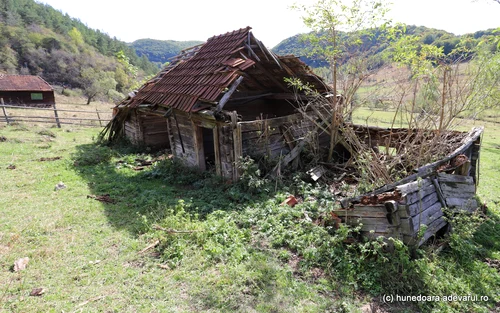
Image 1/17:
Ponorici Șureanu Mountains Photo Daniel Guță THE TRUTH (16) JPG
Although abandoned for most of the year, the hamlet of Ponorici in the Șureanu Mountains remains an attractive place in the Grădiștea Muncelului Cioclovina Natural Park. Several things make the Ponoriciului meadow a completely unusual place.
Prehistoric people lived in the Cioclovina – Ponorici caves
The oldest traces of habitation of the land in the Șureanu Mountains were discovered in the underground galleries of the Ponorici – Cioclovina karst system, which stretch over a total length of over eight kilometers (video – Luncani stream – Cioclovina cave)
At the beginning of the 20th century, during the mining of guano-phosphate inside the caves, the locals found a human skull about 30,000-40,000 years old. Scientists who studied it recently concluded that it belonged to a caveman who had been killed in a confrontation by being struck with a hard object.
In other underground rooms, the speleologists found precious treasures, composed of over 6,000 objects of bronze, amber, glass and earthenware. The pieces would have been deposited as offerings, several thousand years ago, in a sanctuary established underground.
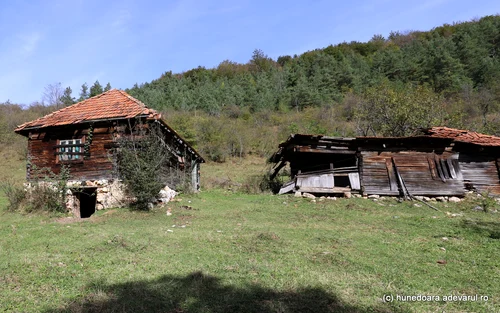
Image 1/10:
Ponorici Șureanu Mountains Photo Daniel Guță THE TRUTH (20) JPG
Travelers can reach the entrance to the Cioclovina Cave by climbing the valley of the stream that descends from it, in waterfalls, towards the Luncanilor valley from Hunedoara.
The entrance to the Ponorici Cave is found in a several tens of meters deep ravine, on the opposite side of the mountain plateau, where the stream flows under the mountain walls.
The Dacians built a huge wall at Ponorici
The remains of an ancient wall stretching for more than two kilometers can be seen in the forest that covers the peak of Chiciura (1,022 meters), which rises above Ponoriciu. The fortification gives clues to the importance the ancients attached to this place.
According to archaeologists, the defensive system stretched above the Cioclovina and Ponorici caves, close to the Dacian fortresses Piatra Roşie and Sarmizegetusa Regia, Poienii Omului and other densely inhabited settlements in the Dacian land. The complex wall would have been built by the Dacians to defend the fortresses, especially Sarmizegetusa Regia, against a Roman invasion initiated from the south of the country, through the Streiului valley.
Locals called it the “Trojan”, and some archaeologists recently showed that it had a much larger extent compared to the one that could be observed during the first archaeological researches, conducted in the 50s, by the historian Constantin Daicoviciu.
The railway intersects with the Trojan
It showed that the Trojan had a thickness at the base of about 10 meters and heights of up to three meters. Its more than 30 secondary waves, arranged from piles of stones, were about six meters thick and up to 36 meters long, being raised at distances of 18-35 meters between them.
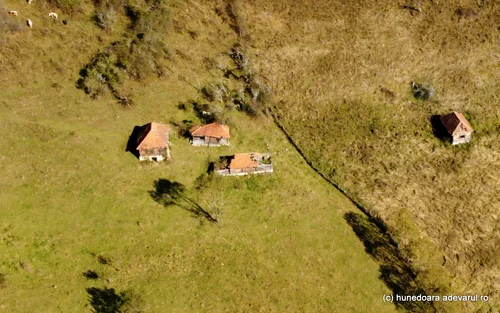
Image 1/10:
Ponorici Mountains Șureanu Photo Daniel Guță THE TRUTH (35) JPG
“Obviously, we are dealing with a dry wall made of pieces of calcareous rock and very little earth, held together on both sides by a wooden palisade, possibly by a woven fence. By burning the palisade, the stones were calcined, the ground between them reddened and the upper part of the Trojan collapsed. Obviously, the original thickness of the wave with the palisade could not have been greater than 2-2.50 meters. What is seen now is only the result of the collapse of the Trojan”, wrote the scientist.
A century ago, a forest railway descended from Ponorici hamlet, Pui village, the center of one of the largest communes in Hunedoara county. At Ponorici, the narrow railway intersected with “Troianul”, the great ancient defensive wall, which archaeologists assumed was used as an outpost against a Roman invasion initiated from the south of the country, through the Streiului valley.
Its end was near the precipice of Cioclovina (video). Here the trains stopped and turned, descending slowly along the “Trojan” and then through the hills furrowed by sharp curves to Pui station.
The railway would have been used both for the transport of logs and, after the Second World War, of the guano-phosphate fertilizer extracted from the caves of Cioclovina.
Above the valley through which the waters of the Ponoriciu flow in loops, then disappearing under the mountain, the bodies of the funiculars circulated continuously, also bringing guano-phosphate (bat dung and sediments) from the Cioclovina Cave, to the Pui station, from where the fertilizer was loaded into wagons and transported to the grinding mills.
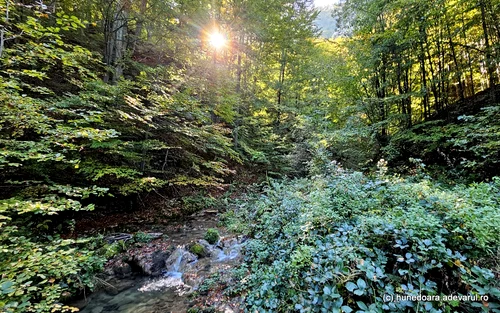
Image 1/10:
Ponorici Șureanu Mountains Photo Daniel Guță THE TRUTH (46) jpg
The Ponoriciu railway and the cable car lines were abolished after the Second World War, leaving behind the embankment, used by the locals as a path, and some foundations of the old iron constructions, which supported the cables and funiculars.
Another strange story about Ponorici hamlet was told by the locals of Cioclovina village, located on the other side of the mountain. Some old graves from the mid-20th century, hidden by the brambles around the entrance to the Ponorici cave, have led some villagers to believe that the place is haunted.
“People were afraid to stay in Ponorici after dark, because of the undead. They returned to Cioclovina with cattle, although some also had residences in Ponorici. Slowly, slowly, the hamlet was abandoned – the world retreated to more accessible areas, and here only the huts where the animals were kept remained“, recalls a local from Cioclovina.
The story of graves bypassed by locals no longer scares people. Now, however, wild animals increasingly “haunt” Ponoriciului Meadow, but animal breeders are not afraid of their presence.
