
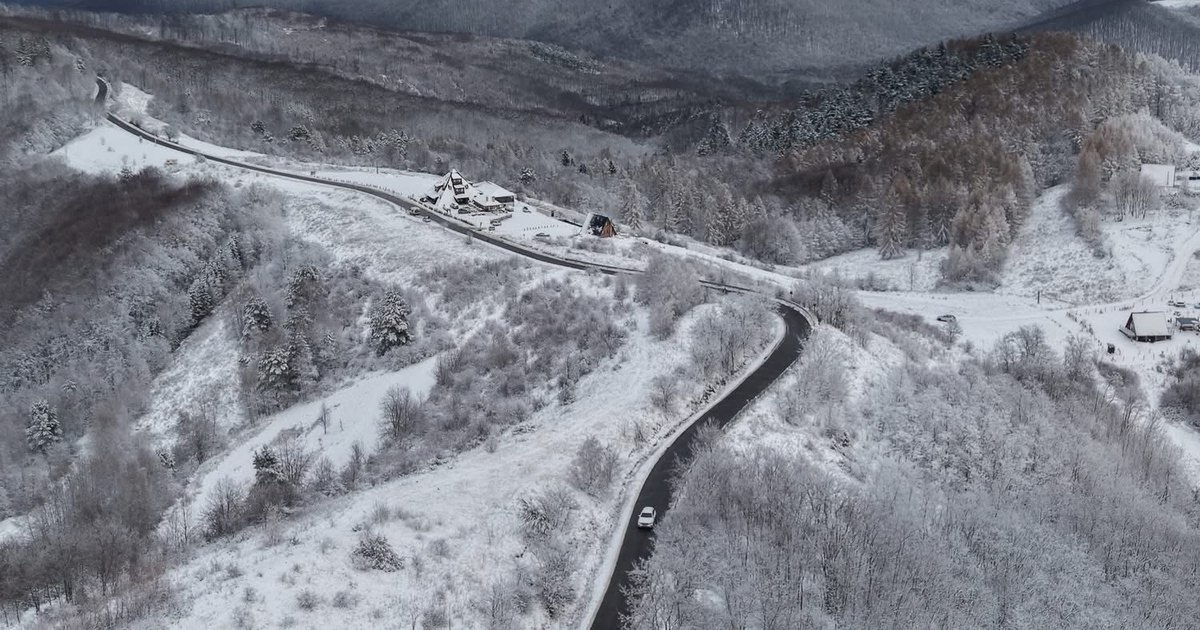
Although Transalpina and Transfăgărășan, the most popular alpine roads in Romania, remain closed until the beginning of summer, those who want to explore the mountain landscapes by car can do so on several other roads that are almost as spectacular. One of these is the recently built Transapuseana.
Annually, for at least six months, Transalpina and Transfăgărășan remain closed to road traffic on their alpine sectors. Mountain roads built with great efforts to cross the Carpathians reach over 2,000 meters of altitude, passing through areas exposed to blizzards, frost and avalanches, so if they were to remain open, they would pose great risks to those who want to cross them.
Transapuseana, the winter alternative to Transalpina and Transfăgărășan
While waiting for the beginning of summer, the period when snow drifts can be removed from these roads, and ice and snow no longer cause problems for drivers during the day, lovers of car trips on the spectacular routes in Romania have several alternatives at their disposal.
One of the most popular is the new mountain road in the Apuseni Mountains, built in recent years and called “Transapuseana”. In winter, the route that crosses Alba county, connecting the cities of Abrud and Aiud, offers travelers a unique experience. From the alpine sector of the road, they can see the wild landscapes of the Apuseni mountains, adorned with natural monuments and picturesque archaic settlements, inhabited by generations of “moți”, mountain people accustomed to the harshness of life in the isolated places of Romania.
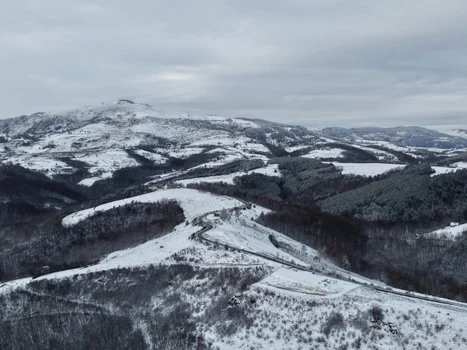
The road is cleared in winter, but authorities warn drivers to drive with caution, as it is steep and narrow in some segments.
“I come with the clear recommendation to go here over the winter only with winter tires and properly equipped cars,” Marius Hațegan, vice-president of the Alba County Council, said recently.
Transapuseana (County Road 107I from Alba county) was inaugurated in 2024 and became, in a short time, one of the most appreciated mountain roads in Romania.
The Apuseni road represented an investment of over 70 million euros, made with European funds, which aimed at transforming a local mountain road – with unpaved sections – into a modern road of almost 80 kilometers, connecting, over the ridges of the Apuseni, the towns of Aiud and Abrud. The road crosses the localities of Aiud (DN1), Aiudul de Sus, Rîmeț, Brădești, Geogel, Măcărești, Bîrlești Cătun, Cojocani, Valea Bărnii, Bîrlești, Mogoș, Valea Albă, Ciuculești, Bucium, Izbita, Coleșeni, Bucium Sat and Cerbu, in the vicinity of Abrudului, where it intersects with DN 74.
The emblematic places of the West
The Transapuseana climbs to over 1,100 meters above sea level, on the Apusenlori plains, where travelers had found patriarchal villages, with traditional households, scattered on the ridges of the snow-covered mountains.
Modern “A-frame” cabins, inspired by traditional mountain dwelling architecture, with high, pointed roofs designed to withstand storms and blizzards, have made way on the ridges in places once rarely visited by humans. The plains of Apuseni are gentler than those of Parâng and Făgăraș, which indicates the age of the mountains, worn down by the passage of time, but, from place to place, travelers can observe spectacular landforms, shaped by waters and geological phenomena, deep caves and steeps that fragment the smooth landscape of the mountains.
“Nowhere, in the other mountains, is there a more harmonious combination between the gentle line of the plains and the verticality of the relief breaks, nowhere is there such a concentration of natural phenomena and natural monuments, and nowhere has man linked his life so organically to the mountain, integrating so naturally into the natural landscape”, pointed out the authors of the Apuseni Mountains tourist guide in the 80s.
The Râmețu gorges are one of the tourist attractions on the Transapuseana route. Nearby, travelers can visit Râmeț Monastery, founded at the beginning of the 13th century, one of the oldest monastic settlements in Transylvania. The road to the monastery is currently unpaved, but will be rehabilitated in the coming years.
Closer to Abrud, travelers reach the Detunata Goală and Detunata Flocoasă reserves, located within the radius of the Bucium commune. The basalt columns of Detunata Goale rise to an altitude of about 1,200 meters, offering spectacular views of the Metaliferi Mountains, the Vulcan Mountains and Roșia Montane.
The two peaks have inspired, over time, numerous local legends about the “detonations” produced by the fallen boulders, amplified by the echoes of the mountains.
