
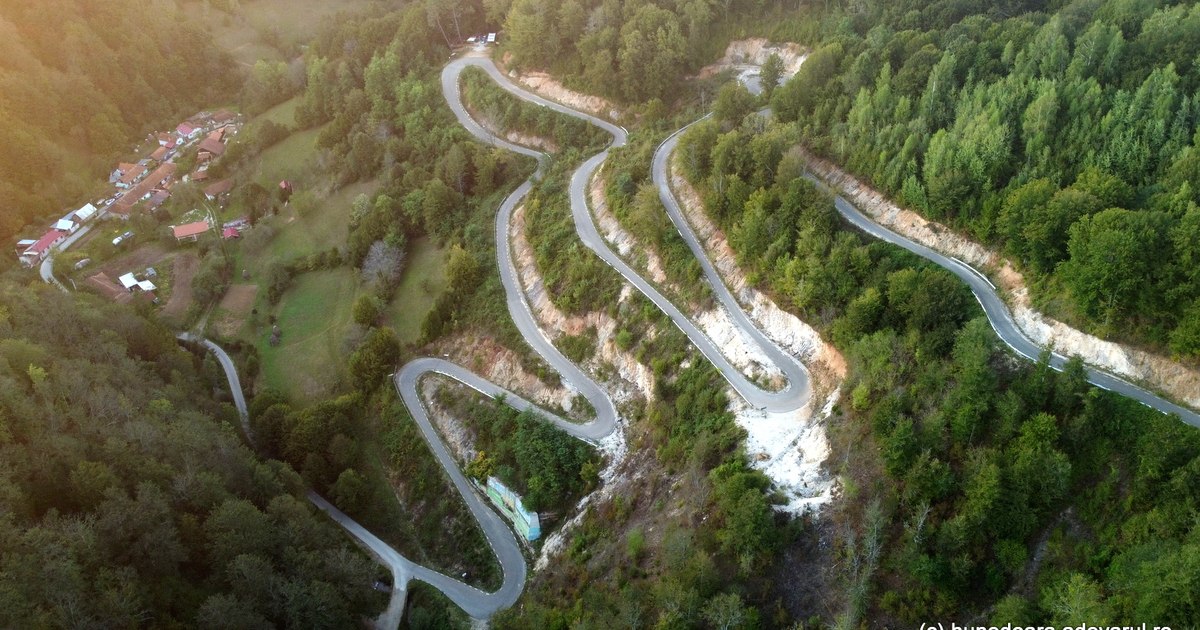
Transluncani, the mountain road in western Romania presented to tourists as a road that could compete with the more famous Transalpina or Transfăgărășan, has remained the same as in the year of its inauguration: a road that attracts tourists, but stops in the forest.
Transluncans. Photo: Daniel Guță THE TRUTH
Transluncans (video – The truth), a mountain road 5-6 kilometers long, was opened to traffic in 2019, and at its inauguration the Timiș authorities presented it as one of the most spectacular mountain roads in western Romania.
Its very name “Transluncani” attracted travel enthusiasts, and the serpentines and views offered by the wooded peaks of the Poiana Ruscă Mountains were also reasons to visit the area.
The mountain road from Tomești commune in Timiș – famous in the past for its glass factory – was built on the route of an old path that the locals from Luncanii de Jos used to climb with their animals on the meadows.
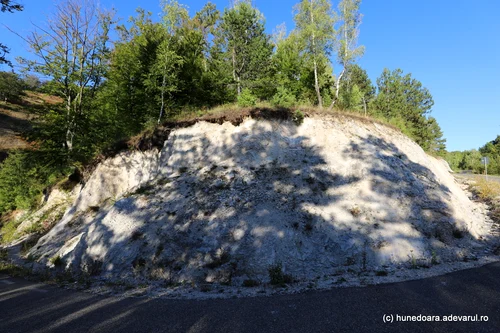
Image 1/17:
Transluncani Photo Daniel Guță THE TRUTH (29) JPG
“It was a shortcut you could take from the village. The old road passed through the forest owned by the state, and according to the law we could not build there. That’s how I chose the version of that path, about two kilometers long, and this road resulted. The work was very arduous. We actually worked on it for two years, we didn’t expect it to be so much rock. About 60 percent of the road surface is rock. It was not easy, we had many obstacles, but the builders managed to complete the project. But from the beginning I was sure that it would be a place of reference for Timiş county and the western area”recounted, in 2020, Costel Medelean, the mayor of Tomești commune.
The paved road, continued by an impassable road
One million euros cost the road officially called “Oboarele agricultural road” and known to tourists as Transluncani. It leads to a mountain plateau at an altitude of about 800 meters, where travelers find a place of recreation and a few holiday homes.
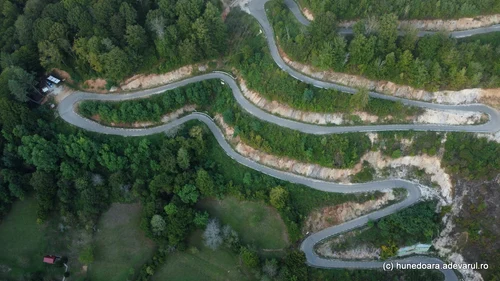
Image 1/16:
Transluncans, aerial images, photo Daniel Guță THE TRUTH (12) JPG
From here you can admire the ridges of the Poiana Ruscă mountains, and in the distance you can see Vârful Padeș (1,382 meters), the highest of the massif, located on the border of Hunedoara, Caraș-Severin and Timiș counties.
Then, the paved road descends steeply into Valea Lupului, where it intersects with a dirt and stone county road. But the road in the valley remained inaccessible to cars, being used by forestry equipment.
Its rehabilitation would open the way for tourists from Timiș county to Ruschița, the village in Caraș Severin county with the most famous marble quarry in Romania, located 12 kilometers from Transluncani.
The route to Ruschița starts up the Lupului stream, while in the opposite direction the travelers descend on the same county (forestry) road, on the course of the Lupului stream that flows into the Bega Luncanilor river, at the entrance to Luncanii de Jos.
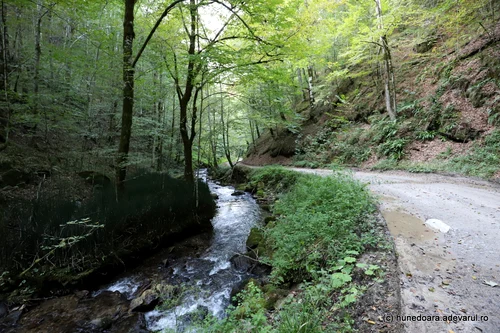
Image 1/15:
Transluncani Photo Daniel Guță THE TRUTH (45) JPG
Like Transluncani, other roads in the Poiana Ruscă Mountains, located on the border of Hunedoara, Timiș and Caraș-Severin counties, stop in the middle of the forest, where they can no longer be crossed by cars.
One such route is the “Marble Road” which goes up the Cerna valley from Hunedoara to the border of Hunedoara and Caraș-Severin counties. The road was built a decade ago in Hunedoara county, up to Lunca Cernii de Jos commune.
From here, there are less than ten kilometers left to be paved to the Rusca Montană commune, and to be accessible, even unpaved, a sector of about two to three kilometers, from the border of the two counties in the “marble road” would must be rehabilitated.
In Caraș-Severin, the road that plunges into the Poiana Ruscă mountains, crossing the towns of Rusca Montană and Ruschița, also stops in the wilderness, at the foot of the marble quarry. From here, it is continued by other forest roads, which cross the mountainous terrain at the border of the three counties.
