
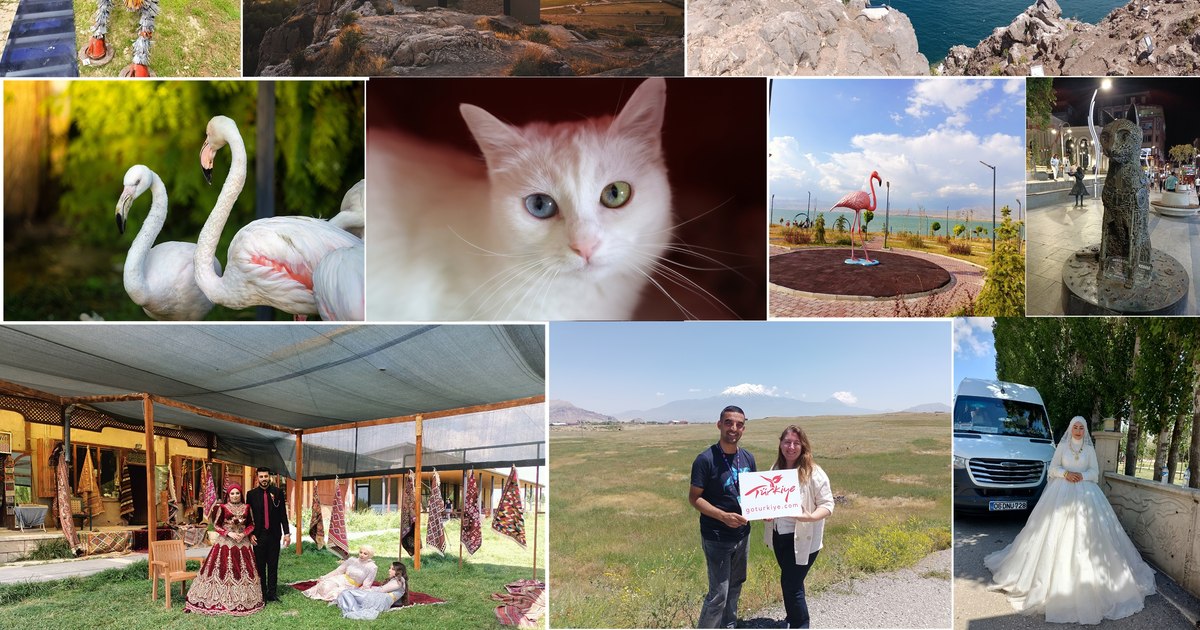
In an impressive volcanic landscape, close to Turkey’s borders with Iran and Armenia, lies Lake Van, remarkable for its high salinity and alkalinity, as well as its vast surface area, often being compared to the Dead Sea. This is a tectonic lake with a unique geological history.
Fascinating attractions of Turkey’s Van area Stoica Dacian Collage for Truth
Turkey means more than its coastline or the mysteries of Cappadocia. On the shores of Lake Van, a fascinating world of historical, architectural, cultural and natural wonders awaits to be discovered.
The Kingdom of Urartu, an ancient and mysterious civilization, of which today only fragments of its glorious history are known, left behind in this region impressive ruins of amazing castles and fortifications, with sturdy walls, cuneiform inscriptions and vestiges that still arouse the curiosity of archaeologists . The Urartians had advanced knowledge of construction and agriculture, creating sophisticated irrigation systems and making stunning jewelry, elaborate weapons, and temples that reflected their beliefs.
The Van region is thus a place where history comes alive at every turn. From the irrigation canals of King Menua, still functional after millennia, to the legends of the underwater kingdom in the depths of Lake Van, this region continues to fascinate and inspire. Visitors can enjoy amazing views, historical sites and the hospitality of the locals who keep the local traditions and legends alive.
In a previous edition, we explored “The Mystery of Turkey’s Atlantis: The Thousand-Year Sunken City, the Mysterious Creature, and the Forbidden Island”focusing on the underwater treasures of Lake Van. We promised then that we would come back with new details about the wonders that adorn the shores of this vast lake, which stretches over more than 3,500 square kilometers.
So, let’s continue the journey and discover together the fascinating places that adorn the shores of the Dead Sea of Turkey.
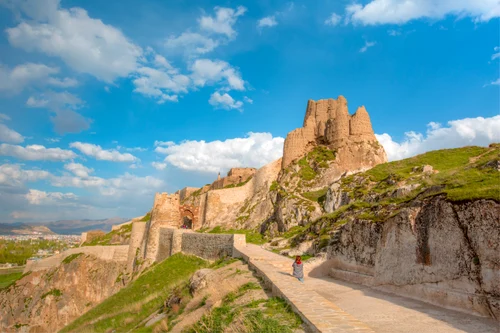
Image 1/37:
Van Castle in Turkey impressive heritage of the Kingdom of Urartu Photo Shutterstock
From Antiquity, to the present
The city and Lake Van represent the essence of an archaic world, retaining its authenticity and charm from time immemorial. The region around the lake hides the vestiges of some mysterious civilizations, including the Van Citadel, built in the former capital of the Kingdom of Urartu, Tushpa – the administrative and political center of the Urartians in the 9th-6th centuries BC.
Built on a massive rock, about three millennia ago, Van Castle functioned as a fortress-city, housing temples, palaces, tombs and storehouses, on an area of 46 hectares and two kilometers long, at a height of about 100 of meters. On its walls are ancient inscriptions, including one belonging to the Persian king Xerxes, attesting to a fascinating, still underexplored history.
Over the centuries, this impressive fortress was shaped and expanded by the various empires that ruled the region, each leaving their mark on it. After the decline of the Kingdom of Urartu, the fortress was used and expanded by the Persians, who contributed to its development. During the Byzantine and Arab periods, it continued to be an important strategic point, and during Ottoman rule it was transformed into a military garrison and further fortified.
A notable example from the Seljuk period is Ulu Cami, a 12th-century mosque, one of the few structures of the old city that have survived to this day, reflecting the mastery of medieval Islamic architecture.
The entire area was an essential trade hub on the Silk Road, connecting diverse cultures and civilizations. During the reign of Suleiman the Magnificent, Van flourished as a center of authority and commerce, becoming a symbol of the historical legacy that continues to influence all of Anatolia.
Discover other amazing places: Urartu Museum, rare cats and unforgettable adventures
In the immediate vicinity of the Van Castle is today the largest Museum of the Urartu Civilization in the world, an essential destination for history lovers. In the city of Van, animal lovers can visit the famous House of Cats, where rare specimens with different colored eyes and a special passion for water live – the Van cats.
A foray into the history of the Kingdom of Urartu would not be complete without a visit to Çavuştepe Castle (or Chavez Tepe), located approximately 25 kilometers from Van Citadel. Here, visitors can discover buried cisterns used to store wheat, oil and wine, signs of an advanced economy and a prosperous civilization. The construction technique of the fortress, intended to withstand centuries and attacks, impresses with its ingenuity.
In addition, the area offers a wide range of unforgettable activities such as boating, swimming and fishing. The spectacular scenery around Lake Van is ideal for hiking, and nature lovers can observe the local fauna in its natural habitat.
The flavor of history: The fort and heritage on the shores of Lake Van
One of the unmissable experiences in the Van Lake area is the local gastronomy, with deep roots in the history of the civilizations that inhabited these lands. Van is the place of origin of the famous Turkish breakfast entered in the Book of Records.
On the shore of the lake, between the city of Van and Akdamar Island, where the famous vineyard of the Kingdom of Urartu is supposed to have existed, a special place dedicated to the celebration of the past has been created to restore its magic to the present. The menu is part of the Tariria cultural project – an initiative that aims to keep alive the culinary heritage of the region and bring it into the contemporary world. The Tariria brand plays an essential role in transforming the city of Van into a unique tourist destination, offering innovative experiences in culture, art and gastronomy.
Inspired by the legend of the love between King Menua and Tariria (his wife or, according to other sources, his daughter), the place combines traditional cooking techniques with elements of modern art, offering a special gastronomic experience. The project is housed in a spectacular building designed by renowned architect Kay Ngee Tan, known for his works in Singapore, including the Botanic Gardens and the University of Management.
The Tariria building impresses with its unique architecture, being the first of its kind in the region. The innovative column-free, fully glass-encased steel structure pays tribute to the rich history and culture of Van.
The value of sustainability in architecture
Inspired by the magic of the place, the Singaporean architect reimagined the hanging gardens built by King Menua for Tariria, recalling the legendary gardens of Queen Semiramis – one of the “7 Wonders of the World”. The terraces here create a perfect setting for savoring local dishes and simultaneously appreciating culture, art and nature.
Last summer, the Tariria building hosted an impressive exhibition by the Turkish artist Asaf Erdemli, who has exhibited in the past including at the Louvre in Paris and in Qatar. The works, exhibited in one of the halls of the building, were accompanied by an immersive immersive exhibition, part of the project “A Legend at its Peak”.
Inspired by history, mythology and legends, Erdemli revived the story of the fascinating Queen Tariria through works made entirely from recycled materials. Industrial waste, car parts and various household items have been transformed into unique sculptures (SEE PHOTO AND VIDEO GALLERY)keeping the original shape of the raw material, to embody beauty, courage and royal elegance.
Through furniture, weapons, clothing, statue heads, and natural form sculptures, Erdemli’s works illustrate not only the legendary figure of the queen, but also the dynamic spirit and vitality of the warrior women of that era. The exhibition, which I saw courtesy of the Tourism Promotion and Development Authority (TGA) of Turkey, provided a profound visual experience, bringing the myths to life. Historical tradition has been combined with a modern artistic vision of recycling and sustainability.
Through expressive details and authenticity, Erdemli created a subtle balance between the fragility of recycled materials and the symbolic strength of the characters, offering visitors an immersive foray into the world of legendary heroes and a reflection on the value of sustainability.
Van and Erçek: the paradise of biodiversity – the amazing flamingos
The Van Lake area is a corner of heaven for both nature lovers and ornithologists. Lake Erçek, located just 30 kilometers east of Lake Van, is a natural sanctuary where flamingos and other migratory species nest and recuperate on their annual journey. In this area, the avifauna is impressive, with 213 of Turkey’s 465 bird species observable in the Lake Van Basin, according to tourism authorities.
Flamingos, with their spectacular pink plumage and fascinating social behavior, are the most popular attractions. Both the lesser flamingo and the greater flamingo find the wetlands around the lake a perfect breeding and feeding habitat, turning the region into an oasis of biodiversity.
Lake Erçek is a unique ecotourism site where ornithologists and tourists can enjoy a rare natural spectacle. Although most flamingo birds migrate by July, their memory remains an unforgettable one. Conservation projects in the area help to protect this natural wonder, making Lake Van a special place to explore, with stunning natural scenery and diverse fauna.
For all tastes and all pockets
The best times to visit the Lake Van area are spring (April-June) and autumn (September-November), when the weather is mild and pleasant. Summer can bring very high temperatures, and winter is quite cold, with values that can occasionally reach below -30°C in the surrounding areas.
Turkey’s Dead Sea is easily accessible with regular flights to Ferit Melen Airport in Van from major cities. The area can also be accessed by road or rail, and travel on these routes offers spectacular views of the volcanoes that surround the lake.
For accommodation, the options are varied: from luxury hotels to cozy guesthouses and campsites around the lake, so visitors can choose according to budget and preferences.
Throughout the year, festivals and cultural events are organized in the lake area that highlight the heritage and natural beauty of the region. Participating in these events provides an authentic foray into local traditions and customs.
Lake Van is a destination that perfectly combines natural beauty, rich history and cultural experiences. Whether you’re exploring ancient ruins, enjoying the peaceful scenery or savoring local delicacies, the area promises an unforgettable adventure. With attractions for everyone, from history and gastronomy buffs to nature lovers, Van is a destination worth discovering. Far from the tourist bustle of other regions in Turkey, here time seems to have stood still, and the stories of the past intertwine with the reality of the present.
