
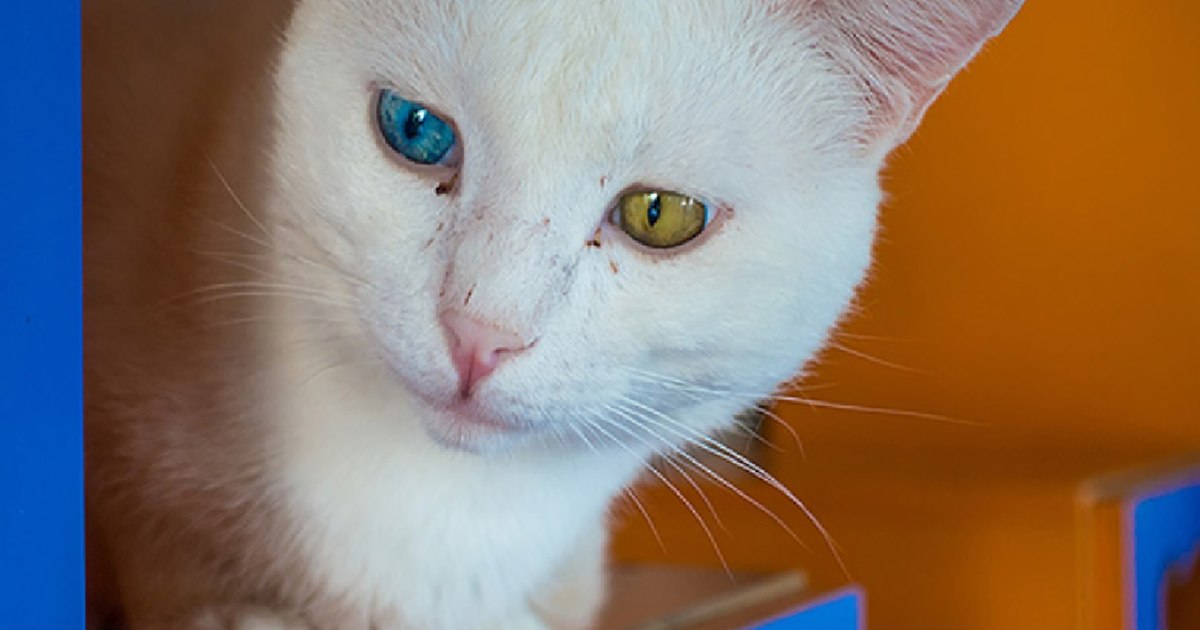
One of the famous symbols of the city of Van, in Turkey, is a unique breed of cats, known and admired all over the world. Van Turkish cats are notable for their silky white fur, distinctive eyes and their rare but fascinating passion for water.
We discovered them during a trip (SEE PHOTO AND VIDEO GALLERY) organized by the Turkish Tourism Promotion and Development Authority (TGA), in the east of the country, close to the borders with Armenia and Iran.
“Cats are classified into three categories based on eye color: blue-eyed, amber-eyed, and one blue and one amber eye. They are excellent hunters and renowned for their enjoyment of swimming. Visitors can admire these cats at the Van Cat Villa, located within Yüzüncü Yıl University in Van. The villa represents a special shelter (breeding and research center – ed.), designed to protect them from extinction”explained our guide, Adem Kocaman.
Van cats, as they are known worldwide, continue to fascinate with their unique abilities and their unusual behavior of enjoying water, traits rarely seen in other breeds.
Villa Pisicilor – Van Cat Villa – breeding and research center
The research center, which now houses more than 300 cats, opened its doors more than three decades ago, initially with just a few cats, at a time when the breed was on the verge of extinction.
Until 2021, taking cats out of the country was prohibited by law. Today, Van Cats cannot be taken out of the country without official permission due to their protected status. Under current regulations, owners must obtain a permit from the Ministry of Agriculture to export them.
Image 1/7:
The famous cats from the city of Van in Turkey Photo Daciana Stoica for the Truth
Cats can be adopted, and in Turkey it is also possible to purchase them on the open market. For example, last year a breeder was asking less than €150 for a kitten, but unfortunately, due to inflation, prices have risen since then.
Even Turkish President Recep Erdoğan gained popularity on social media after a photo of him petting a Van kitten went viral.
“Swimming Cat”
dubbed “swimming cat” (SEE VIDEO)this breed is distinguished by a rare trait: the passion for water.
These cats can often be caught swimming in Lake Van, the largest lake in Turkey and the Middle East and one of the largest saline lakes in the world.
“There is an exciting story about Tombi, a Turkish cat from Van, who became famous thanks to a unique skill: surfing. Tombi, known for her love of water, was captured in pictures and stories as she ventured out on a surfboard on Lake Van – extremely rare behavior among cats. Living in the Lake Van area, Tombi has become a symbol of the extraordinary passion that Van cats have for water. She has been filmed and photographed on several occasions, walking on the waves or swimming, thus attracting the attention of not only the locals, but also tourists and animal lovers from all over the world.”the guide Adem Kocaman told for “The Truth”.
Thus, Van cats are famous for their ability to swim and play in water, a behavior rarely seen among other cat breeds. Tombi’s example has become symbolic of this particular trait.
Happiness purrs around the globe
It is important to point out that the Turkish Van cat should not be confused with another famous breed from Turkey, the Turkish Angora. The two breeds evolved in different regions of the country and have distinct characteristics.
Although recognized as a distinct breed since the Middle Ages, Van cats did not reach the Western world until the mid-1950s, when they were discovered by two English women traveling through Turkey. They adopted two kittens and continued to travel the country with them.
Noticing their love of water and swimming, they decided to promote Van cats as a new breed. They took them to England where they started a breeding program.
British group “Governing Council of the Cat Fancy (GCCF)” was the first to officially recognize the breed in the 1950s and 1960s. Later, Van cats also arrived in the United States of America, in the period 1970-1980.
Origin, uncertain: from ancient Egypt, on Noah’s Ark
Although the most famous specimens of Van cats are completely white, some of them have brown, red or black spots on the ears, head or body. These cats are part of a natural and ancient breed that evolved in relative isolation in the mountainous regions of modern Turkey.
Recent research suggests that their true origins may be linked to Armenia, given that Van, part of the ancient kingdom of Urartu, was inhabited mostly by Armenians until the early 20th century.
Local tradition holds that the cats were part of the cargo of Noah’s Ark and that they left the ark when the waters receded and the ship remained in the area of Mount Ararat. Another version suggests that the cats came from an Egyptian strain, which was brought to Van about 3,000 years ago.
Historical studies also indicate that the breed may have existed in the Armenian mountains long before the arrival of Turkic tribes in the area. For example, there is historical evidence that mentions a named race “Armenian White”and King Tigranes II, who reigned from 95 to 55 BC, is said to have had a palace full of white cats.
Cats fishing in streams
Although the breed is today associated with Turkey, having been discovered and promoted in the Van Region, the remarkable feline breed remains a fascinating example of the history intertwined with the cultural heritage of Armenia and Turkey.
These cats remain relatively rare globally, even in their country of origin. Highly active specimens need lots of stimulation to stay happy. They love to play and are extremely curious, eager to explore their surroundings. Intelligent, they can be trained to do all kinds of tricks.
They are known to swim and play in the water, and some have been observed fishing in streams. They live up to 20 years, but, being a special breed, they are quite demanding, not recommended for families with small children. A 2021 study by the University of Helsinki ranked Van cats as the most aggressive of 26 breeds analyzed.
Moreover, in the Van region there is a famous story related to the Van cats and several monuments dedicated to them, including one made of wrought iron, located right in the center of the city of the same name. Another Van cat was immortalized on a plaque (statue) placed on the shore of Lake Van to celebrate the uniqueness and cultural importance of this breed in the region. The monument symbolizes the deep connection between the local community and these exceptional cats, considered an integral part of the natural and cultural heritage of the area.
Such initiatives underscore conservation efforts and local pride in this rare breed, known for its unique behaviors such as its love of swimming. The monument is also a tourist attraction, attracting animal lovers and visitors interested in the traditions and specifics of the region.
The Van cat breed is considered one of the most important cultural heritages of the province and a real treasure of Turkey.
