
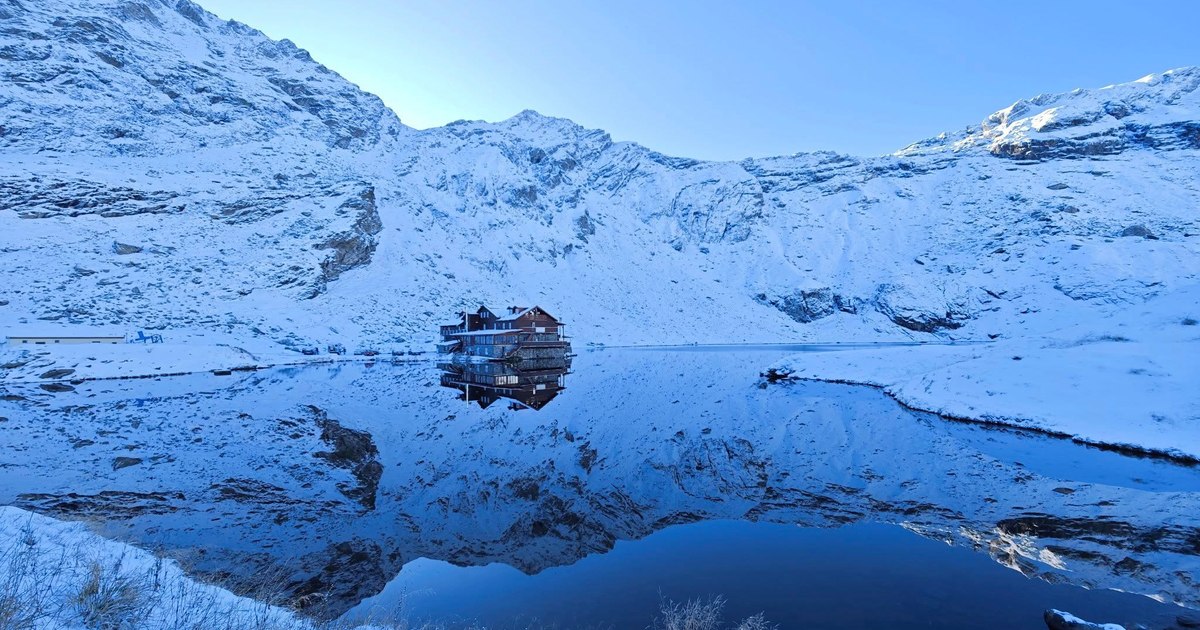
Hiking in Romania’s highest mountains is risky in winter due to unstable weather, strong winds and low temperatures. Several glacial lakes, the great attractions of the peaks of Făgăraş and Retezatu, remain accessible and entice tourists to discover them.
Bâlea Lake. Photo: Marius Turc. Facebook
In winter, the roads and paths in the mountains are increasingly difficult to cross, especially in the alpine areas, over which snow has fallen. Starting long and uphill routes involves more risks and requires some precautions, but also avoiding risky actions.
Travelers must take into account that daylight hours are shorter, and long routes increase the risk of darkness taking them far from places of refuge. The climate is harsher and more capricious, so weather forecasts should not be taken with complete confidence.
Mountain rescuers advise those preparing for mountain trips to pay attention to the quality of equipment and clothing, and to stay hydrated and fed, things necessary to regulate body temperature.
Beyond the caution with which winter mountain trips should be viewed, they offer hikers several benefits – they are a means of staying active, being considered invigorating and beneficial to health. They are also a means of enjoying the beauty of nature’s monuments, covered with snow. Several glacial lakes accessible in winter remain among the top mountain attractions in Romania.
Lake Bâlea, the “pearl” of Făgăraș
Lake Bâlea is one of the most popular glacial lakes to visit in winter. Located in the Făgăraș Mountains, at over 2,000 meters above sea level, the lake is one of the attractions of the land crossed by the famous Transfăgărășan road (DN7C).
During the winter, the mountain road is closed on the route between the Bâlea Waterfall and the Bâlea Lake, dominated by spectacular serpentines, but access to the vicinity of the glacial lake can be made with the cable car that goes up from the Bâlea Waterfall. Lake Bâlea has an area of 4.7 hectares, a length of 360 meters and a depth of 11 meters. It is surrounded by the sharp ridges of the Făgăraș Mountains, which together with it form a nature reserve.
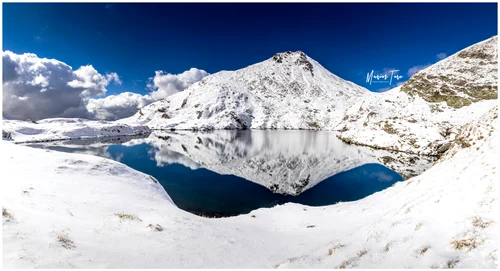
Image 1/6:
Fagaras Mountains Photo Marius Turc (6) jpg
“The landscape of a unique austere beauty is overwhelming both in summer and especially in the white season. Then the fascinating world of the frozen north moves here, with high, sparkling snows, hanging as if from the eaves of the heights that merge into the white of the ephemeral clouds. From the Neted Saddle – the accessible “gate” of the Arpişel Faunal Reserve – the view encompasses an endless succession of tall and winter-covered peaks, which hide complex glacial valleys, suspended or simple, sharp peaks and spurs, needles and massive towers neatly aligned on an alpine pediment with a Himalayan ridge. On the ice lake more than a meter high, the stalagmites of the frozen waterfall under the Bâlii Window”informs the Bâlea Lake website.
Capra glacial lake, harder to see
While Lake Bâlea remains accessible to tourists in winter, continuing the route to nearby Capra Lake is risky.
The glacial lake in the Făgăraș Mountains, located 45 minutes from Bâlea Lac, at an altitude of 2,230 meters, covers an area of 1.8 hectares and has a depth of 11 meters.
Access is from Lake Bâlea on the blue triangle route to Saua Caprei, where it continues with the main ridge route, red band, which passes by the lake (video Marius Turc, Facebook).
“Winter in the Făgăraş Mountains is very harsh, the avalanche risk being extremely high, even from the first snowfalls. Access is recommended only to highly trained climbers or tourists with full winter equipment – ice axes, ice ax, helmet, thick technical clothing – and only when weather conditions and snow conditions are optimal for ascent”. transmit the Transfăgărășan travel site.
Retezati, the land of glacial lakes
The huge caldera, lakes, glacial cirques (rocky basins with steep slopes, formed by the melting of glaciers), stepped glacial valleys, moraines and grottoes make Retezat the land that has preserved the richest and most widespread traces of the ice age. The most sought-after natural monuments in Retezat are the glacial lakes, most of them formed at altitudes of over 2,000 meters, through the accumulation of water from rain and snow and thanks to springs.
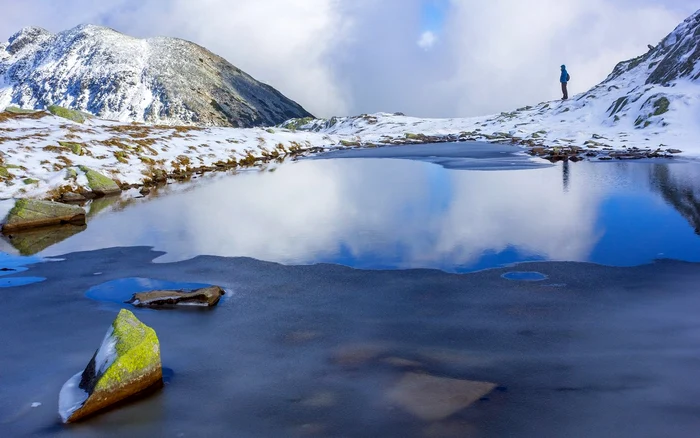
Retezat glacial lake. Photo: Lucian Ignat
In winter, only a few of the Retezat’s more than 50 lakes remain accessible to hikers. High winds, cold temperatures and thick snow can put even the most prepared hikers through their paces.
One of the most spectacular lakes to see in winter is Tăul Ţapului, located at over 2,000 meters above sea level, under the Closed Gates of Retezatu. The lake, with an area of 2.3 hectares, is distinguished by its grassy islet, but in winter it is mostly covered with ice and snow.
Tăul Ţapului in Retezat is protected by rocky walls, in a narrow caldera, and all the routes that lead here are tiring and require mountain experience. The most accessible of them starts from the commune of Pui, going up from the village of Hobita on the Bărbat river valley, to the Stâna de Râu refuge. From here, hikers can continue their journey on foot, past the Closed Gates of Retezatu and the Ciumfu Waterfall, towards the lake in the mountains.
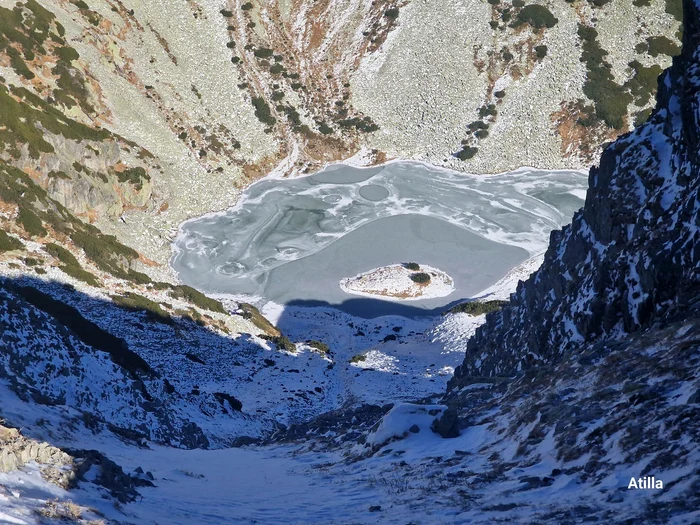
The Goat’s Calf Photo Attila Dobai
Tăul Tăpului from Retezat is fed by four springs and snow avalanches. It has a maximum depth of six meters and its waters flow downhill, giving rise to a waterfall. The lake was stocked in 1977 with trout, and marmots can sometimes be seen around it.
“It is said that a handsome prince, with bright green eyes, ruled over the expanses of Retezat. Because the prince did not love him, an evil witch turned him into a goat and threw him into a lake from a deep glacial caldera. The goat’s body gave birth to a small island in the middle of the lake, on which the two green eyes of the prince can still be seen.” show a local legend.
Winter mountain hiking tips
Mountain rescuers advise hikers to check the weather forecast in the area where they are traveling and the conditions for ascent on the mountain before embarking on mountain expeditions during this period.
“Never enter a closed area. Do not go out alone. Consult weather reports, avalanche forecasts and local information. Use appropriate materials and check their condition. Ask professionals for information: mountain rescuers, mountain guides, lodgers, ski instructors. Consider that there is no safe zone,” is the recommendation of Salvamont Romania, for those who want to travel mountain trails in winter conditions.
According to mountain rescuers, communication and navigation systems (compass, phone with GPS applications, map), appropriate clothing (waterproof equipment for rain or snow, thick sweater or fleece, hat and gloves, boots, snow guards, light clothing that won’t embarrass you and won’t make you sweat) should not be missing from the luggage of those who venture into the mountains in winter.
On the mountain trails, you also need a water bottle, food, a flashlight (with spare batteries), a first aid kit, a lighter and matches for a fire, a blanket that could be used as an emergency shelter, and a bag for collecting waste, which should not be thrown on the mountain.
