
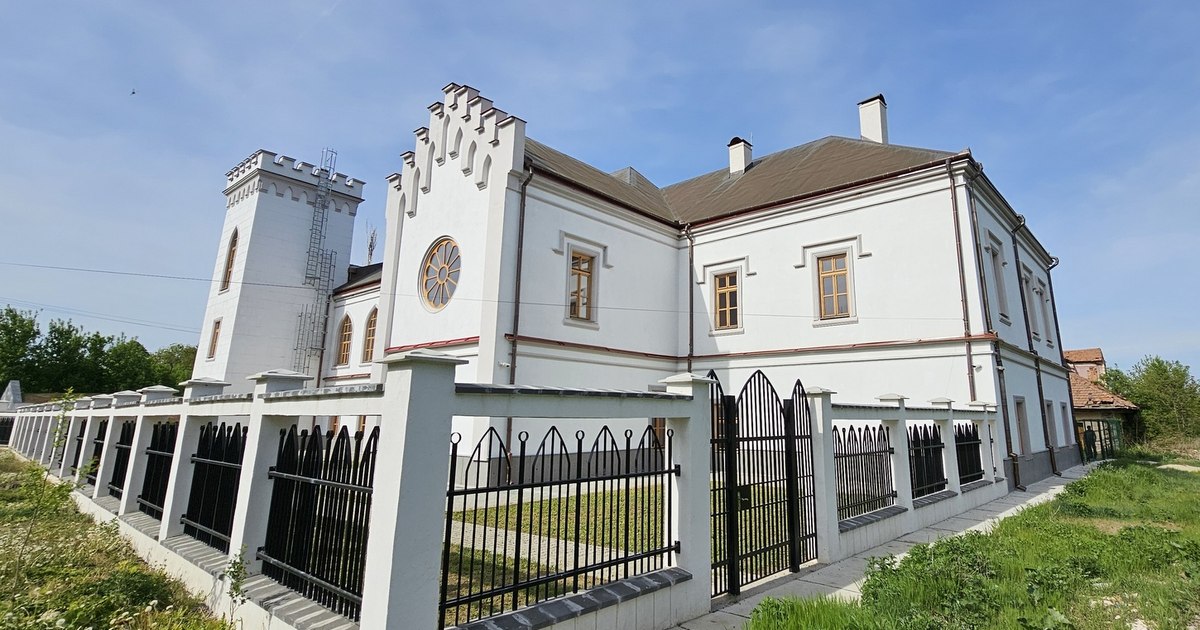
The works at the Nopcsa Castle in Hunedoara County are completed, and their reception is awaited, after five years in which the historic building was in the construction site.
Nopcsa Castle from Săcel. Photo: Daniel Guță. TRUTH
Nopcsa Castle in Săcel, Hunedoara, arrived in the 90s, after the school for children with special needs and the boarding school that operated here during the years of communism were closed. The locals devastated it, taking from it everything they considered valuable.
“Some broke the walls, not only to take the electrical installations, but also thinking that they would find hidden here the treasures of Baron Nopcsa, the former owner of the castle, since the beginning of the 20th century”recounted a local.
Restored in five years
Since the 2000s, the historic building (video), almost two centuries old, from Șara Hațegului, was put under guard by the Hunedoara County Council, but the restoration works of the monument only started in 2019.
Then, the former castle of the scientist and spy Franz Nopcsa (1877 – 1933), known as the discoverer of dwarf dinosaur fossils from Șara Hategului, entered the construction site, and the builders had 18 months to complete the investment.
The works cost over eight million lei, being financed by the National Local Development Program and from funds allocated by the Hunedoara County Council. Their reception will be held in the following days, claims Costel Avram, the public administrator of Hunedoara County. The Nopcsa Castle in Săcel will then be furnished and returned to the tourist circuit. Its annexes, old and dilapidated buildings, were not included in the restoration project that targeted the castle.
Until the 1920s, the castle located at the foot of the Retezat, about eight kilometers from Hațeg, belonged to the Nopcsa family, one of the richest in Transylvania in the past centuries. Nopcsa Castle in Săcel was one of the most luxurious period buildings in Șara Hațegului, an area where there are several former estates of noble families with origins in the Middle Ages.
Place of riots
In the First World War, the scientist Franz Nopcsa was a secret agent of the Austro-Hungarians, and the castle was used as a starting point for his dangerous missions, in the lands of Retezat, then the border area between Transylvania and Romania.
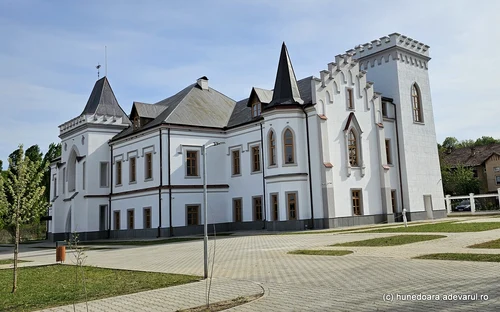
Image 1/11:
Nopcsa Castle from Săcel Photo Daniel Guță THE TRUTH (1) jpg
After the war, Franz Nopcsa, who had been declared an enemy of the Romanians, was rehabilitated, but once he returned to his castle in Săcel, the locals took revenge on him, attacking him with stones.
“The villagers of Săcel commune cut a communal road through Baron Nopcea's garden. The administrator of the settlement, Dom Captain Terk, trying to fence off the baron's park and stop the passage of the villagers, caused their revolt. The villagers stormed the castle and reopened the road“, Dimineata newspaper reported in 1926.
Franz Nopcsa left the castle and settled in Vienna in his last years of life. He committed suicide in 1933, in a hotel in Vienna, after fatally shooting his personal assistant, the Albanian Bajazid Doda, who had been faithful to him in the last decades of his life.
“In the picturesque area of Nalaț-Vadului, surrounded by wooded hills, cut in two by the white line of the Clopotiva river, is the commune of Săcel (at a distance of eight kilometers from Haţeg, Hunedoara county). At the entrance from Bărești to the commune, we meet the castle (in medieval style) of the Nopcea barons, surrounded by a huge oak park. The narrow paths that wind through the leafy thickets could tell us a lot about the nocturnal climbs of the 19th century bandit-knight, Black Face, the grandfather of the current suicide, Baron Franz Nopcsa“, Nopcsa Castle was described in 1933, upon the death of its former owner.
Aided and boarding school
In World War II, the castle was devastated and the thousands of valuable books in its library were set on fire. In 1945, immediately after the war, it was transformed into a dormitory for students, just like other castles in Șara Hațegului. Children from mining families from Valea Jiului were brought here in school camps.
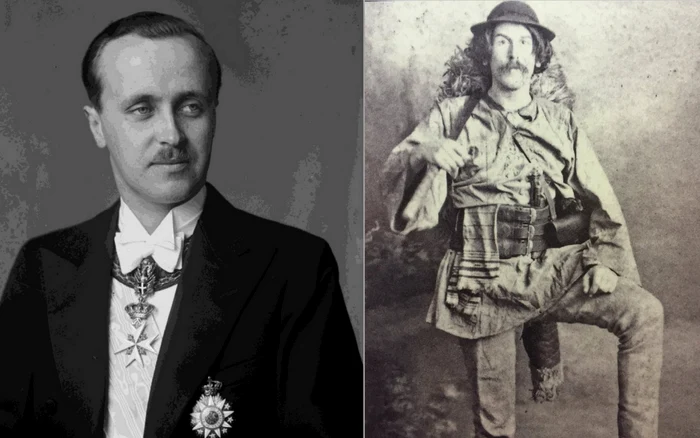
Franz Night. Source: Wikipedia.
“In the Săcel castle in Valea Hațegului and in the huge park that surrounds it, the Patriotic Defense, regional for Valea Jiului, organized a summer colony where 800 miners' children were housed. These children spent an outdoor holiday for 20 days, in four series. Special educators took care of their growth in a democratic spirit. Throughout the vacation, the children received abundant and substantial food, and their health was ensured through good medical assistance. It was also organized in the Nalati castle, a rest house for miners exhausted by the hard work in the underground galleries“, informed Scânteia, in 1946.
In the following years, the Nopcsa castle in Săcel was transformed by the communist authorities into a boarding school and a school for children with special needs. In 1990, the Nopcsa Castle in Săcel and its annexes, transformed into a helping school, housed over 250 helpless children, almost isolated from society.
Its buildings were used until the end of the 90s, then gradually fell into disrepair until 2019.
