
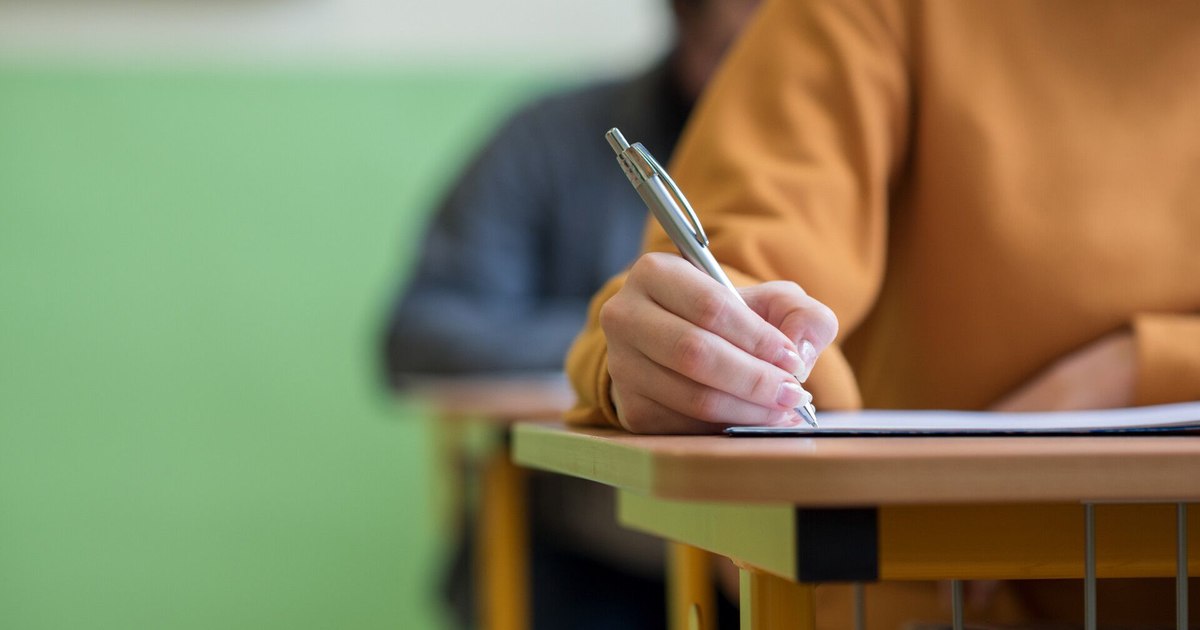
On March 23, the first test of the simulation of the Baccalaureate exam is scheduled: the one for Romanian Language and Literature. The education unions announced that more than 73,000 teachers will boycott, but the data of the Ministry of Education contradicts them. According to them, simulations will take place in almost 95% of schools, while 63 educational units will not organize. What happens to the students in these high schools? In the country, the inspectorates tried to organize and transfer them to the units where the simulation will be held. In Bucharest, this will not happen. ,“From our perspective, every student must have the opportunity to support the simulations and be evaluated correctly and objectively, in accordance with the legal provisions”says Mihnea Haiduc, president of the National Council of Students.
The data announced by the Ministry of Education
According to the data sent by the inspectorates to the Ministry of Education on Friday, the simulations will take place in 1,364 national high schools and colleges (95.59% of their total), while 63 (4.41%) of the educational units of this type will not organize. At the same time, the number of enrolled students exceeds 143,000.
In some educational institutions, the decision to organize the simulations was made a few days before the actual tests.
“Initially, the decision was taken by a vote at the level of the teachers’ collective, with the majority of teaching staff voting for the boycott. The return on the decision was made on Friday, 20.03.2026, by majority vote”, says Marian Ursu, teacher of Romanian Language and Literature Neagoe Basarab from Oltenița, Călărași county.
Half of the high schools that do not organize the simulations are from Bucharest, where so far no such exercises have been organized at the unitary level.
“At this moment, from the records of the School Inspectorate of the Municipality of Bucharest, it appears that of the 122 high school education units that should organize the simulation of the national Baccalaureate exam, 22 will boycott and announce that they will not organize the simulation, on Monday, Tuesday, Wednesday and Thursday”, said ISMB inspector general, Florian Lixandru, quoted by Agerpres.
What happens to the students in the high schools where the simulations are not organized
In several counties in the country, students whose teachers boycott the simulations will be sent to other educational units, which organize the tests. Such an example is the county of Satu Mare.
“The County School Inspectorate has identified a solution for their implementation: the simulation will be organized in exam centers, so that 5-6 high schools in the municipality will host all students from the final classes. They will take the tests under the supervision of teachers who are not participating in the boycott. In parallel, the students of the respective high schools will conduct the courses in an asynchronous format”explains Mihnea Haiduc, president of the National Student Council (CNE).
No unitary solution has been identified in Bucharest. The education authorities consider that the simulations take place at a later date, an option they have also proposed for schools where the National Assessment simulation was not supported.
“It is not natural that the exercise of a right depends on the high school where a student studies, and the fact that some students can support the simulation, while others are deprived of this possibility, obviously creates an unfair treatment. From this perspective, yes, students from units where the simulations do not take place can feel discriminated against and unfair, because they are put in a disadvantageous position compared to their colleagues from other high schools,” says Mihnea Outlaw
According to him, the main responsibility belongs to the Ministry of Education:
“The Ministry should have prevented reaching such an impasse and identified early solutions by which the students’ right to support the simulations would be protected unitarily, at the national level”.
The subjects and grading scale for the simulation of the Romanian Language and Literature test within the National Assessment. In how many schools was the exam held?
CNE: We cannot expressly support the boycott
The representative institution of students in Romania does not support this method of teachers’ protest.
“The National Council of Students believes that this form of boycott is one that risks directly affecting final year students, which is why we cannot expressly support it. Although we understand and support some of the demands of teachers, including those aimed at adequate financing of education, we believe that simulations of national exams should not be turned into a terrain of tensions between decision-makers and teachers.
At the same time, we empathize with the grievances expressed by the teachers, especially in the context where many of the problems pointed out by them overlap with concerns that we have constantly raised in the public space”, says Mihnea Haiduc.
The President of the CNE adds:
“From our perspective, every student must have the opportunity to support the simulations and be evaluated correctly and objectively, in accordance with the legal provisions.
That’s why we publicly support both the need to protect the interests of the students, and the responsibility of the Ministry of Education for the situation we have reached”.
Why simulations are important
I asked the student representative what he thought about the importance of simulations.
“Simulations are, in fact, useful, even if many final year students already go through such assessments almost monthly, at class, school or county level. The essential difference is that the national simulation has a much higher stake and degree of objectivity, precisely because it more faithfully reproduces the conditions of the real exam.
For many students, this comes as a real wake-up call. It is one thing to take an organized mock at your school, where the topics, the atmosphere and even the marking are more familiar, and another is to take part in a national mock, where the paper is randomly marked in another part of the country by teachers who do not know you and who grade strictly according to the scale. Precisely this mechanism provides a result closer to the reality that the student will encounter in the exam”explains Mihnea Haiduc.
National Assessment Simulation 2026. “Old model” subjects, but with traps. What made the difference in the Mathematics test
The simulation also has an orientation role, he says: it confirms to the students if they are on the right track or if they need to rethink the pace of learning.
Teacher: “The trade union movement is at a huge impasse”
The difference between the scenario announced by the unions, which said that more than 73,000 teachers will boycott the simulations for the Baccalaureate exam, and the reality on the ground is great, just as it happened in the case of the National Assessment simulations. Why this discrepancy?
“This difference comes, first of all, from the way of reporting: the unions reflect the declared intentions of the teachers, while the inspectorates report the actual situation in the schools. In addition, some teachers may abandon the boycott under pressure or for practical reasons. Last but not least, the authorities believe that simulation “happens” even with partial participation, which explains the high percentage reported”is the opinion of professor Marian Ursu.
It points to other forms of protest that could have results:
“At this moment, the most effective form of protest would be one that is organized, coherent and supported by the majority of teachers, so as to send a clear message, but without directly affecting the students. For example, forms of symbolic or administrative protest (refusal of bureaucratic tasks, visible public actions) can put real pressure on decision-makers while maintaining the support of public opinion. Unfortunately, from what has been seen these days, the trade union movement is in a huge impasse”.
