
Norepinephrine, the drug central to the scandal of suspicious deaths at St. Pantelimon’s Hospital, is vital in emergency situations to maintain blood pressure. Used short-term only in adults and under strict medical supervision, it plays an essential role in intensive care.
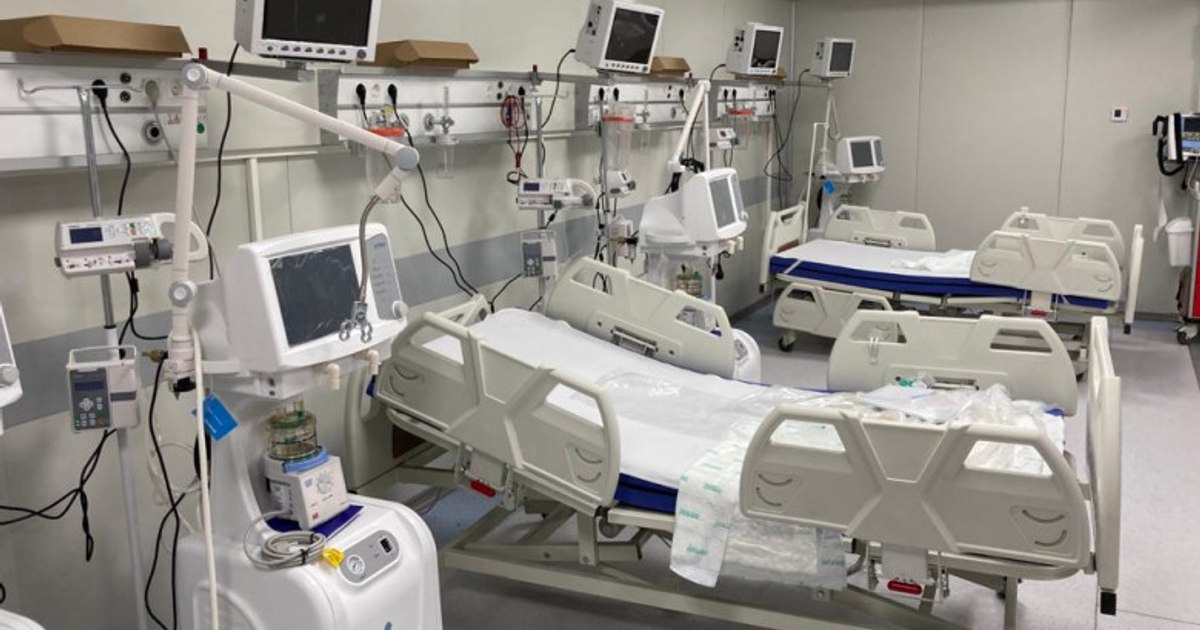
Noradrenaline, a very important substance in Intensive Care Units – Photo Archive
Noradrenaline, the drug around which the Pantelimon Hospital investigation revolves, where 20 patients allegedly died in the ATI ward between April 4-7, is administered exclusively “in moments of shock“, according to ATI doctors.
Norepinephrine (or norepinephrine) is a drug intended to rapidly raise blood pressure in emergencies. It works as a vasoconstrictor, narrowing blood vessels to raise blood pressure. Used only short-term and under medical supervision, it is given to adults to restore normal blood pressure in critical situations. Although produced naturally by the body, supplementation is necessary in an emergency context.
“There are very clear protocols for the administration of noradrenaline, you really can’t go wrong. The standard dilution is made in all intensive care units in Romania, a vial of 16 milligrams, we have 320 micrograms per milliliter/kilogram of body and depending on the patient’s condition, it is administered by continuous injection. It is given up to a maximum of 20 milliliters per hour, because after this value it no longer has an effect. It is NOT a drug to be given long-term, but only in moments of shock. In principle, noradrenaline is a drug that is given in septic shock, cardiogenic shock, it is an essential drug in ATI; but there were years when this medicine did not exist in Romania.”, explained doctor Carmen Pantis, from the Oradea Emergency Hospital, for “The Truth”.
However, when the concentration drops suddenly, the patient’s blood pressure also drops.
“Noradrenaline is a drug whose main effect is to increase blood pressure in an attempt to maintain it at normal or near-normal values, by stimulating cardiac activity and by constricting vessels.”, explained the vice-president of the association of ATI doctors from Romania, Dorel Săndesc for “The truth”.
International guidelines recommend doses that are disease- and patient-specific.
“The range of correct doses is very wide, between the recommended minimum dose and the maximum dose the differences can be huge, the maximum dose can be tens of times higher than the minimum dose. It is a drug with a very strong action and therefore the effect cannot be predicted in all patients in the same way, therefore this adaptation is required.“, adds the doctor.
The representative of the Romanian ATI Commission of Experts, Professor Săndesc, claims that in the case of the Saint Pantelimon Hospital “it is not an action that causes death, and the lowering of the dose of this medicine was required, otherwise, it should be kept in mammoth doses, which could directly cause mortality”.
“We cannot make a thanatogenesis link between norepinephrine doses and patient prognosis and death. This connection cannot be medically justified“, emphasized the vice-president of the association of ATI doctors from Romania.
He noted that the diagnoses presented were extremely serious and that the patients were in an advanced state of some diseases, many of which were incurable. The ATI doctor emphasized the need to consider all the details of the case for a correct assessment.
In cases of refractory shock, when high doses of norepinephrine fail to raise blood pressure, medical guidelines recommend returning to regular doses. Prolonged use of high doses can cause serious adverse effects, such as cardiac disorders, ischemia, cardiac arrest, and even death. A persistently low blood pressure indicates a poor prognosis and may lead to mortality. The representative of the ATI doctors explained that, in the case of the patient from St. Pantelimon Hospital, high doses of noradrenaline were necessary because of his extremely severe condition.
Dr. Dorel Săndesc states that the reduction of the dose of noradrenaline, in the context of extremely low blood pressure, was a correct measure and does not constitute an accusation of murder.
How the injectomat works – the “murder weapon”
Injectomats are advanced medical devices, similar to automatic syringes, that administer drugs to patients in a programmed and controlled manner. These machines allow accurate delivery of medication in small amounts, regulated in milliliters per hour, and are equipped with internal memory to record all administered doses.
Commonly used in intensive care units (ICUs), injectors help maintain accurate dosing, reducing the risks of overdosing or underdosing, essential for powerful drugs such as noradrenaline. In the case of some investigations, the data stored in the memory of the injectors can provide critical information about the treatments administered and help to clarify complex situations in ATI.
Injectomats, which administer treatments in precise doses, showed that the 54-year-old patient at St. Pantelimon’s Hospital received an insufficient amount of noradrenaline, although the observation sheets indicated correct doses. Judicial sources suggest that in addition to this case, there are about five other possible cases being investigated as murder, according to Hotnews.
However, Dr. Dorel Săndesc warns that the decrease in the dose of noradrenaline is not necessarily related to death and emphasizes the need for a detailed analysis of the case.
The prosecutor’s office is also investigating whether the injection machines, sometimes moved between patients, influenced the results.
Yesterday, four employees of the Pantelimon Hospital were questioned at the Prosecutor’s Office of the Bucharest Court in the case of 17 deaths from the ATI Department. Two female doctors were detained preventively for 30 days for attempted murder and qualified murder, and a nurse was placed under judicial control for perjury.
In April, prosecutors received a report from a nurse employed at the Hospital “St. Pantelimon” regarding the fact that, between April 4-7, 2024, in the Anesthesia and Intensive Care Unit (ATI), 17 patients would have died, after the medical staff had voluntarily reduced the dose of noradrenaline, a non-transmitter used to increase or maintaining blood pressure.
