
Political analyst Cristian Hrițuc reviewed as the Presidents of Romania fought, from Iliescu to Iohannis, with the system in their attempts to reform the country and summarized the lessons that can be detached for Nicușor Dan from these experiences.
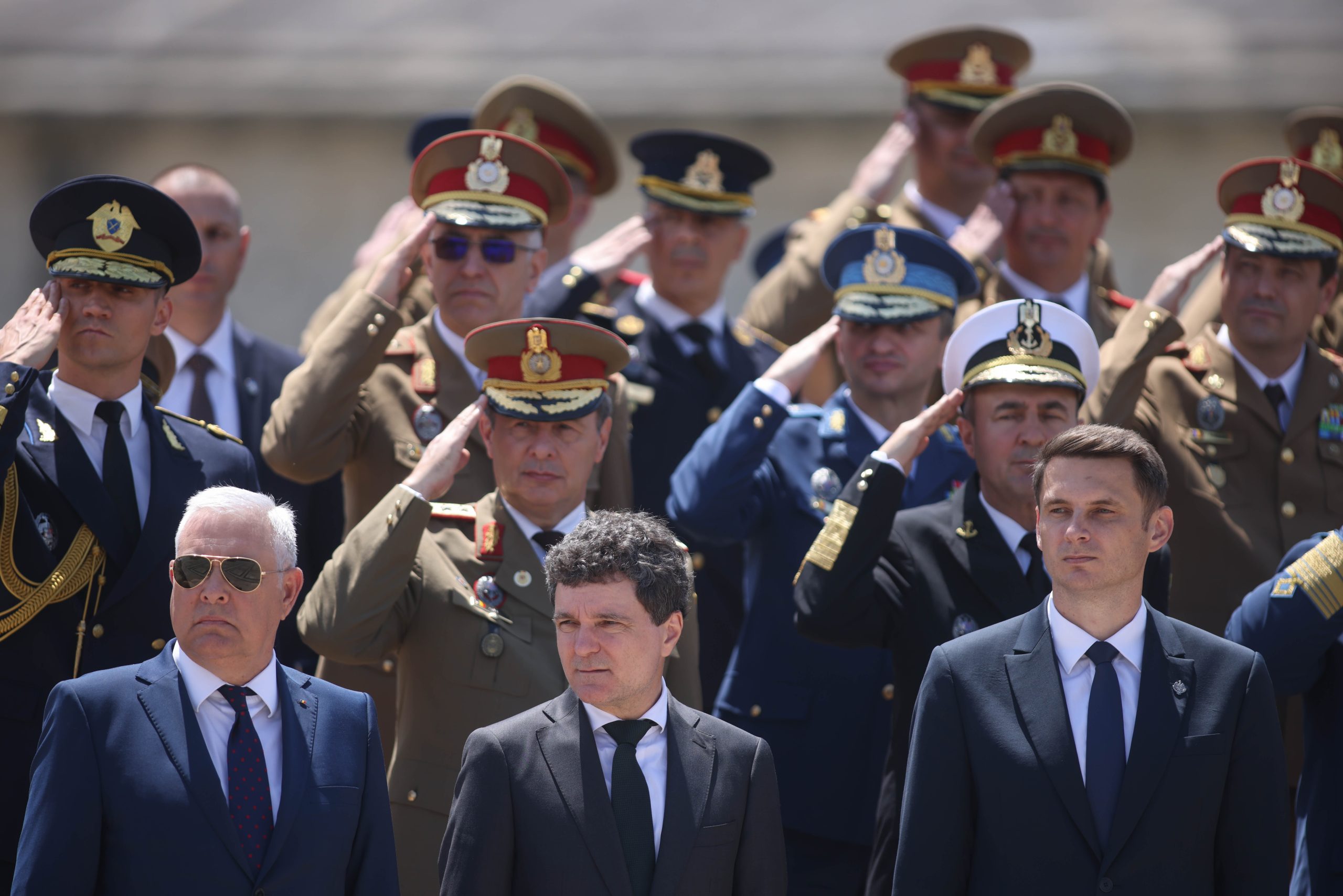
President Nicușor Dan has a fierce fight with the system. Photo: Profimedia
Cristian Hrițuc, political consultant with experience in the election campaigns in Romania and the Republic of Moldova, made a short guide with the lessons learned from the mandates of the Romanian presidents after the 1989 Revolution, from Iliescu to Nicușor Dan.
“In the post -communist period, Romania had four presidents: Ion Iliescu, Emil Constantinescu, Traian Basescu and Klaus Iohannis. Each of them tried to make certain changes in the period when he was in power. Depending on the activity they carried out, the direction they managed to print and the imprint left over the mandate, remained in the public perception with a specific label ”the analyst begins the guide published on his blog.
Thus, Ion Iliescu “He was the president who was perceived as a system man. He pactized with him and tried to do things with him.”
Emil Constantinescu „It remained with the imprint of the man defeated by the system. Although, perhaps, it does not deserve this label, because the times were extremely difficult, and he contributed to Romania to the west, his statement and the fact that he had only one mandate led to the outline of this perception. “
Traian Basescu was “President-player”, “who has ridden the system for a while.”
Klaus Iohannis was “A president who, in the first term, put pressure on the system and tried to implement some changes. In the second term, it was much more withdrawn. The pandemic and the war followed, came out of the” normal period “and things were even more complicated.”
Traian Basescu’s fight with the system: “Justice began to work differently than in Nastase’s time”
The analyst develops some ideas from the mandates of Traian Basescu and Klaus Iohannis – things that can be useful today to understand how current politicians should approach the challenges.
“The text below does not intend to be a complete analysis of the presidential mandates – it is neither the time nor the right space – but can be highlighted some” learned lessons “or that should be taught by today’s politicians”, he says.
First of all, Hrițuc says that we must define what we mean by the “system”, given that many use this term according to their positioning.
About three approaches can be identified:
“The system is the informal and non-transparent power network that controls Romania in the shadow or semi-shadow-made up of politicians, officials, justice, reservists of secret services, businessmen and obedient press. It is perceived as an auto-reproductive mechanism that protects the interests of their own members, escapes the responsibility, itself-the set of institutions, processes, norms and relationships through which a society exercises its power, manages its conflicts and regulates its functioning by political decisions.” – he explains.
The analyst claims that it is clear that Romania needs a state reform, the reduction of institutions that often only parasitize the governmental activity, an administrative-territorial reform, better services, of more equity-and the list can continue.
“Traian Basescu tried a force approach. That is why he was called” President-player “. He managed to have his own government only three years out of the ten mandate. Otherwise, it coabit – better or worse – with more governments formed by political opponents. During the mandates of Emil Boc, his political partner, the education reform, the work reform, the flexibility of the Labor Code, the macroeconomic stabilization and the signing of the agreement with the IMF in the crisis, as well as a reform of the pension system were carried out ”,explains Hrițuc.
No matter how many things are said today, one fact remains certain, believes the analyst: “Justice began to work differently than in Nastase’s time, when DNA (PNA, at that time) investigated only train chiefs.”
There was also a first reform of services, who became trusted partners for NATO countries, he adds.
“Of course, many reforms since then are contestable, as there are negative aspects related to DNA, services or other measures taken. It is a thing: there was a change. It was a reform and an improvement in the operation of StatuluI ”, concludes Hrițuc.
These reforms and Basescu’s policy came to the package with important political costs: two suspensions and many fractures in society. Basescu managed to bring his party to power, but only for a relatively short period.
Klaus Iohannis’s fight with the system: “He preferred, after the pandemic, to preserve”
During the mandates of Klaus Iohannis, Romania had ten governments: Cioloș (technocrat), Grindeanu (PSD), Tudose, Dăncilă, Orban 1, Orban 2, Cîțu, Ciuca, Ciolacu 1, Ciolacu 2, Lists the analyst.
“In the first term, Iohannis had a fight with the PSD and could not make the necessary reforms. In the second term, the pandemic and the war came, complicating even more the political game. He preferred, after pandemic, to preserve and avoid the risk of suspension.”summarizes the struggle of Iohannis for the reform of Romania.
Iohannis came to power with a popular support close to that of Nicușor Dan: Iohannis – 6,288,769 votes, Nicușor Dan – 6.168.642.
“Even though he benefited from a strong folk support, Iohannis failed to impose his political game from the beginning. He had a PNL that had barely merged with PDL, led Bicefal. He lasted until he brought his party to the government and, unfortunately, he did not have a real partner in the PNL, because he was not a PNL. Basescu succeeded with Boc”, Explains the political analyst.
Nicușor Dan, president at a much more complicated moment
Nicușor Dan came to power at a much more complicated moment than the two predecessors, he believes. “Today, there is an “antisystem” current globally, a war on the border, a resettlement of the international order. It is for the first time after 2000 when an extremist party reaches 35% in polls. The country has a huge deficitand the inequalities and inequalities have deepened ”he details.
In addition, the European Union is no longer seen as the better hope, as it was in 2004. “The electoral decision of the people is not based only on the” did something “algorithm, but it is getting more and more to the aspirational area“Says the analyst.
He is sure that Nicușor Dan will want to put his own fingerprint on the mandate and will not copy a previous model.
His advice for the new president: “Must take into account history. It does not have the strength of Basescu’s speech, nor his dynamism. It does not have a 30%party, as Băsescu had, and not even a formation like the PNL from the beginning of Iohannis. ”
In addition, “The transpartinic mafia has expanded, the political class has been deprosialized, the international context has changed, and people have less patience and are more dissatisfied. ”
Hrițuc exhibits Basescu’s strategy: “When he started his mandate, he made a “pact with the devil” or chose the immoral solution to take his party to power. For a long time he avoided the direct confrontation with the system. He slowly dug at his base, until he came to hold the power levers. ”
Lessons for Nicușor Dan: “The system does not react to the screams on Facebook”
Therefore, Hrițuc summarizes some lessons to learn, so that the objective of reforming the state can be achieved:
“It is difficult to make reforms in time of crisis, as it is difficult to reform without allies.
You have to juggle the system and gradually bring it in the direction of your goals. The system does not react to the screams on Facebook. Politicians are afraid of the “vibe” in the networks before the elections. After the elections, everything tends to return slowly to the status quo.
Political allies should be consulted and convinced, do not force to play by your rules. It takes support both in politics and outside. A partnership with force structures must be built.
The opponents should be kept in the chess, but you do not crush, until you have control over the events.
You cannot go to fight with an inexperienced team, nor with the Talibans. You cannot say, every day, that you will set up a new party, because, for the moment, you need the existing parties, to manage the crisis. A new party can be a solution only in the last year of mandate. Currently, it would be just a power -free and without parliamentary representation.“
In addition to these tips that have the purpose of preparing the new president of Romania for a heavy fight, Hrițuc also comes with an element of optimism:
“Nicușor Dan has the chance to be the first president who breaks Romania, really, on the transition period defined by Brucan. It depends on him and his team if he succeeded.”
