

Expertise is needed to determine whether the psychoactive substances found in the body of a driver affects the ability to shock, the High Court of Cassation and Justice announced on Monday. Basically, through this sentence, the judges give, de facto, free to drift under the influence of drugs, draw the attention of some experts in the field. Others support the opposite and I think the decision will help those under treatment.
The “law of drugs at the wheel” will save the drivers following drug treatments. Archive
“In the case of the offense of driving a vehicle under the influence of psychoactive substances, provided by art. 336 para. (2) of the Criminal Code, in order to achieve the essential condition attached to the material element of the objective side, that the defendant was under the influence of psychoactive substances, it is necessary to establish both the presence in the biological samples of the psychoactive substance and its ability to to determine affecting the ability to lead the perpetrator’s author”, Stations the judges of the High Court.
Anti -drug expert Cătălin Țone explained what follows. “Now, by the ICCJ decision, in each criminal case, regardless of the concentration of substance in the body, a forensic expertise will be made that will establish its ability to determine the ability to drive. This is specifically, the fact that, in the past, these experts were done in about 90 % of the files, at the request of the criminal prosecution body or at the request of the defense, but now they become mandatory. So, from this point of view, things will not change much, here being very important the ability of legal medicine structures to make these experts within a reasonable time”Says Cătălin Țone. Just that: “We must not neglect a possible interpretation of the decision as an acceptance of the moderate drug use at the wheel, which can generate frequent deviant behaviors ”he points out.
However, the anti-drug expert believes that it is natural to discuss a possible legislative complement with contraventional and complementary measures, such as the suspension of the right to drive for a certain period for drivers who led under the influence of drugs but they did not affect their capacity and received the classification the criminal case, following the conclusion of the forensic expertise. “If we do not do this, a contrast will be created compared to the sanction of the segment regarding the consumption of alcohol at the wheel, below the threshold of 0.8%o “explains the anti -drug expert Cătălin Țone.
Doctor: Decision impossible to put into practice
According to toxicologists, each body reacts differently. A person who has consumed a very small amount of substances could work perfectly, in any way has been affected the ability to make decisions or reaction capacity, while another could have risky traffic behavior. “Unfortunately, this decision I think will be impossible to put into practice from a medical point of view. At this time we do not have any objective test that can attest whether or not a person is able to drive a motor vehicle, because all these assessments of neurocognitive function are extremely subjective”, Explained Dr. Radu Tăcu, a toxicologist at the Bucharest Emergency Clinical Hospital.
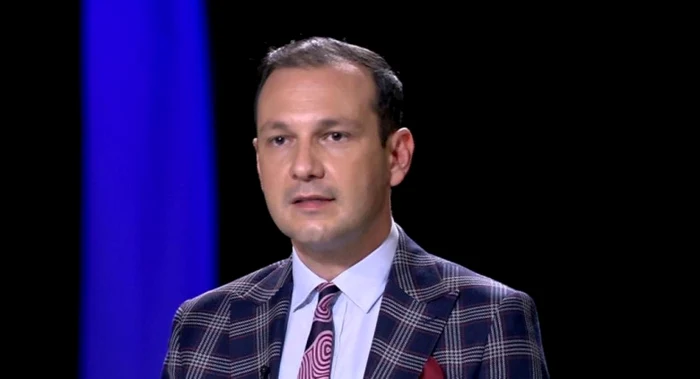
Photo digifm
“And we should not look at things only from the perspective of the neurocognitive evaluation of that patient, but we must discuss from the perspective that, for example, drug use predisposes to risk behavior”, The doctor says. This refers to the fact that people who have ingested even a small amount of substance could make certain irresponsible gestures, which they would not normally do.
Alcohol, the main psychoactive substance
And, warns the toxicologist, because we are talking about the consumption of psychoactive substances, this category includes alcohol. Therefore, drivers caught drunk at the wheel could force the law. “On the other hand, those from the High Court of Cassation and Justice have lost sight of the fact that the main psychoactive substance is alcohol. So, most likely, people who have positive alcohol will invoke this evaluation of the ability to lead to escape the criminal prosecution. I think there are many aspects that will be difficult to put into practice. The most important thing, however, is that there are no neurocognitive capacity assessment scales that can be applied for a driver”.
Legist doctor: “a normality has been established”
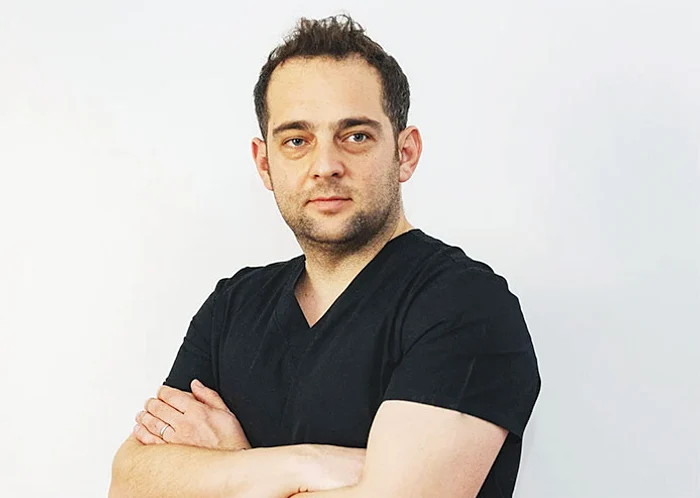
Cristian Paparau, forensic doctor. Archive
But the forensic doctor Cristian Paparau greets the decision of the Court, saying that, finally, a very common situation is regulated and which, especially, affects the people under different drug treatments. “The long -awaited decision of the High Court appeared. Basically, a normality has been established. And this, after in 2021, also after a decision of the High Court, it was considered that the mere presence in the body of the substance throws you directly under the influence of the respective substance ”said the specialist.
Well, from now on, besides the fact that the existence of the substance in the body must be proved, justice has to do something, namely to demonstrate the state of influence under which the driver in question is found: “That is, the clinical examination of the person should also be taken into account when he arrived at the hospital, the value of the substance present in the body at the time of harvesting, as well as other medical documents by which the person demonstrates that they are under the administration of a particular treatment.”.
This decision comes, practically, in support of those under a certain treatment prescribed by the doctor for a certain condition: “The world about the fact that this decision would liberalize the use of drugs in small quantity for recreational purposes has been slightly hysterized. I don’t know if that will happen. Or if not the world consumes anyway, and without the decision of the High Court. But what I know is the fact that this decision comes, practically, to rely on many people wrongfully accused. ”
Cristian Paparau, who is also a psychiatrist, told “Adevărul” that he has a lot of patients who have not taken their fear treatments not to be positively detected in anti-drug tests and not remain without a driving license: “Metformin can give a false positive result. It is a drug prescribed to diabetes patients 2. They are then betablots, ie the treatments used in cardiological therapy, which can also give false positive results. We also have anti -inflammatory, and anti -allergic. And there are many who need them and who take them. Then there are patients who are on anxiolytics used for hypnocative purposes, ie they help them fall asleep”.
The doctor explained that a seemingly trivial medicine such as ibuprofen can give a false positive result for barbiturates: “If you have consumed such a medicine and you will perform a drug in the next few hours – days, the result can be false positive, so you can retain your driving license and choose with a criminal case”.
And the forensic doctor Gabriel Gorun, the vice-president of the Romanian Legal Medicine Society, believes that the solution of the JCCJ renders the importance of the forensic expertise, which until now in investigations did not take into account.
“The evaluation of the relevance of the forensic expertise by the judicial bodies was rather random. It is a profit, by the fact that justice returns to a modern means of proof – that of expertise. Therefore, it will be necessary to adopt a methodology with speed that will uniform the forensic expertise ”said the specialist.
The law on the meaning of all
Vlad Zaha, a criminologist specialized in public drug policies, said that this decision is not a legalization of driving under the influence of drugs because it does not propose any kind of threshold, as it is, for example, in the case of alcohol. Therefore, there is no question that the law will allow us to consume prohibited substances. “What this decision does is to see the following reality: if you have any residue, a small microscopic particle in the body, it does not automatically mean that the amount affects your skills. Whether we are talking about drug treatments, older substance consumption, does not mean that you are going to prison or you have to be criminally punished“, The expert said.
He explained that, from now on, the courts will be obliged to take into account a medical-legal expertise based on blood tests that will analyze the quantities of substance existing in the body, the day and time when the driver was stopped in traffic, as much as It lasted from stopping it until it reached INML for sample collection: “If a certain concentration of substance comes out in the blood analysis, a reverse engineering is made to find out whether that concentration that the driver had when it was stopped was or not to affect the ability to drive”.
The decision, the criminologist said, brings us closer to a fair drug policy: “Those who are truly affected to be punished according to the law, but those who have only residues of substances in the body, due to drugs, treatments or older consumption of substances, which do not affect their ability to drive, should not either criminally punished. Thus we make justice the work of justice to do justice with speed and based on scientific forensic expertise, not on a simple presence of one substance or another”.
