
Pentecost is one of the most important holidays of Christianity, celebrated 50 days after Easter. In the Romanian tradition, they are also linked to some ancient beliefs. In Romania, Pentecost brings days off for most employees.
Pentecost, one of the most important religious holidays celebrated in Romania, takes place at the end of spring, 50 days after Easter. Pentecost in 2026 brings an extra day off for most Romanians, but overlaps with an already existing day off for students and teachers.
Pentecost falls on May 31, 2026. How to calculate the date
Pentecost, the holiday known in the Christian tradition as the Descent of the Holy Spirit, is celebrated by Orthodox believers on Sunday, May 31, 2026. The date of the celebration is not fixed, it being set 50 days after Orthodox Easter, which this year will be celebrated on April 12. Catholic Pentecost takes place on May 24.
In Romania, since 2008, Pentecost is a public holiday, and employees benefit from two days off: Sunday, May 31 – the first day of Pentecost, and Monday, June 1 – the second day of Pentecost. For Romanians who work from Monday to Friday, only Monday will be extra free, since the first day falls on a Sunday.
Days off on the occasion of Pentecost for employees and students
The day after Pentecost overlaps with Children’s Day, a day that was declared free for students and teachers anyway. Thus, for many families, the beginning of June in 2026 will bring a little long weekend.
For Romanians of the Catholic faith, Pentecost is celebrated a week earlier, on May 24, 2026. In Romania, however, the legal days off are set according to the Orthodox calendar, so Catholic employees will benefit from the days off on May 31 and June 1, just like the rest of the employees. On the other hand, May 24 is not a statutory holiday, but it can be granted off for the Catholic faithful by agreement with the employer.
Pentecost in Christian beliefs
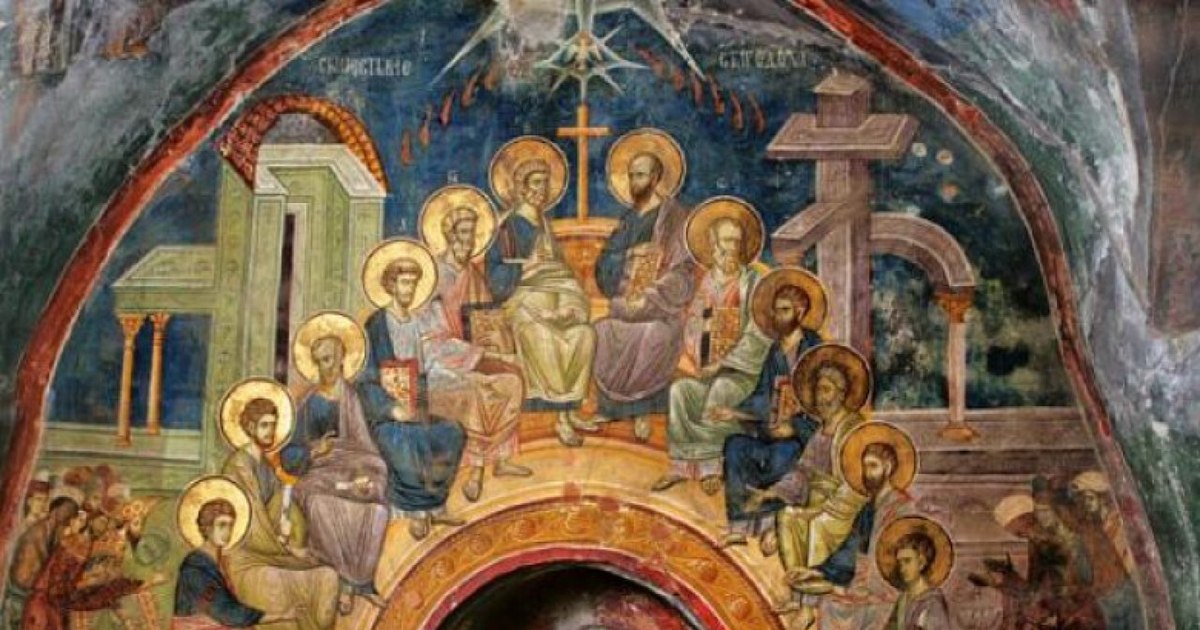
Pentecost represents the celebration of the Descent of the Holy Spirit (Descent of the Holy Spirit), being celebrated on the fiftieth day after Easter, always on a Sunday. They recall the descent of the Holy Spirit on the disciples of Jesus of Nazareth and on the Holy Virgin Mary, the Mother of God, gathered in the Upper Room.
“In those days, when the day of Pentecost arrived, the Apostles were all together in the same place. And suddenly there was a noise from heaven, like a rushing wind, and it filled the whole house where they were sitting. And there appeared to them, divided, tongues like fire and they sat on each of them. And they were all filled with the Holy Spirit and began to speak in other languages, as the Spirit gave them spoke. And there were in Jerusalem devout men, of all the nations under heaven. And when that noise arose, the multitude was troubled, for every one heard them speaking in his own language.”the Bible recalls.
A young woman who boasts that she will work during the holidays outraged the Romanians: “After she stopped the camera, she was crying”
Pentecost is one of the oldest Christian holidays, celebrated since the time of the apostles, but its origins predate Christianity.
Early Christian authors and authors of the canons of some synods from the first centuries of Christianity wrote about Pentecost. Initially, for Christians, Pentecost marked both the Ascension of the Lord and the Descent of the Holy Spirit, but around the year 400 the two holidays were separated: the Ascension was set 40 days after Easter, and Pentecost commemorates the day of the Descent of the Holy Spirit.
The word “Winter” derives from the Latin Rosalia (Rozalia), which in turn comes from the Greek term rousália and is also found in the Slavonic one, Rusalija. In the Old Testament, Pentecost was mentioned as an agricultural festival of Jewish joy, where offerings were made from the fruits of the earth. On top of this celebration was the celebration of the Descent of the Holy Spirit.
The name and customs of Pentecost were also borrowed by the ancient Romans. With the Christianization of the Roman Empire, the celebration acquired a Christian meaning, superimposed on the pagan meanings and customs, which were gradually lost over time.
What are the rusalies, the divinities from Romanian mythology
In Romanian mythology, rusalii, also called iele, are mythical female beings that appear at night, before the roosters crow, in the period between Easter and Pentecost.
They are considered rebellious spirits of the dead who, after leaving the tombs at Joimari and spending Easter with the living, refuse to return to their underground abodes. Like the sânziens, the other spirits celebrated during the summer, Pentecosts appear in groups, testing people.
“Their abode would be in untrodden forests and untouched by ax or human foot, through the air, on plains, on desert islands, on great waters. They can be seen at night, floating and fluttering through the air, by fountains, through trees, under the eaves of houses. They walk accompanied by fiddlers (whistle players, bagpipers), ringing bells, beating drums and trumpets, play (hora, belt, etc.), spread tables on green grass, drink, party”, writes the ethnologist Ion Ghinoiu, in the Dictionary of Romanian Mythology.
They were associated with the fairies of the forest, also called “Alea Frumoase” in the Hunedoara area, who adorn the mountains with flowers and make sure that nature remains undisturbed by humans. They have ancient origins and have been identified by ethnologists with deities from Thracian and Greco-Roman mythology, such as Bendis, Artemis or Diana.
“Their presence was only nocturnal, and the punished were always the men: their face was changed, their forgetfulness was displaced”, ethnologist Lucia Apolzan reported.
According to popular mythology, if one sees or hears the turbans, one must neither move nor speak them.
“Where they play, the ground remains scorched and battered, the grass turns black or ceases to grow. Pentecost punishes evil-doers, those who do not respect their days, those who sleep under trees at night or go out to the well at night for water, lifting them up in whirlwinds or dragging them down.”informs the author of the Dictionary of Romanian Mythology.
They are opposed, in Romanian mythology, by the caluşari – the groups of dancers of the Caluș, an ancient ritual associated with protection against evil spirits and with the fertility of nature.
