
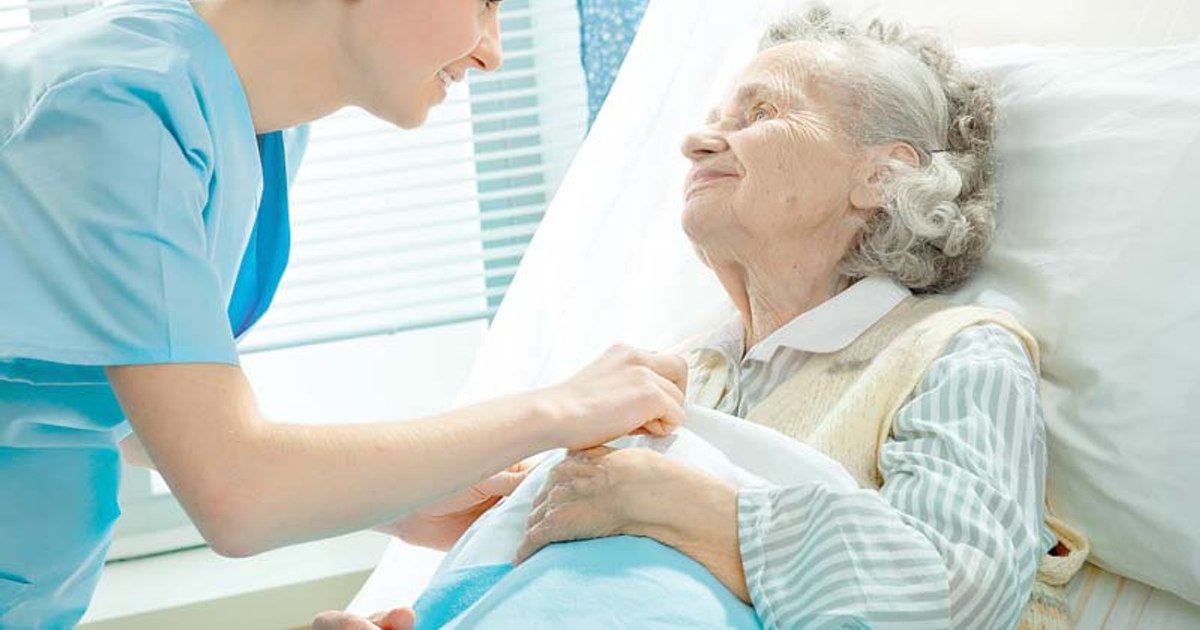
Medical assistants in Romania are as few as they are poorly trained. The reason? Post-secondary health schools enroll students on a conveyor belt even though many of them do not even have the Baccalaureate. It is one of the reasons why hospitals, as much as they would like to, cannot hire them.
Health unions demand better training of nurses. Photo source: archive
At the “Bagdasar Arseni” hospital, in the Capital, for example, where the Baccalaureate diploma is mandatory, 12 positions were put up for competition for which 28 people applied. But only 5 passed. In this context, trade unionists demand a change in the legislation.
“Post-secondary schools, like mushrooms after the rain. Everything revolves around money”
In the last 10, 15 years, post-secondary schools have popped up like mushrooms after the rain. “Because in Romania everything revolves around money”, Marius Sepi, the executive president of the “Forța Legii” union, told “Adevărul”. “In the old days, we had one post-secondary school per county. Now they have multiplied. And they are no longer interested in the actual training of the nurse, they are only interested in the money, because these courses are paid for. Some people who had some buildings found this opportunity. Then they took some nurses from the hospitals, made them lecturers, gave them some money and let’s start a school. This phenomenon of the multiplication of post-secondary schools is related to the financial interests of some people who no longer value the health of patients, they only value money”, said the trade unionist.
And this is how the diploma factory is taking shape. “It is a reality. Many post-secondary schools, some of which did not meet any criteria to be approved, churned out diploma holders for years. But, from my experience, most good nurses are only trained on the job,” continued Marius Sepi.
On the other hand, he claims, it is not because of medical assistants without a Baccalaureate that the health system in Romania has reached the ground. “I am a nurse by profession and over time I discovered many colleagues, people, young people from the country, who had more empathy towards the patient than those from the city, who came from families with money. There are many cases of people who come from rural areas, who for various reasons – especially poverty – graduated high school, but did not take the Baccalaureate. And what did they do? Because they wanted to continue with a job, they enrolled in a post-secondary school. And many arrive in hospitals better prepared than those with Bacul taken”.
Director of post-secondary health school: “I don’t want to be sued”
Why do post-secondary health schools accept students without a Baccalaureate? “Because the law allows us”, explained Dr. Mihaela Vasile, pediatrician and founder of the “Vasile cel Mare” post-secondary health school in Bucharest, a school that accepts candidates without the experience of the matriculation exam “And because if we refused, we could be sued. And we would lose in court, because we would violate a right of the students. In only one situation do we ask for the Baccalaureate diploma: when we have more candidates enrolled and fewer places available, this is to sort them out in a way”, explains the director, who insists on the fact that they have no possibility of refusing these children. “I don’t want to be sued, sit through the courts.. This is the law and we respect it. When the legislation changes, we will gladly align ourselves. Until then I am bound hand and foot. How can I refuse a candidate on this basis? I would violate his right!”
“Students don’t know how to think, they come with big hiccups from small classes”
As for the training of those who leave school and enter the workforce, regardless of whether we are talking about graduates with or without a Baccalaureate, this really leaves a lot to be desired, says Dr. Mihaela Vasile. “I’ve had students without a Baccalaureate diploma who were exceptional, just as I’ve had students with a Baccalaureate but who didn’t impress at all. On the contrary. Generally speaking, nurses come out of schools poorly prepared. And I will also explain the reasons. They come poorly prepared from school, from small classes, from high school”.
The headmistress refers to the fact that many students who enrolled in post-secondary school do not have basic notions, do not know fundamental elements of the Romanian language, mathematics, etc. “These kids don’t know how to think. I don’t know how to learn. They come with such big hiccups that we can’t cover them. The train was lost. Here, functional illiteracy is extremely high. And we struggle a lot with these children. We take some from scratch. For example, if you give a student the sentence “Mom is going to the market”, and then you ask him where mom is going, he does not know how to answer you. This is what we are facing”.
“We sort the students during school”
The doctor told us that if the law does not allow him to refuse a candidate without a Baccalaureate, and the enrollment is not based on an exam, during the school a sorting of the students is still carried out. “I have expelled many for absenteeism. I left others as repeaters, correctors. At our school, they also fail the graduation exam. Because we are trying to impose some standards”. The founder of the school came up with a concrete example: last year there were two first-year classes, this year only one class remained. “Some I expelled, others I let repeat. And they are students with the Baccalaureate”.
However, there are students who manage to leave post-secondary school with a certificate in hand. “Dthey are also very poorly prepared because if they perform poorly in a discipline, they save themselves with a passing grade for another discipline. Practically, it avoids coriness, repetition. But they are totally unprepared to enter the workforce. But they are employed, because the hospitals are short of nurses. And this is how we reach the patients and the quality of the services they benefit from”. Therefore, the teachers who teach in these schools – doctors and nurses – face serious gaps in the education of students. “They come with a small amount of knowledge and they have no way of keeping up with what we ask of them”.
Dr. Mihaela Vasile believes that to solve this problem a profound change of the system is needed. “We should be able to make a more rigorous selection during school. Basically, we can’t really let them repeat because they save themselves on the last hundred meters. The education system it is a modular one, and the module contains several subjects: internal medicine, internal medicine nursing and practice. It’s not for nothing that I give him a grade 4 or 3 in internal medicine because in nursing, for example, he moves a little more and scores a 5, a 6. And in practice, he does maybe better…and this is how I get a passing grade here as well. But their level, even if they avoid corigence, is extremely weak”.
On the other hand, the headmistress of the post-secondary school wonders why these poorly trained nurses are employed in hospitals. “They don’t look in the transcript? I wouldn’t hire someone who has, for three years, only grades of 5 and 6 on their transcript. In addition, hospitals can make a selection when it comes to the Baccalaureate. There are medical units where the diploma is mandatory. Do not hire without this document”.
The founder of the “Vasile ce Mare” health school explained to us how the graduation exam is organized: “The school lasts three years and the system is like in high school: with grades during the year, with a final paper on the module – which encompasses the knowledge from all the subjects that make up that module. At the end of the three years there is a professional quality certification exam with three tests: the practical test, in the hospital where they did the practical hours, a written test and the support of the roiect. Most fail the written test”.
