

Not only America looks at the Pieziș to the Romanian democracy, but also Europe. According to the democracy index for 2024 calculated by the British magazine “The Economist”, our country is in a gray and extremely dangerous area. We were relegated and placed in the category “defective democracy” in that of “hybrid regime”, and the reason is the presidential elections canceled last year. “However, this annulment was the strongest proof that the Romanian democracy really works”commented for “Adevărul” the historian Bogdan Bucur, a teacher at the SNSPA.
The Romanian democracy, hit under the belt. Archive
The relegation of Romania in the Index of Democracy is unfair, unjustified, deeply incorrect and extremely worrying, the specialist considers. “The deposition of Romania, the retrograde from the imperfect, vicious democracy regime, to the hybrid democratic regime is equal, from a moral point of view, with its criticism Volodimir Zelenski At the White House for the fact that he resisted the Russian invasion ”, he commented.
We are in front of a historical aberration, the teacher continues: “ÎAt present we are witnessing an aberration in the purest sense of the term. I mean what happens to Romania, but also to what happened to Zelenski at the White House. ”
History: “Democracy has acclimatized in the Romanian soil”
Bogdan Bucur is of the opinion that Romania not only had to be submitted for the cancellation of the presidential elections, but had to be “sanctioned” positively: “It had to have been appreciated, because we have more than 100 years of democratic exercise behind, excluding the occupation period in the First World War, the period royal dictatorshipsnational-legal, military-anton and communist ”.
The specialist considers that it is for the first time that we find that the Romanian state has even developed antibodies to populism, dictatorship: “It is for the first time throughout the history of Romanian democracy when the state struggles for preserving the democratic regime and for the Euro -Atlantic orientation. Romania is like a body that has developed antibodies to fight a virus that wants to take control and kill it politically and national. It is a performance that makes me proud of the imperfect maturity, as we call so, of the Romanian democracy ”.
According to the historian, it is for the first time that the state force institutions such as Prosecutor, Magistrates, Police, Secret Services have a reply to the attempt to force the state: “I have witnessed a reaction to the collapse of democracy, the orientation of the country towards dictatorship, to a non -democratic ideological current. I never had resistance to these attempts in the past. On the contrary! I gave up the country on the tray because democracy was extremely weak and no one believed in it. “
The most exciting thing, believes the historian Bogdan Bucur, is that after 160 years of democratic exercise, with dictatorial, totalitarian interruptions and foreign military occupations, democracy, the rule of law, the Euro-European orientation of this country have taken root in the Romanian soil: “D”The Romanian emotion and the rule of law have acclimated in the Romanian soil, a soil that was not favorable to these political experiments. ”
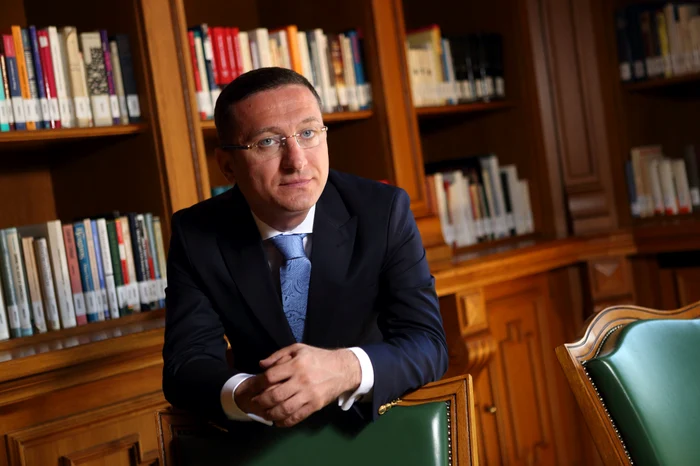
Bogdan Bucur, historian, sociologist and teacher within SNSPA. Personal archive
Special pensions, unintended, but moral
The historian Bogdan Bucur assumes a controversial statement, but in which he believes: the special pensions granted to the magistrates have become, in the current political context, moral: “I know that it will sound outrageous what I will say now, but I can’t find one thing: I have always stated that the special pensions of magistrates They are not only insensitive, but also inequitable. This appreciation remains valid. But it is for the first time in the post-December history of Romania, if the annihilation of the coup attempt is stifled, when this special pension for magistrates, although uninterested and inequitable, becomes moral ”.
The specialist concludes: if the price we have to pay for the vigilance with which democracy is defended in the face of external dangers is a special pension of 5,000 euros, then it will be! “To fight Putin’s secret services, to fight with Potra’s mercenaries, to fight people who hold millions of euros and are willing to mobilize them in order to support an extremist and populist candidate, it is not an easy thing. To fight with this odious hydra armed with military resources, which has support from some people from the Romanian and Russian intelligence, is not an easy thing. And the prosecutor who manages this case, if he will complete him through a conviction, I am absolutely convinced that he deserves the star of Romania with the marks of war ”, considers Prof. Bogdan Bucur.
Because at the moment Romania is in the war. Not a classic war, as it goes to Ukraine, but a hybrid, masked, hidden war, which makes it even more mean, and lower. “We are talking about a war with a group of people from the military structures of our state and is coordinated from Moscow, of Russian secret services. People who are fighting in this war deserve to be appreciated, encouraged, deserve our recognition that can be expressed and through such scary special pensions, but who suddenly become moral ”, considers the specialist.
The democracy in Romania in 2024 was relegated to the Intelligence Economist ranking. Romania registered a significant regress being placed in the category “defective democracy” in that of “hybrid regime”, the reasons? Accusations of Russian interference, illegal use of social networks in the election campaign, violation of the legislation on electoral financing, all culminating in the annulment of the presidential elections by the Constitutional Court. The Romanian score was descended by 0.46 points, from 6.45 to 5.99, our country descending 12 places, to the 72nd position, between the Republic of Moldova (6.04) and Papua New Guinea (5.97), notes the EIU report.
