
Violence in schools tends to become normal, with teachers often feeling overwhelmed by the situation. Why do conflicts between students occur so often and how could they be intervened, we asked teachers and school counselors.
Sport is a means of making friends with children, say FOTo specialists: The Truth Archive
Cases of aggression between students hardly surprise anyone anymore. Teenagers fight with thirst, to the cheers of the “gallery”, and their exploits often end up on social networks. Only then does the school usually admit that there is a problem and announce that “we will take the necessary measures”. The protagonists are sanctioned, the police intervene, a criminal case is drawn up, etc.
To the question “How do you get conflicts between students?” I looked for answers in the schools themselves.
A certain level of aggression, says school psychologist Aurora Szocs, is explainable. “In general, boys have a level of aggression that is given by testosterone. They are not even allowed to phase him out at this point. They don’t have any siblings to mess with, they don’t have any friends to mess with. It is a need of theirs to “grunt”, natural, definitively. But once they are no longer allowed, at some point it accumulates very, very much and the moment it discharges, it discharges very badly. And they end up fighting very badly precisely because they no longer have the possibility to get rid of this tension along the way”explains the psychologist. The list of prohibitions is also long at home. Moreover, when a problem arises between children or teenagers, the impulse of the parents is to solve it instead of the children, or is this not the solution, says the psychologist.
“We are talking about a need that exists and that you cannot neutralize. It is not very appropriate for us adults to solve their problems. We have to teach them to solve these problems. We teach them: how you react, what you say, what you do. The problem is that it takes them by surprise. They’re thinking of a smart, non-aggressive retort, but that’s after the episode is over.” says the psychologist Aurora Szocs.
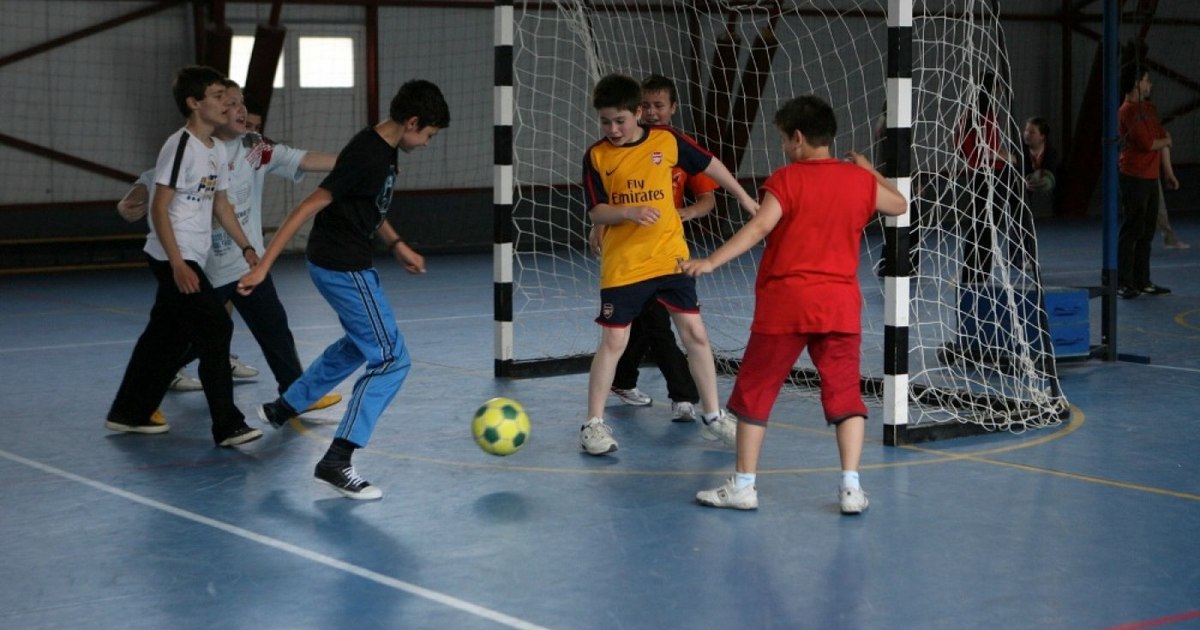
What parents can do, as well as the school, is to give children the opportunity to release their energy in an organized setting, practicing a sport.
“They didn’t learn to express themselves from a young age”
School counselor Loredana Stroiuleasa speaks for her part about the need to intervene in this whole process from a very young age, when children must be taught to express their feelings.
“If you put them in a position to explain why they got to that point, they don’t know how to do it, they have nothing to say. This way of expressing one’s feelings must be implemented from home. Children who reach the age of 16 did not learn to express themselves from an early age. And if at home the parents have a low level of culture and tell them –
Counseling activities in school, conducted in such a way as to “open up” the children, can be of great help in such cases. Role-playing games are a handy tool, says Stroiuleasa.
“They have to be put in a position to transpose themselves into another story. A specific theme is given:. You can ask another student, but let the bully assist. And then he can be asked a question like – ok, what would you do? Thus, he will actually tell what is in his heart. You give him a problem, a role-playing game, and let him express himself.” adds Stroiuleasa.
The conductor has a very important role in defusing conflicts, and the conductor’s hour should be respected every time. Leaders can proceed, in order to know their class very well, to draw up the “class sociogram”.
“Through the quizzes they find out who are the leaders of the class, those whom the other children admire, or listen to, and why. And teachers in general need to know this. Depending on this, the student who is admired is co-opted to attract the others in conflict to other activities, the leader becoming a balancing factor. They work best among themselves, you, the adult, when you come from outside you are already an intruder, who does not know the group. But they know each other and they also manage to resolve their conflict more easily.” says the school counselor.
Based on the sociogram of the class, it should be clear to them who are the violent children, who are the ones with problems at home, often those children who manifest themselves through violence are, in turn, victims, or copy violent behavior from the family.
“If they fought and you picked on them, the next time it will be the same”
Excursions and activities of all kinds during “Green Week” or “Different Week” also have this role, to put the children in different situations, thus learning things about each other, points out the school counselor. These experiences are equally useful to the conductors, those put in the position to “defuse the bombs”, says the psychologist Loredana Stroiuleasa. The leader can observe their behavior in different contexts, train the violent students in activities alongside the less violent ones, so as to “weld” the class.
“If they fought and you picked on them, the next time it will be the same, they haven’t learned anything. They haven’t solved their problems, their frustrations,” says the counselor.
Another structure that is not always given due importance is the class council. It instead provides the supervisor with the framework to expose the problem and seek a solution together with colleagues from the department. The sports teacher, for example, can be warned of conflicts so that he can make students in conflict work together, be good teammates.
“You, as the leader, have to talk to every teacher, that’s why the class council exists. The class council does not meet to punish the child, but we must also find solutions to defuse, how to proceed so that it does not happen again”adds Loredana Stroiuleasa.
In the school run by Loredana Stroiuleasa, one of the rural areas, the children have access to a table tennis table during all breaks, and the teachers usually sit among them and make sure that everyone who wants to have their turn. When the weather is good, the table is in the school yard, and in the winter, in the hall. However, basketball hoops can be installed just as well, or children can be involved in other physical activities that help them use up their energy, bond with friends, etc.
Professor Liviu Mitroi leads the largest high school in the municipality of Caracal and says that he has so far managed to avoid major conflicts between students. Secrets aren’t really secrets at all. He is a sports teacher, and at the “Mihai Viteazul” Theoretical High School, one with very good academic results, the students are also good athletes. The school competes at the highest level with teams from other schools in sports competitions, and this concern helps students to get to know each other outside the classroom and make friends.
“I always tell them to do sports. Every time I am with them in the school yard, on the field, where they need answers to questions, I talk openly with them about any problem. My door is not the door they fear to walk through. Those who are not sports fans can stay in the library, where they can read, listen to music in headphones, learn”, says the teacher.
