
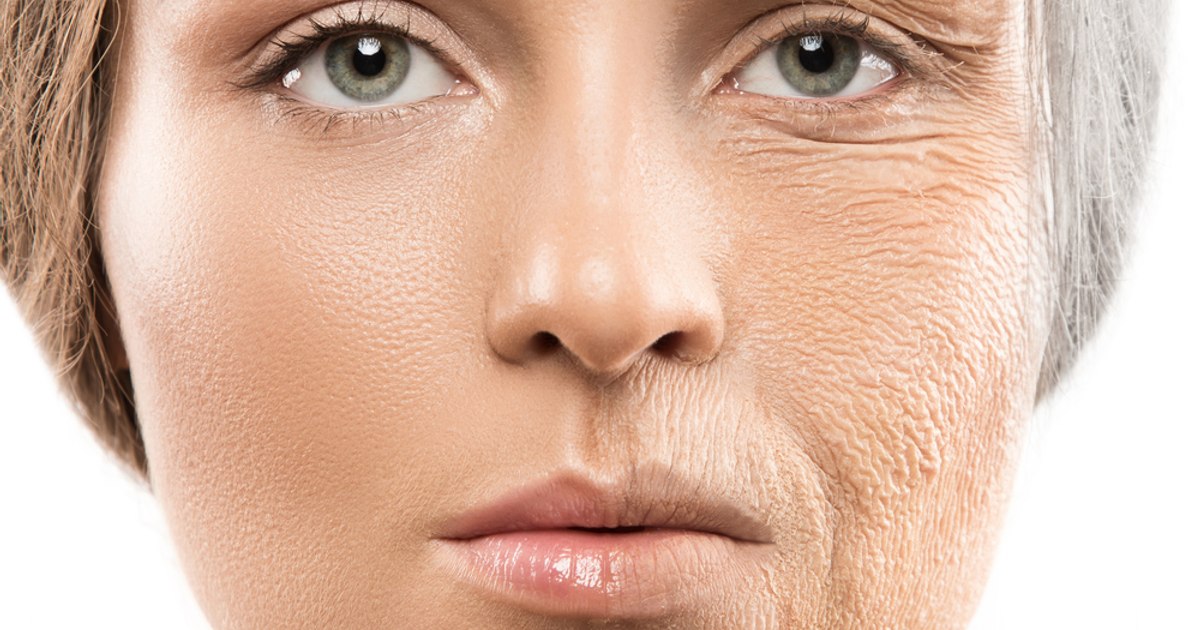
“Accelerated Aging” and increased cancer rates have been attributed to a mix of genetic, lifestyle, dietary and environmental factors. But new data suggests that specific lifestyle choices may be to blame.
The causes of aging in the elderly, the subject of a study PHOTO: Shutterstock
In posts viewed millions of times on the video-sharing app TikTok, the attention-grabbing theory is that a generation of young adults, all under the age of 27, already look older than the generation before them, the Millennials (born between 1981 and 1996). writes dailymail.co.uk.
One of the first to notice was influencer Jordan Howlett, who, aged just 26, confessed to his 12 million followers that he's commonly mistaken for his mum's older brother.
“We live in a time where millennials look much younger for their age, while Gen Z looks older,” he said in a TikTok video. “I'm Gen Z and no one ever believes me. It's mainly because of stress.”
Last week, scientists seemed to suggest that there might be at least some truth to what has, until now, been a funny theory.
Research published at an international cancer conference showed that young people diagnosed with certain types of cancer – particularly lung, gastrointestinal and uterine cancer – are more likely to show signs of what the researchers described as “accelerated aging”.
Simply put, the age of the cells in their body—known as their biological age—was significantly older than their actual age.
This is an emerging field of science and reflects wear and tear on the body as a result of factors such as lifestyle, diet, environment and stress.
Curiously, the American researchers involved in this study stated that there is “hard evidence” that the risk of accelerated aging, and therefore of cancer, increased with each successive generation born after 1965.
And this could mean that Generation Z – those born between 1997 and 2012 who are now becoming young adults – are at a much higher risk of developing potentially deadly diseases such as cancer at a much earlier stage than their parents or grandparents.
This raises a fascinating question: Is it possible that what is being observed on TikTok is the thin end of the knife? Could Gen Z be aging faster than previous generations?
Professor Ilaria Bellantuono, co-director of the Healthy Lifespan Institute at the University of Sheffield, is one of many who think this is at least plausible.
“The simplest answer is that, at this point, we don't know enough to say for sure that younger generations are aging faster or why,”
she says. “This research has not been done. But it is not impossible. We see more diseases in young people, the kind of diseases we would normally expect to develop in older adults. And biological aging is a risk factor for these diseases. In the same way that smokers increase their risk of lung cancer, so too does accelerated aging increase the risk of developing multiple long-term chronic conditions“.
Certainly, when it comes to cancer, diagnoses were once rare in people under 50. But today, scientists have become troubled by a growing epidemic of early-onset tumors in populations around the world. The Princess of Wales, who revealed her own cancer diagnosis at the age of 42, is one of them.
The statistics are stark: between the early 1990s and 2018, cancer among 25-49-year-olds in the UK rose by 22% – a bigger change than for any other age group and more than twice more than the 9% increase in the over 75s.
What triggered this remains unclear. It has been attributed to a complex interaction between genetics, lifestyle, diet and environmental factors.
But the latest US study adds further compelling details.
The researchers, from Washington University School of Medicine in St Louis, used data from the British Biobank – which contains medical and genetic information for half a million UK adults – and looked at blood measurements associated with biological age, including proteins produced by the liver and red blood cell size.
People with the most significant biological aging had twice the risk of early-onset lung cancer, were more than 60% more likely to develop a gastrointestinal tumor, and had an 80% greater risk of uterine cancer. A similar pattern was discovered last year by researchers at the University of Bristol in bowel cancer. They found that for every additional year of biological age over actual age, the risk of bowel cancer increased by 12 percent.
The youngest participants in the US study were 37 years old, but evidence suggests that this aging phenomenon is only getting worse with time.
An investigation led by epidemiologist Dr. Shuji Ogino, of Harvard University, noted that cancer rates have risen steadily since the mid-20th century. “Since 1950, we have found that each successive generation has a higher risk of early-onset cancer“, he said.
In young, healthy people, cells can usually repair and renew themselves. But as they age—either naturally or prematurely—this process can become dysfunctional.
Cells can accumulate damage that they cannot repair and turn into “zombie cells”, which can lead to inflammation and the development of diseases. It's not just the cancer that this causes.
NHS data analyzed by the MoH reveals a 38% rise in the number of under-40s treated for heart attacks in a decade, from 1,730 in 2012/13 to 2,396 in 2022/23. The biggest increase – 89% – was recorded in people aged between 20 and 24 years.
The situation is similar for type 2 diabetes. The latest National Diabetes Audit, published in December, shows that the number of those diagnosed increased by 11.6 percent between 2017 and 2022. But it is worse in young people. For those under 40, the increase is 18.7%, and for those between 19 and 25, 21%.
Amazingly, the number of under-12s with this chronic condition has increased by 66% in four years (although the numbers are still small, from 90 to 150). Research has found that accelerated aging plays a role in the development of type 2 diabetes. In one study, adults with the condition were 12 years older biologically than adults without the condition.
Professor Naveed Sattar, an expert in type 2 diabetes at the University of Glasgow, said: “People who develop diabetes under the age of 40 lose 15-16 years of life expectancy – much more than those diagnosed later, around six years .
“The younger you are when diagnosed, the greater your risk of diabetes-related complications such as cardiovascular disease, kidney problems and heart failure.”
There are other developments that take off with each new generation. Puberty became earlier, especially in girls, by three months every decade. The average age for a girl today is 11, more than a year earlier than 40 years ago. This has harmful effects, experts say.
It is linked to a higher risk of depression, anxiety and substance abuse, and may also increase the risk of breast or uterine cancer in adulthood. Girls who start their periods earlier are also more likely to be obese and suffer from cardiovascular disease.
While no one really knows for sure what causes it, there are clues. One of them is diet.
Dr Ogino points out that in high-income countries such as the UK and the US, generations born since the 1950s have been exposed to increasing amounts of processed food – high in fat, sugar and salt and containing artificial flavours, colourants and industrial chemicals – and recent generations have been exposed to them while still developing in the womb.
Of the 12 types of cancer that are becoming more common in people under 50, eight relate to the digestive system, Dr. Ogino's research found. But in Japan, where diets include more fish, vegetables and legumes, there was no increase in these early-onset cancers.
