

While paracetamol will become more expensive, essential diabetes drugs will disappear from the market altogether. It is the alarm signal raised by the specialists in the pharmaceutical industry, who explained during a press conference why we do not have generic drugs in Romania and ask the authorities to take urgent measures.
In Romania, more than 700 medicines intended for serious diseases are missing. Source: Archive
The urban waste water treatment directive assumes that by 2025 Europe will be the first climate-neutral continent. That is, it will no longer have any negative impact on the climate. “The European commissioners have come up with a package of laws and policies to facilitate the achievement of this objective which, however, impacts us all. The Commission has estimated an impact of €1.2 billion per year for all of Europe, but a recent study by the German Environment Agency estimates more than one billion for Germany alone.” explained Simona Cocoș, president of the Romanian Generic Medicines Manufacturers Association (APMGR).
The Urban Waste Water Treatment Directive will leave us without essential medicines
The biggest risks are with essential, very commonly used drugs, drugs for cardiovascular disease and diabetes. “Paracetamol, for example, because this fee will be paid based on volume. The more a drug is used, the higher the manufacturer will pay. But the costs will be huge. It is estimated that this Directive will increase production costs for very affordable medicines such as paracetamol or metformin, the most widely used diabetes medicine, by up to 50%. the specialist also specified.
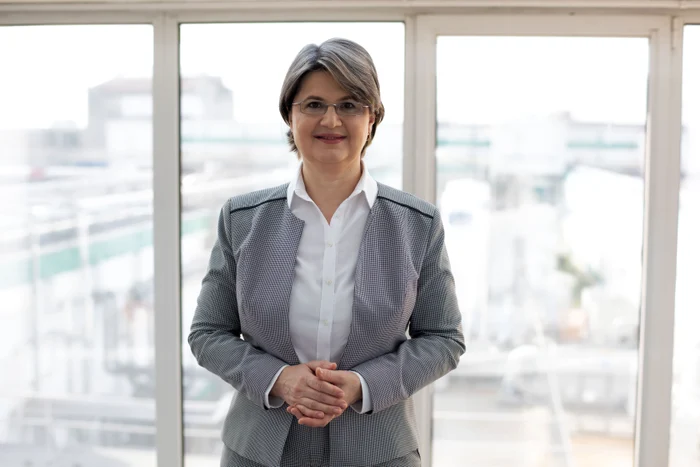
Simona Cocoș, president of APMGR. Source: archive
“Thus, in the case of paracetamol, an absolutely commonplace and essential drug that can be obtained from pharmacies without a prescription, the price on the shelf could increase so much that certain patients will no longer be able to afford it.” Simona Cocoș also declared. But the situation will be even worse in the case of metformin, a drug for diabetes, which is bought with a medical prescription. “In this case, the costs cannot be transferred into the price because it is regulated by the Ministry of Health and is fixed. You can’t raise the price. So, most likely, the manufacturers will withdraw their product from the market. It is a very big danger that has not been properly estimated. And the European Commission’s proposal does not have any kind of protection measures for these very affordable medicines”.
This Directive will also have an impact on the local production of medicines. “There are a lot of drug factories in Romania, many very small local companies that will probably disappear from the market.”
Generic drugs, cheap but non-existent
Generic drugs are the equivalents of original pharmaceutical products whose patents have expired. But although they contain the same active substances as the original products and are used to treat the same conditions, they are 20-80% cheaper than the original products. In Romania, for example, the price of a generic drug cannot exceed 65% of the price of the original drug whose generic it is.
“70% of Romanian patients are treated with generic drugs. And these, in addition to the very low price, have at least two more benefits: when a generic medicine starts to be used, we notice that the number of treated patients increases even two or three times. If until that moment we treated maybe 10,000 or 100,000 patients, with the appearance of the generic drug we treat 200,000 or maybe 300,000 patients”, said Daniel Bran, member of the Administrative Council of the Association of Generic Medicines Manufacturers in Romania. Then, due to the much lower price compared to the original drugs, generic drugs contribute to “budget optimization, leaves room in the budget to be used in other treatments”, continued Daniel Bran.
As a first conclusion, generic drugs are cheap, accessible to a very large number of patients and lead to important budget savings. In Europe, for example, it is estimated that the use of generic medicines leads to annual savings of over €30 billion for patients and public health budgets.
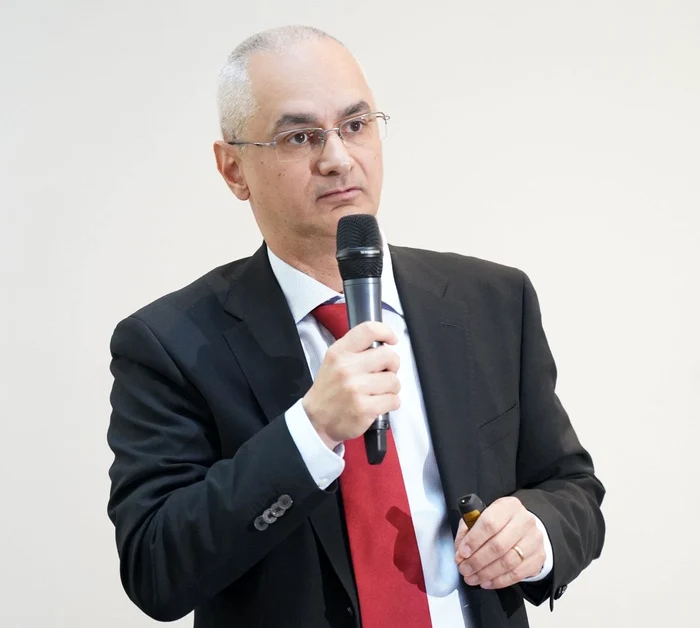
Daniel Bran, member of the APMGR Administrative Council. Source: decisepoate.ro
Why do we not have medicines in Romania? 5 essential reasons
Therefore, if they are so cheap and accessible, why don’t we find them in pharmacies? Currently, according to the list of the National Medicines Agency, 758 medicines are missing for various ailments: from cancer, diabetes, cardiovascular diseases to post-transplant medicines, anti-epileptics or vaccines for children. There are several reasons, pharma specialists say in unison.
The policy of the lowest price puts the big producers on the run
A first reason would be the fact that Romania practices the policy of the lowest price in Europe. Consequence? The companies no longer bring the medicines to Romania because they should sell them at a lower price than the production ones. “The policy of the lowest price in Europe also applies to generic medicines. We have over 750 medicines out of the 4,000 – 5,000 that have prices below 10 lei. That is, with 10 lei we treat a condition of a cardiac, metabolic, etc. nature. A month of days for 10 lei. Maybe we will get rid of the lowest price policy”recommends Daniel Bran, member of the APMGR administrative board.
Clawback fee. 15% of the profit, way too much
Another reason is the clawback tax, i.e. the amount paid by manufacturers to the Romanian state from the profit made from the sale of medicines. Manufacturers of innovative medicines pay 25% of the profit to the Romanian state, and manufacturers of generic medicines – 15%. “Even if the clawback tax is well regulated, if it were to drop from 15% to 10% or from 10% to 5% and increase patient use of generic drugs by 2% we would see not only a cost saving but also a budget impact close to zero. We would have 2.3 times more treated patients, budget savings, and in the long term we would no longer have to come with money from home”, the APMGR representative also stated.
Generic drug reimbursement, years delayed
Then, the specialist says, there is a delay in the use of generic drugs in the compensated system in Romania. “Even if the generic drug is on the market, there is a compensation barrier that delays the possibility of its use even by a year and a half, two. And this can be solved by changing an order – we can’t even talk about a law – in a week. We have unjustified expenses for a year and a half, two on certain innovative drugs that remain the only option because generic drugs cannot be prescribed even if they exist”, Daniel Bran also said.
Hospitals do not purchase enough generic drugs
Another reason would be the fact that in certain hospitals public procurement is done in a deficient manner, according to the experts in the pharmaceutical field. “Exist HOSPITALS where, although the tenders are supposed to be done on the international common name of the drugs, in the specifications there are two separate positions: one for innovative, original biological drugs with a requirement close to the actual consumption of that medical unit, and another position for who have access to biosimilar medicines, those that replace the original. Here, however, the required amount is very small, small, I would say, compared to the actual consumption of the hospital”also specified Arina Gholmieh, vice-president of APMGR. The reason? “In this case we are dealing with an artificial patent extension.”
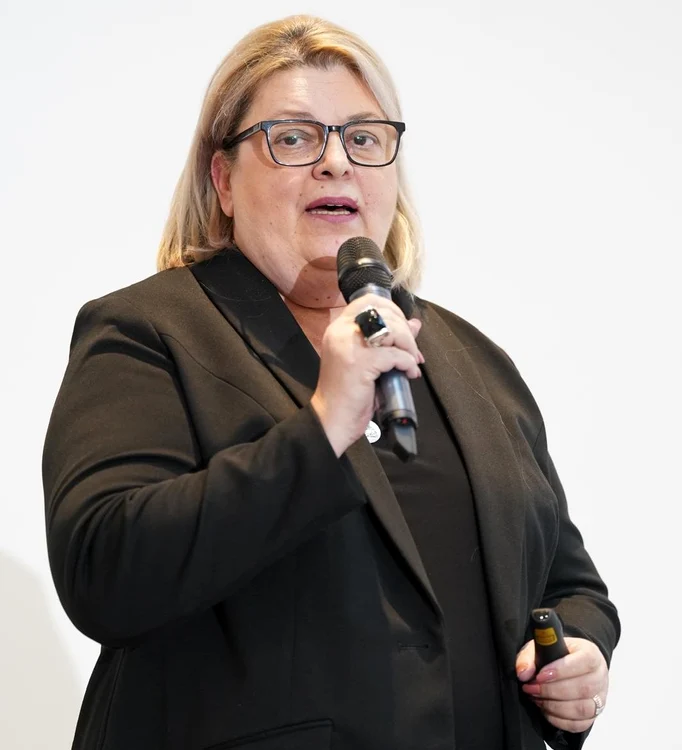
Arina Gholmieh, vice president of APMGR. Source: decisepoate.ro
Biosimilar medicines are not included in therapeutic protocols
Biological drugs, produced from living cells, also have cheaper equivalents. But things are not good here either. The reason? “There are serious delays in the access of biosimilar drugs (those that replace biological drugs) in therapeutic protocols. And a paradoxical situation is created when the biosimilar drug reaches the list of compensated drugs, but cannot be prescribed because it is not included in the treatment protocol. And this is how we are again dealing with limiting patients’ access to these extremely valuable drugs that, in practice, treat serious diseases, serious, disabling diseases”, he also specified Arina Gholmieh.
“They are expensive drugs, produced by complex technologies and which consume the budget in a very large proportion. In 2023, for example, 1.4 billion euros were consumed by these biological medicines. Consumption is high, but their therapeutic value is also very important, because they address serious, sometimes disabling diseases. And in this case, it is possible for biosimilars to enter the market, which would bring budget optimization and, implicitly, the opportunity to treat more patients”. Arina Gholmich also comes with an example. “Let’s take a look at the Adalimumab market. At the time of 2019, when only the reference biological medicine was available on the market, and at the time of 2023, when biosimilar medicines were also available on the market. What happened? Not only are we dealing with an increase in the number of patients treated, by 16%, but this increase was made with a 36% lower budget”.
The integration of generic and biosimilar drugs in healthcare must be the result of a strategic partnership between the authorities and the drug industry, experts believe. They announce that similar drugs that will enter the market in the period 2024-2026 will create a budget optimization in the next five years of almost 250 million euros.
