
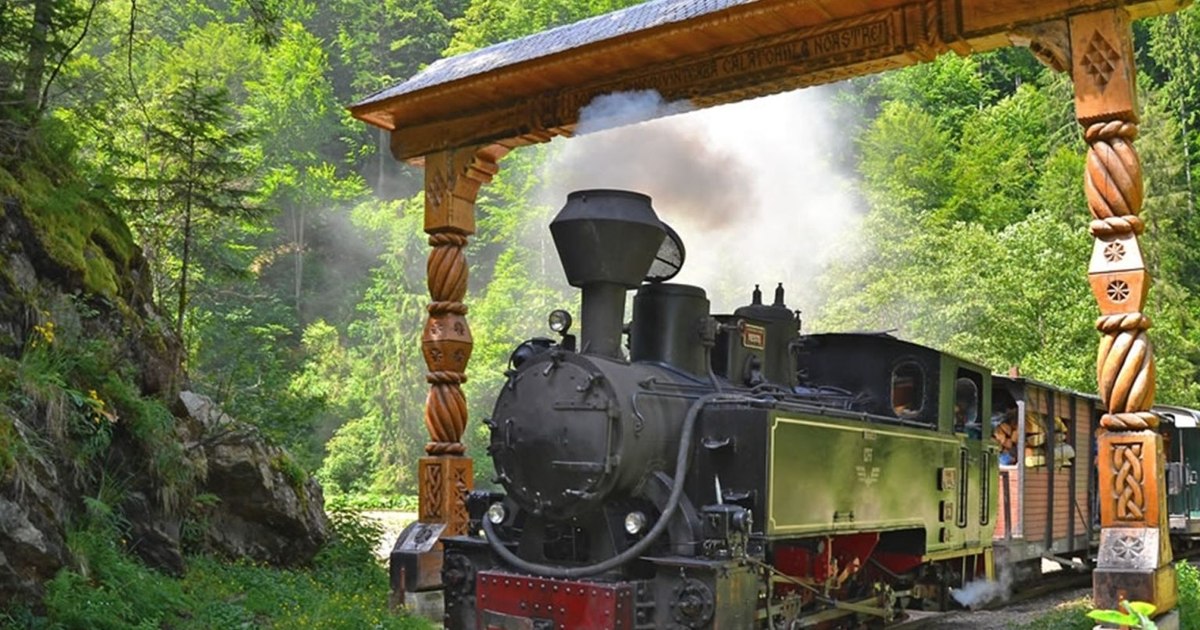
Mocănița, the narrow-gauge train that runs through the mountains, is considered one of the most attractive tourist experiences in Romania. There are at least seven such trains in the country, the most famous being the one in Maramureș. There are also in Mureș, Alba, Bistrita, Covasna and Hunedoara.
Mocănița Valea Vaserului, one of the most beautiful in the country PHOTO Vișeu de Sus City Hall
Whether it's summer or winter, a ride on the snowmobile takes you out of everyday life and transports you to another world, where you expect to meet the fairies from the stories or characters from the stories you read as a child. If you have arrived in Maramureș, at Vișeu de Sus, you cannot miss such a walk that promises to relax you and restore your connection with nature.
The narrow gauge train from Maramureș also has an interesting history. In the beginning, the railway had a utilitarian function (like many others, by the way), it was used to transport wood from the forest. It was an easier technical solution for the transport of wood material than the one on water, and today, even if it is still used for this function, tourism exploitation is increasingly important.
Work on the railway began in 1932 and was carried out according to the Austro-Hungarian model, with a narrow gauge of 760 mm, and since then the CFF (Căile Ferate Forestiere) Vişeu de Sus has been operating almost without interruption.
Although forest railways then spread throughout Europe, after 1945 they were replaced by forest roads. In Romania, however, a few have been preserved, with the same steam locomotives, powered by wood and coal.
Spectacular route
The route starts from Vișeu de Sus and goes along the Vaserului Valley, and after the first eight kilometers it goes deep into the forest where there is no mobile phone signal, among the steep cliffs of the gorge. The area is part of the “Maramureșului Mountains” Natural Park.
Those who venture on a trip to the Vaser Valley experience not only spectacular landscapes, but even history lessons. During the approximately 50 kilometers of narrow gauge railway, the route passes near an old military cemetery. It is about a German military cemetery where 98 soldiers of the 3rd Mountain Hunter Regiment from the “Carpathian” army corps – Karpathenkorps were buried, along with four Austro-Hungarian and three Russian soldiers. All of them fell in the battles with the tsarist army in the Maramureş Mountains, from the winter of 1916-1917.
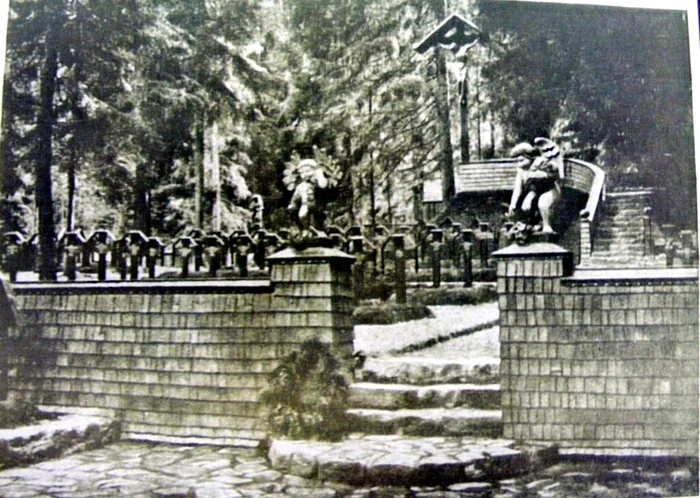
The military cemetery on Valea Vaserului PHOTO Regiomm
The cemetery is located near the Miraj station, at km 35.6 from the Mocăniţei route and was affected by floods during the interwar period, then abandoned for many years, being partially brought back to light in 2011.
Built with the tracks of the highest railway in the Carpathians
Moreover, in Maramureș there was also the highest railway in the Carpathians, which connected with Moldova and passed through the Prislop Pass, at an altitude of over 1,400 meters. Because of the difficult route and the very high slope, which put a lot of pressure on the locomotives and frequently broke down, after the war it was abandoned, and the rails were used for the Vaser Valley railway.
The Mocănită route starts from Vișeu de Sus and reaches the CFF station called Făina, with several stops along the route, where you can stop and even buy souvenirs. The ride takes about six hours, starts in the morning at 9.00 and returns in the afternoon, giving tourists a memorable day.
A private company has been exploiting Mocănița since the 2000s, developing the tourist component. The company put back into operation locomotives that had been withdrawn, new passenger cars were purchased and the depot and the historic station building were restored.
The price of a ticket is 89 lei, with discounts for pensioners and students at 79 lei and 60 lei for students. Tickets can be purchased online.
Suceava – Moldova
The Suceava – Moldovita railway was built by a sawmill owner from Munich, Louis Ortieb, and put into use in 1888 for the transport of wood from the forest to the sawmill. The line was taken over from the church fund in 1909, when the gauge of the line was changed from 800 mm to the standardized gauge of 760 mm.
The original route was 23.9 km, but over the years more were built, so that in 1987 it reached a length of 73 kilometers. The current steam train line is 12 km long.
The route starts from Poiana Novăț – Novicior, climbs Vârful Greben, then the summit of Obcioara, after which it descends to Borcut and climbs to the former baths of Novicior. It then returns to the CFF Novicior station, the whole journey lasting about a day.
The price of a ticket for adults is 57 lei, with a discount for pupils and students to 34 lei.
Sovata (Mureș)
Mocănița from Sovata in Mureș county offers a two-hour train ride, over a distance of 14 km between Sovata and Câmpu Cetății. The locomotive was built in 1949 in Poland and components manufactured in Romania, in Reșita, in 1919 were used.
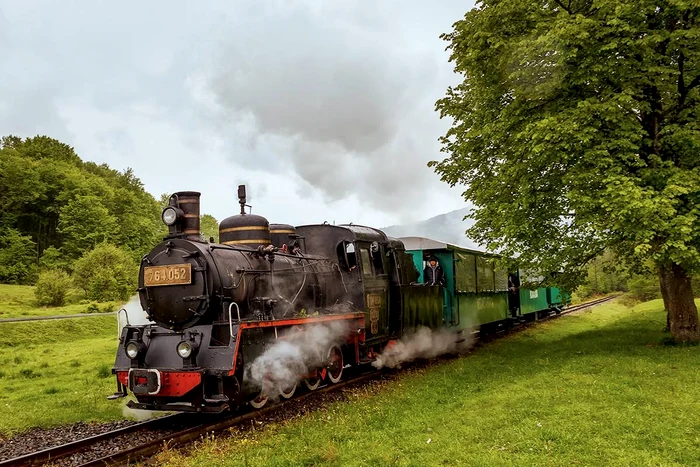
Mocănița Sovata PHOTO Facebook
Until September, the train runs daily, except on Mondays. It leaves at 11.00, 13.30 and 17.00 from the station Gara Mică Sovata. A minimum of 15 passengers is required for the train to run.
The price of a ticket is 60 lei for adults, 50 lei for pensioners and 40 for students.
According to the Romania Travel Guide, at the beginning, in 1915, the train traveled the Târgu Mureș – Praid route, being mainly a means of transport for people and goods, but also a tourist attraction. The train ran continuously for 70 years, then there were periods when the railway was closed. After the repairs, the truck resumed its route and runs again on the Sovata – Câmpu Cetății section.
The steam train consists of a locomotive and three carriages, two closed and one gondola.
Tickets are bought right on the train, so you don't have to wait if you want to get a seat. The maximum speed of the moped does not exceed 35 km/h, but on certain parts of the route it is even lower, so the 14 km journey takes about 45 minutes – an hour.
Criscior (Hunedoara)
The only moped in Hunedoara county travels on the 7 km route between Criscior and Brad.
The train runs until September and the journey takes one hour. The price of a ticket is 25 lei round trip and 15 lei for children.
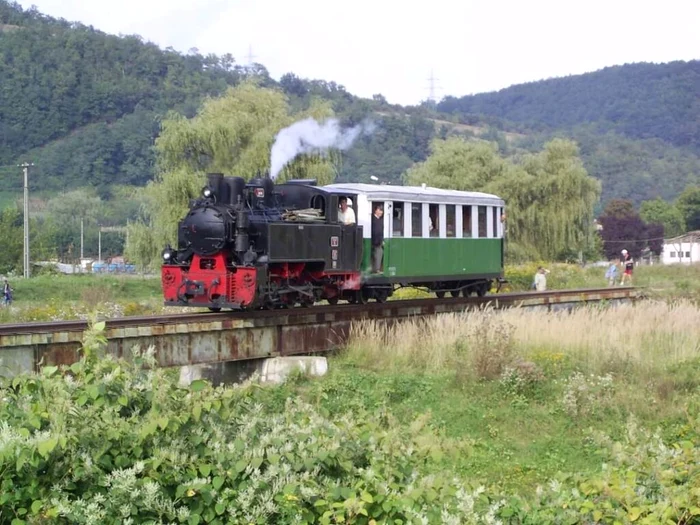
Mocănița Brad – Criscior PHOTO Western Mocănița
The train, which has a capacity of 130 seats, operates on this route twice a week, on Saturday and Sunday.
Teaca (Bistrita) – Râciu (Mureș)
Also called Mocănița Transilvaniei, it has a 35-kilometer route that connects the town of Teaca in Bistrița-Năsăud with Râciu in Mureș county.
The railway was built as a result of the major interest in the Mures basin to solve the problem of transporting products from the Praid salt deposits, the Miraj Valley forests, cereals and animals from Bandului Plain, Miheşului and Tecii, goods desired not only in the area of Transylvania and which, for the most part, took the road to Budapest and Vienna.
Thus, in 1915 the railway from Mureș county was put into use, after the first part of the construction started in 1912 was destroyed by the floods of 1913.
The first transports carried out between 1915 and 1919 were military transports of troops, food and supplies necessary to support the Austro-Hungarian army, engaged in the first world war.
The departure is at 10.00, from the Teaca station. The train can carry a maximum of 60 people and a minimum of 20. On the route, stops are made at Valea Lupului and Ocnița station. At Comlod, tourists can visit Teleki Castle.
Order (Covasna)
The area where the narrow-gauge train runs from Comandău was considered one of the most beautiful and interesting in Romania. Of the entire line up to 20 years ago, only seven kilometers are still practicable, and this is thanks to particular efforts to preserve and restore the remaining infrastructure, the website of the railway shows. The landscape and the trip through the forest make the trip to Comandău worth it.
The log cabin here was built in the period 1889-1891 and rehabilitated in 2007. This route was used to transport wood from the Brețcului Mountains to the Covasna station between 1892 and 1999. The pandemic put it out of use, like many other objectives touristic.
Abrud – Campeni (Alba)
The Mocănița from Valea Ariesului was put back into operation in 2020, on a route of 11 kilometers, out of the 94 that it had from its construction in 1912 until 1997. It was taken out of use in 1998. The narrow line had 27 stations, including 4 stations and 23 bus stops.
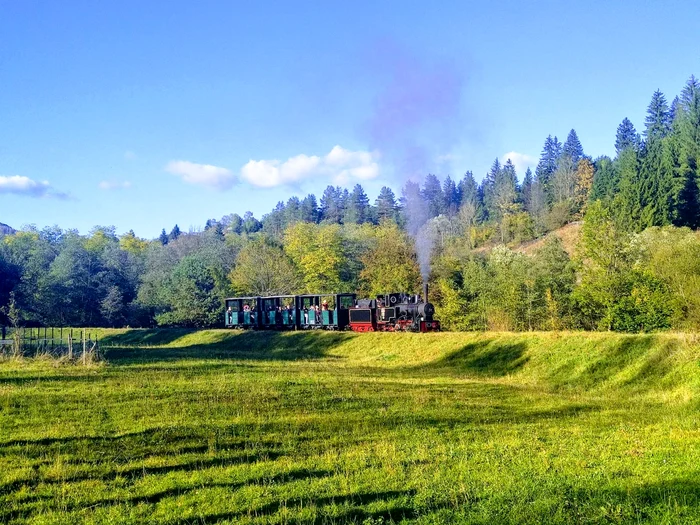
Mocănița Abrud – Campeni PHOTO Facebook
Until the 1970s, the train was powered by steam locomotives. As technology evolved, the locomotives had modern trains, which were the equivalent of those running on normal lines, but on a smaller scale. These were the last trains that ran on Valea Ariesului.
The train runs on weekends and departs at 10.00, 12.00 and 15.00, and during the week only the 15.00 train will run.
The price of a ticket is 25 lei, and for children, 15 lei.
