
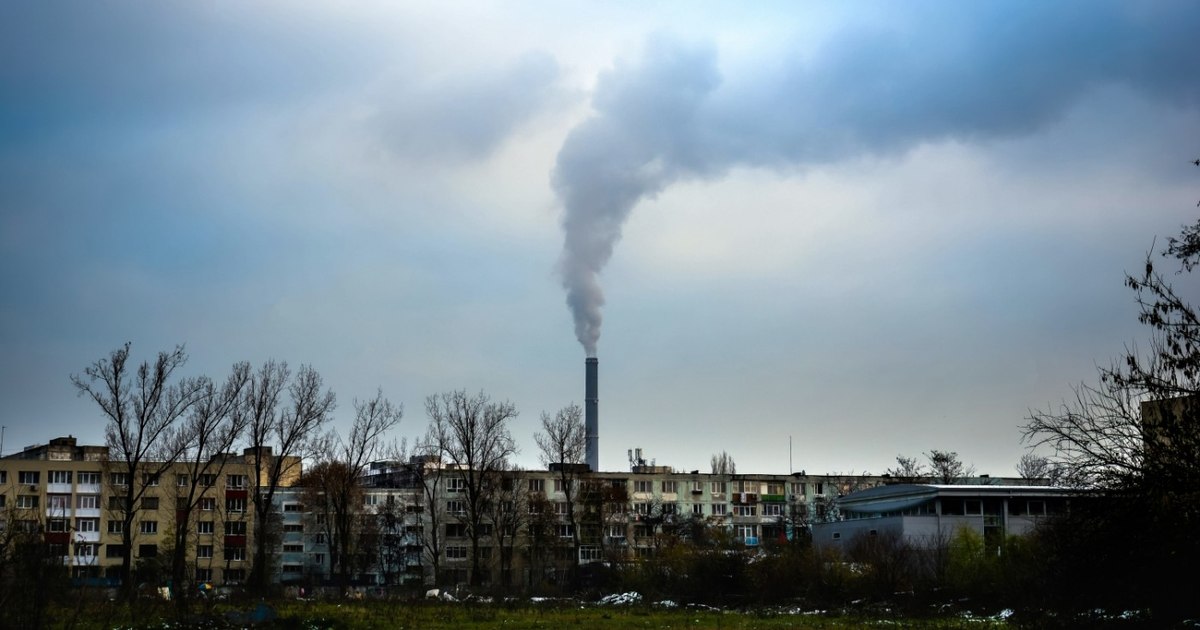
The health costs, caused by air pollution in Bucharest, are the highest in Europe, and reach approximately 3,000 euros/person, that is why there is a need to implement Low Emission Zones (ZNSE) by 2025, in order to improve air quality, support the experts of the 2Celsius Association, in a specialized analysis, cited by Agerpres.î
The health costs generated by air pollution in the Capital are huge. PHOTO Archive Octav Ganea
“The air pollution it is associated with a wide range of health problems, including chronic respiratory disease, cardiovascular disease and lung cancer. The World Health Organization estimates that air pollution annually causes approximately 7 million premature deaths globally. The health costs caused by air pollution in Bucharest are the highest in Europe, at around 3,000 euros. At the same time, the European Environment Agency announces that air pollution remains the main environmental risk for the health of Europeans and estimates that at least 253,000 deaths in the EU in 2021 can be attributed to exposure to fine suspended particle pollution (PM2.5 ) above the concentration of 5 micrograms/m3, recommended by the WHO“, mentions the analysis.
A research carried out by 2Celsius and Ecopolis in 2023, through which the level of nitrogen dioxide (NO2) was monitored in 21 locations in Bucharest, shows exceeding the limit thresholds imposed by the legislation in six points.
The capital, suffocated by cars and their emissions
NO2 is a gas resulting from road traffic, industrial activities and the production of electricity and, in high quantities, it affects human health, causing respiratory ailments in particular.
“Bucharest has been going through a mobility crisis for years, which meant that the city is suffocated by cars and their emissions. Low-emission zones are one of the most effective ways to improve air quality in cities, all the more so when they are implemented across its entire surface. They must work together with a functional network and as dense as possible air quality monitoringand, because that’s the only way we can show people how effective these areas are (…)“, explained Mihai Stoica, the executive director of 2Celsius, in the analysis quoted by Agerpres.
The environmental organization presented a proposal for the implementation of such areas in the Report on the burning of waste and other recyclable materials in Bucharest and Ilfov, developed by Ecopolis and AerLive in 2021.
According to Law 155/2023 on sustainable urban mobility, Low Emission Zones represent delimited urban areas where vehicle access is restricted or regulated depending on the level of pollutant emissions they generate. The main purpose of these areas is to reduce air and noise pollution, thus promoting a healthier environment for residents and contributing to improving the quality of life in cities.
What does the “implementation of low-emission zones” mean?
Representatives of the profile association say that in these areas, the use of less polluting means of transport, such as electric vehicles, bicycles or ecological public transport, is encouraged, and taxes or restrictions may be applied to vehicles with conventional engines that do not comply with emission standards. established. “Implementation of low emission zones” involves a series of administrative and technical measures, including the installation of appropriate signs, monitoring the level of emissions and the application of sanctions for non-compliance with the regulations:
“The local authorities are responsible for the delimitation and management of these areas, having the freedom to establish the specific rules according to the needs and particularities of each city. Through these measures, the aim is not only to reduce pollution, but also to encourage the adoption of more sustainable and environmentally friendly urban mobility habits”.
The 2Celsius Association is a non-governmental organization established in 2010 with the aim of influencing climate change policies at the national and European level.
