
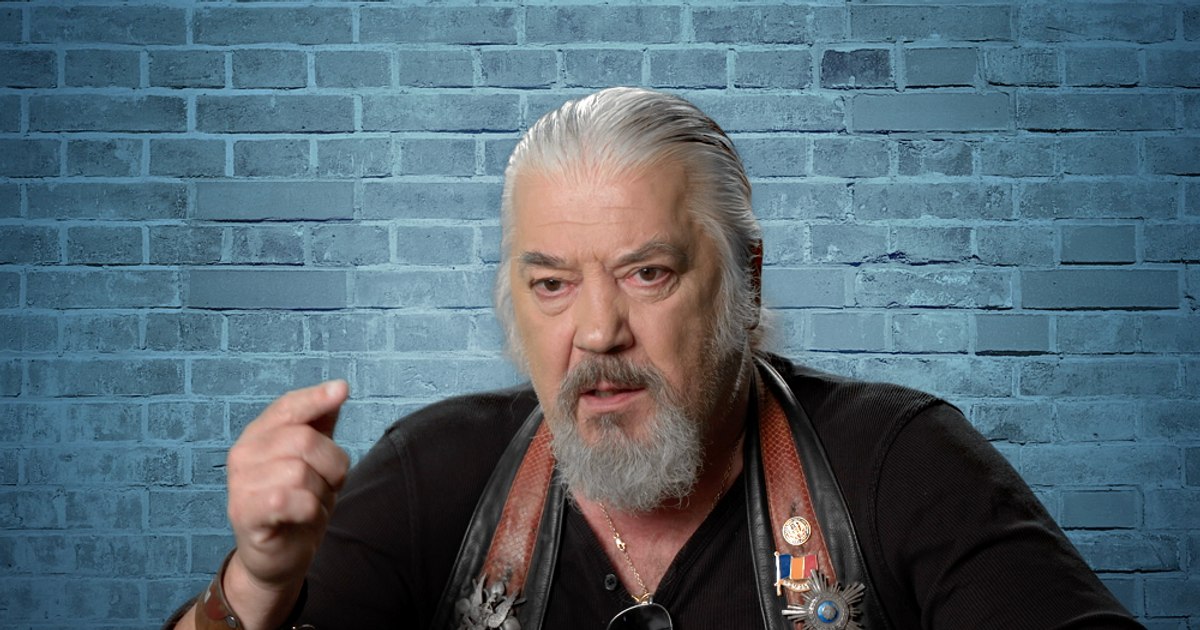
Nicu Covaci was my guest at Adevărul Live, on January 18, 2023, before the premiere of the documentary film Phoenix. Grace/Gar. The artist’s greatest wish: “Phoenix moves on”
Nicu Covaci in Phoenix. Har/Jar Photo source Romanian Television
“I feel my soul bursting with a whistle
What a shrill song
For the days that have passed
For the dark and sultry nights”
“What I did, but also what price I paid”
Phoenix. Har/Jar, the documentary made by Televiziune Română and directed by Cornel Mihalache reunited the band members from the period before their flight from Romania in 1977 and evokes the important moments in the tumultuous chronology of the band, from the first appearances in 1962 under the name “Sfinții “, to date.
The film tells in the premiere, the story of the 60 years and the events that the Phoenix members went through in the country, the relationship with the Securitate, the moments when they decided to flee Romania and how they succeeded, but also the life they led abroad before and after the Revolution of ’89.
I asked Nicu Covaci how the 60 years passed. I expected them to tell me about their success in the country and in the West, how they managed to achieve it in a space where they were forced to adapt and compete. I expected him to tell me what it was like to offer Romanian ethno-rock to the Western European public. None of this was told to me by Nicu Covaci in the show.
“My dear, they passed with many joys and with many troubles. The truth is that everything has a price. The world praises me Nicule, what have you achieved! What you did! But what price did I pay?! The world does not know and it is better not to know. Just the simple fact that I’m back in the country, which no one expected. My mother was stabbed to death 30 times and to this day it is not known who did this horrible crime, although I suspect. I don’t want to spoil the mood, but it’s about Phoenix.”
Nicu Covaci seemed to me less concerned with the history of Phoenix. For him, the future of the band was much more important.
“We are moving forward, and that is what today’s show should support and help. People should understand that not me or Mircea Baniciu or Josef Kappl are important. What matters is our message, our music that stays and is listened to. You listen to our music even with the light off, because it gives you a mood. Art consists of emotional states. If it doesn’t create an emotional state for you, music is just noise”
“I started with dew on my feet
To sing a sun song
For the days to come
For jasmine nights”
“No one supports the new formation”
Nicu Covaci was angry because, from his point of view, radio stations in Romania do not broadcast the music of the new Phoenix. Generation Z knows the lyrics to many of the band’s songs, but for Covaci it wasn’t enough that the Phoenix, through Mircea Baniciu’s voice, is broadcast on radio playlists in the country.
” I am not convinced of this. And if it airs, airs what, as you said the known pieces. But no one supports the new formation to move forward. Unfortunately, we are still dug in today” thought Nicu Covaci
“The trembling of the waters
And the rustling of the woods
In it they meet
And I warm my soul”
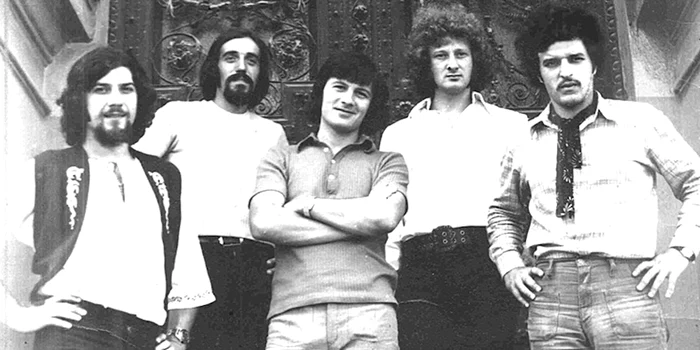
Phoenix, archive photo Photo source Romanian television
“I had enough money”
One of the most moving moments in the documentary about Phoenix is that of the letter that Nicu Covaci sends to his mother in 1977 and which never reached the recipient. The producers of the film found it in the files of the Security. For the first time, after 45 years, Nicu Covaci is again reading a letter for his deceased mother. In those pages, he told her about what life is like in Germany, about the hopes that had already begun to falter and the reality there that contradicted the dream that had generated their departure from the country.
I asked Nicu Covaci if they, the Phoenixes of the ’60s-’70s, felt they were the masters of Romania. They were allowed to wear braids, dress like the West, exchange currency. And all this, at a time when things were starting to get harder and harder for the Romanians.
“On the one hand, we were quite discreet, on the other hand, huge money was being made behind our backs, and then the Security turned a blind eye. It was said that Nicu Covaci is so modest that he only takes 10% of the proceeds, which I shared with the boys. So that moment was important because there was a lot of money for everyone. I had enough money, and I invested it in the installations. We had the most terrible installation that you could not find in either the Hungarians or the Czechs. That’s how we could sing in stadiums” Nicu Covaci remembered
In the 60s and 70s, the music from their concerts in the country and then, after their escape, recorded on tapes circulating clandestinely, was a measure of freedom for Romanians. I finally asked Nicu Covaci what freedom is:
“My freedom is limited to your freedom. If we keep this in mind, Peace is made on earth. Unfortunately, this is not taken into account. “
“Hey, hey, the grass is green
The sun is high in the sky
Hey, hey, winter is gone
With her iron teeth”
Lyrics Whistle Bud, Phoenix, 1974
In the edition of Adevărul Live, together with Nicu Covaci, Mircea Baniciu and Claudia Nedelcu, the producer of the film Phoenix, were also invited. Har/Jar” produced by TVR
Watch the full Adevărul Live edition.
