
Professor of Anesthesia and Intensive Care, Dan Longrois, who works in Paris and is one of the most reputable experts in his field, believes that the decision of the two doctors at the Pantelimon hospital to reduce the dose of noradrenaline was a correct one.
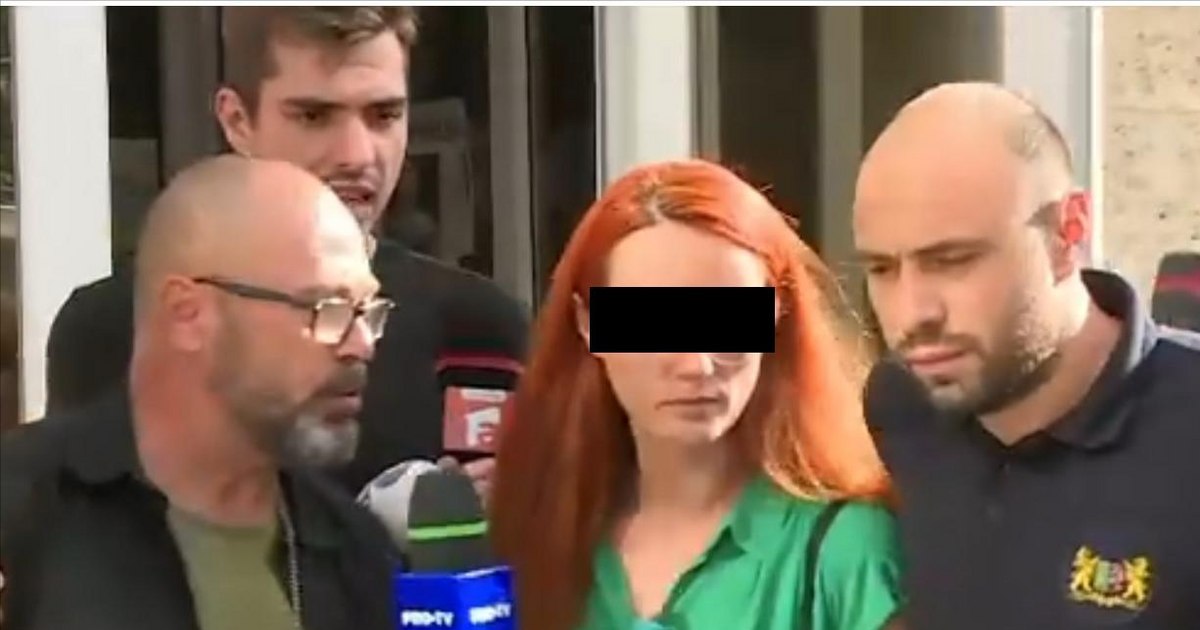
“Lady with the scythe”, as the doctor accused of murder was called PHOTO Archive
“Reaching the conclusion that the decrease in noradrenaline doses is the cause of death seems excessive to me, and even if there was an autopsy, this conclusion cannot be credible”he declared.
Professor of Anesthesia and Intensive Care Dan Longrois, who works in Paris and is one of the most reputable experts in his field, explained, in the context of the scandal that broke out at the Pantelimon Hospital, what care in the intensive care wards actually entails, such as noradrenaline used in certain phases, but also what legislative framework has been adopted by many western countries related to the therapeutic limitation in the case of patients in terminal stages of the disease.
“Reducing doses of noradrenaline was not a mistake”
Patients who end up in intensive care, says the doctor, end up there because they have serious health problems, and vital organs such as the heart, lungs, kidney, liver, and brain are dysfunctional. “The principle of care in intensive care is that the treatment applied by doctors is able to mobilize what we call new functional reserves, that is, it means that the organ is dysfunctional, but if it is cared for correctly, it can recover part of its functions to keep in life the patient”.
With modern techniques of intensive therapy, we can almost completely replace the function of the lung, the function of the heart, the kidney, in part the function of the liver, we cannot replace the brain function. All these techniques try to recover the affected organ which may still have a minimal functional reserve or, on the contrary, may enter the so-called refractory shock. “Refractory shock means that there is no longer any function that can be mobilized and then whatever the doctors do, the result of the intensive therapy will be death, there can be no other. So this patient, when he was admitted to resuscitation, was in a state of refractory shock, which means that no matter how high the dose of noradrenaline, there is no functional reserve left and the probability of keeping him alive is almost zero”the doctor explained to news.ro.
He considers that in the case of a refractory shock “the fact that the doses of noradrenaline were lowered is not a mistake in itself”. The reason? “Because, at a given moment, there are paradoxical effects with this noradrenaline and by increasing the doses very very much, there are harmful effects. So I don’t think there is any mistake and the physiopathological reasoning for reducing the doses of noradrenaline can be justified. To reach the conclusion that the decrease in noradrenaline doses is the cause of death seems excessive to me, and even if there was an autopsy, this conclusion cannot be credible”believes Prof. Dan Longrois.
What is “therapeutic limitation” and what is the protocol in France
In France, the doctor explains, patients, while they are still in full health, can express their wish, in a legislative framework, related to what should happen to them in the event that they might need hospitalization in ATI. However, there is also legislation for situations where the patient does not express any desire in this regard. “In many western countries the legislator has created a framework that is not extremely strict, in which patients, when they are still in good health, can write advance directives on a register and can say I do not want to be admitted to resuscitation if it happens to me something, or if I’m admitted to resuscitation I don’t want to be intubated and put on mechanical ventilation. These advance directives can be changed at any time, of course, can be shared with the family, and are an element of reflection for the doctors.
In the absence of these advance directives, intensive care doctors may consider that the patient’s evolution, chronic diseases, lower or greater response to treatment make the hope of success of intensive care very, very small, if not even zero. ” And then the family is informed and the legislator provided that doctors from intensive care contact doctors from other intensive care, so that they are not also actors and referees, and then they ask their colleagues to give their opinion on the patient’s condition and then it is decided, no definitely…in France there is no euthanasia, but a limitation of the therapeutic escalation is decided, it is decided for example not to go to more than 5 mg per hour of noradrenaline, whatever happens, it is decided that, if it is a cardiac arrest, the patient should not be resuscitated because he has no hope of getting out of resuscitation in a state compatible with a life, let’s say, acceptable if not normal”the teacher explained.
These procedures are called therapeutic limitation procedures in France, very legal. “The family of course participates, the role of the family can be major, the family can say we don’t agree or say we’ll meet again every day and depending on the evolution we’ll see and it’s a dialogue in a fairly fair legislative framework and with very very few medico-legal problems. This legal framework can be extended to terminal patients apart from intensive therapy, and we find in this legal framework the best solutions, first for the patient, for the family to agree, and after that no medico-economic or cost considerations intervene , is totally human. Patients who have spent several days or weeks in intensive care, including young ones, despite modern treatments, those who survive say that the suffering is terrible in intensive care and those who survive generally have a very, very impaired quality of life “.
Romania has no legislation that regulates the therapy of patients with ATI
“This legislative framework seems to me to be an essential element, all Western countries have adopted it, not on the same model, each country has created an adapted legislative framework, so the problem is no longer medical or legislative, it is societal, that is, society must accept the fact that at some point patients who are terminally ill it is not reasonable to escalate endlessly because they have no benefit, they suffer and it makes no sense. As far as I know, such a legal framework does not exist in Romania, and then this limitation of therapies could benefit from a legislative framework”the doctor specified.
“Society realizes that medicine does not have unlimited powers, two, it creates a relationship of understanding between the patient, society and doctors, and accusations against doctors that “you didn’t do your best” will no longer exist. So it seems to me the most important and most useful solution for society, for patients and for the medical body, is a compromise solution with priority patient care”, he explains why such legislation is needed.
Prof. Dan Longrois offers his support and expertise to his colleagues in Romania for the creation of a legislative framework related to therapeutic limitation. “I would like to and if I can contribute, I will do it with great pleasure for my colleagues who are in Society of Anesthesia and Intensive Careand with whom I have collaborated for many years, if my experience in France could help, I will do it with great pleasure to find a legislative framework that protects all the actors and first of all the patients”.
