
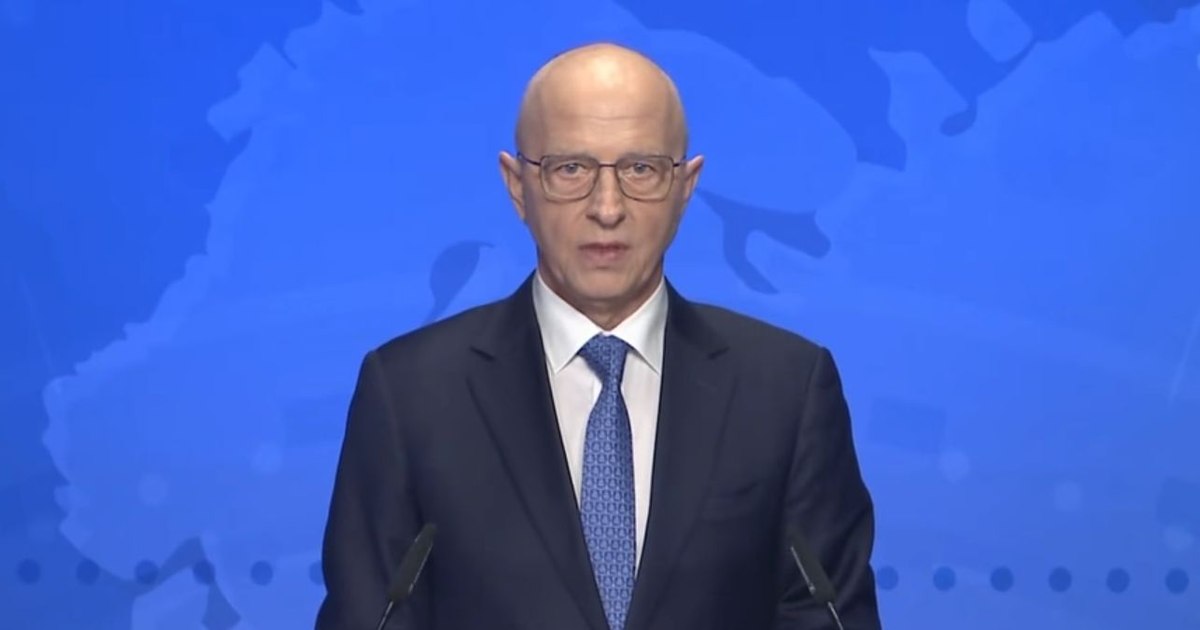
Mark Rutte is looking for his deputy at NATO to replace Mircea Geoană, who will resign to participate in the presidential elections, Politico writes, specifying who the favorites are.
Mircea Geoană could resign from his position in NATO
The current deputy, Mircea Geoană, who has held the position since 2019, is expected to step down to run in Romania’s presidential election in November, NATO officials told POLITICO.
A senior NATO diplomat in Western Europe said there was a general consensus among the allies that an Eastern European should be appointed as Rutte’s deputy.
The discussion at NATO headquarters centers around two former female operatives from North Macedonia and Bulgaria, two Balkan countries under Soviet control until the end of the Cold War.
“The job could go to a woman from Europe for Est”, former NATO spokesperson Oana Lungescu told POLITICO. “Not least because of public efforts to appoint one as general secretary in Rutte’s place”.
Rutte will take the helm at NATO on October 2, as the military alliance sets its sights on an urgent mission to shore up its eastern flank to prevent any potential Russian aggression. Germany, for example, estimates that Russia could be militarily ready to attack NATO countries within five to eight years, if it chose to do so.
That makes deep knowledge of Kremlinology relevant when it comes to Rutte’s choice of his deputy.
The name of former North Macedonian defense minister Radmila Šekerinska has been widely circulated, according to a NATO diplomat and a senior NATO official. If elected, she would be the most senior NATO official in the Western Balkans region outside the European Union. The country joined NATO four years ago, with Šekerinska playing a key role in its membership.
Pro-Vest Šekerinska is currently vice-president of the Party of European Socialists at the European level. In an interview after Russia’s full-scale invasion of Ukraine, she rejected Russia’s claim that NATO’s eastward expansion was a “sinister plan of the West“.
Majda Ruge, senior policy researcher at the European Council on Foreign Relations think tank, praised her as an ideal candidate.
“For the next (Deputy Secretary General), NATO will need a senior figure who is very competent, has balls, is smart about Russia and also understands the challenges in the Western Balkans. Radmila Šekerinska fits this profile perfectly,” said Ruge, who is an expert on the Balkan region.
Another candidate is Bulgaria’s former deputy prime minister and former European commissioner Mariya Gabriel, according to two officials with direct knowledge of her plans.
“There are rumors surrounding former European Commissioner and Bulgarian Deputy Prime Minister Mariya Gabriel“, Lungescu said.
The delegations of Bulgaria and North Macedonia to NATO did not comment on the candidacies. NATO declined to comment.
Bulgaria has been in the spotlight due to its political elites’ close ties to Russia. In April, acting Prime Minister Nikolai Denkov warned in an interview with POLITICO that “Russia will do everything possible to regain its strong influence in Bulgaria.” Sofia has also worked out deals to boost Moscow’s role as the dominant energy supplier in southeastern Europe, despite the EU country’s rhetorical support for Ukraine.
However, both countries are plagued by corruption concerns.
According to Transparency International, Bulgaria ranks 67th worldwide in its Corruption Perceptions Index. North Macedonia is in 76th place.
While the two Balkan candidates are considered the frontrunners, there are other proposed candidates being presented to Rutte. Former Latvian Prime Minister Krišjānis Kariņš, who once wanted Rutte’s job, is in the running to be his deputy, according to a senior Latvian official who was granted anonymity to speak.
Poland and Turkey – both with serious military structures – are considering offering their own candidates, according to two NATO diplomats. However, Poland is besieged by infighting between President Andrzej Duda and Prime Minister Donald Tusk.
The role of deputy general secretary has grown in importance over the past decade or so, according to Lungescu. The office holder’s primary role is to deputize for the chief and chair the twice-weekly meetings of the 32 ambassadors in the North Atlantic Council or any emergency meeting, including the NATO-Ukraine Council.
In May 2021, Geoana presided over the informal meeting of NATO foreign ministers in Berlin, when the head of NATO, Jens Stoltenberg, was diagnosed with Covid.
