
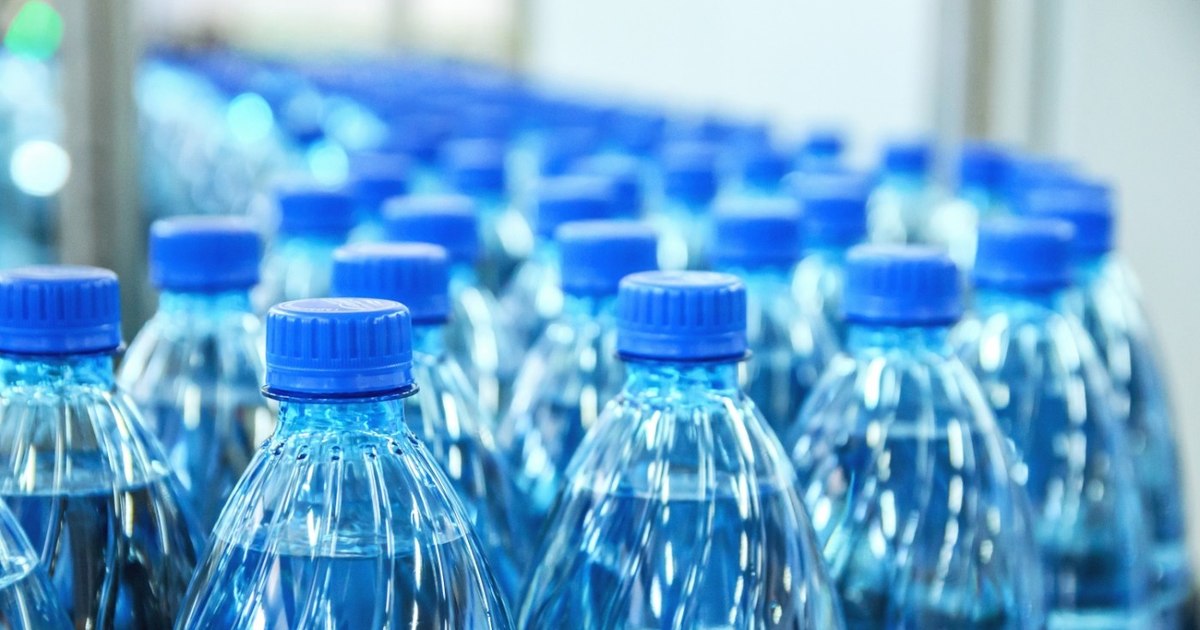
According to research, up to three-quarters of all the bottled water we drink could contain potentially harmful chemicals linked to cancer.
PHOTO Shutterstock
Scientists in Qatar found that between 10 and 78 percent of bottled water contained contaminants, including microplastics — microscopic particles that enter the bloodstream and are believed to interfere with several bodily processes, according to the Daily Mail.
At the same time, tap water is much safer to drink because it is subjected to “rigorous quality and safety standards”they declared.
Invisible to the human eye, microplastics are plastic fragments of only two micrometers, or two thousandths of a millimeter.
These particles end up in food, water sources and even the air when plastic products degrade naturally.
A growing body of research has already linked them to cancer, heart disease and dementia, and even lower quality sperm.
Scientists at Weill Cornell Medicine in Qatar, who conducted the latest study, also found traces of other contaminants, including phthalates and bisphenol A (BPA).
These are believed to break down and end up in the water when the bottles are squeezed or the cap is opened and closed repeatedly.
They can also seep into water if a bottle is exposed to heat, such as being left in a hot room, in a car on a hot day, or outside in the sun.
Used to make plastics more durable, phthalates are known to interfere with hormone production in the body.
BPA is a chemical used to make food packaging stronger and less vulnerable to corrosion or decay.
Both substances have also been associated with infertility, PCOS, asthma and some cancers.
The UK follows EU BPA safety levels, recommending a safe daily exposure level of 0.2 nanograms per kilogram of body weight per day.
But both health risks are thought to be increased only when exposed to high levels.
Writing in the journal BMJ Global Health, the scientists stated: “Although short-term safety thresholds exist, the long-term effects of these contaminants remain largely unknown. Dependence on bottled water carries significant health, financial and environmental costs, requiring an urgent reassessment of its widespread use.”
They also urged restaurants and other public spaces to ditch bottled water instead of tap water.
Tap water is much safer to drink because it is subjected to “rigorous quality and safety standards” and does not pose the risk of “the leakage of harmful chemicals from plastic bottles’the researchers added.
Microplastics have worried scientists for decades.
Researchers are scared because the smaller things are, the easier they can get inside us.
Previous studies have suggested that the average person ingests about five grams of plastic a week – the equivalent of a credit card.
However, experts warned it could be much more, as not all food has been tested for plastic content.
It is also thought that people inhale up to 7,000 microplastics a day, raising concerns that they could pose a health threat alongside asbestos or tobacco.
