
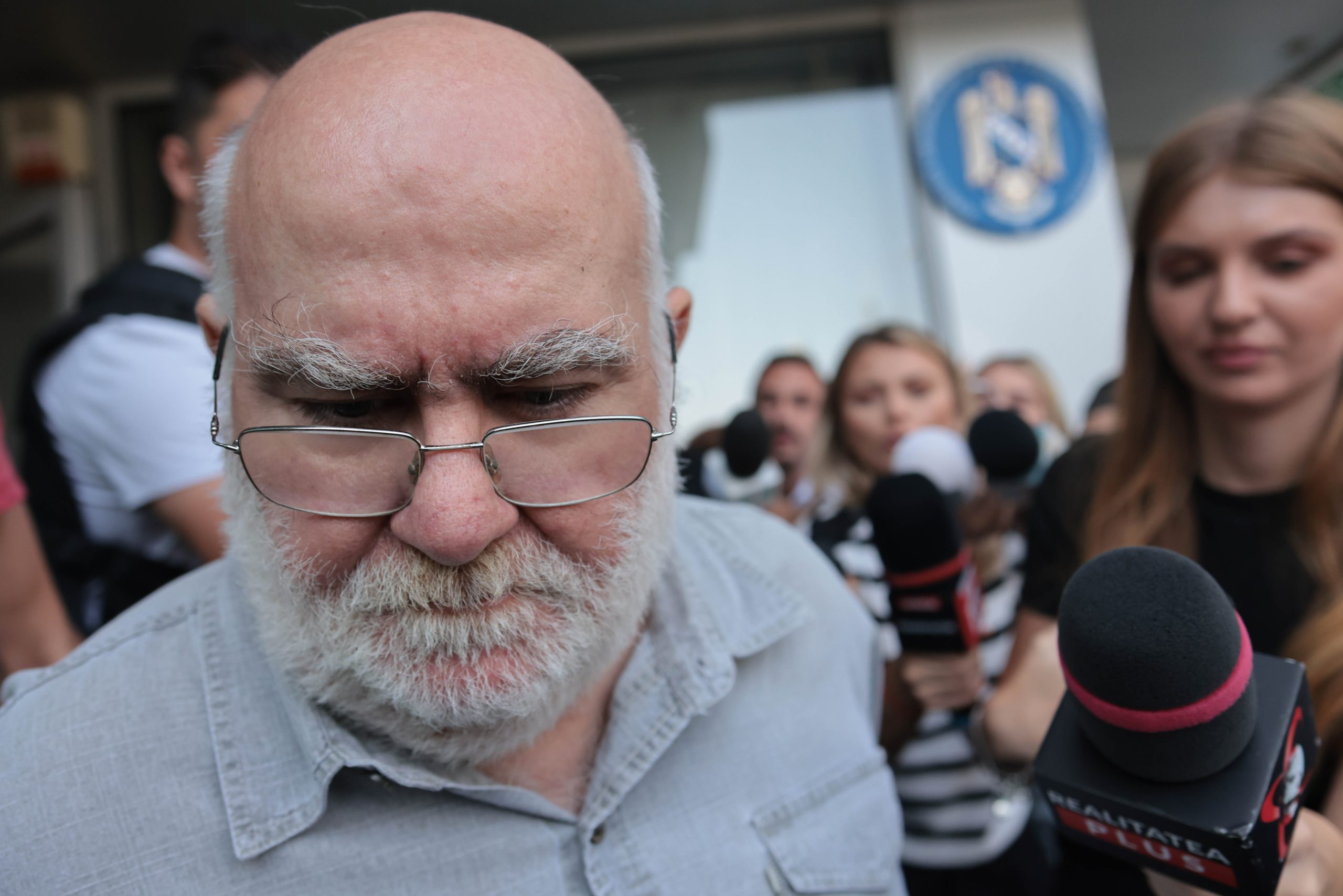
The sexual harassment scandal involving the sociologist Alfred Bulai flared up and went out like wildfire. Although they promised to adopt a law against sexual harassment, the elected officials did nothing in this regard: the project was blocked in the Chamber of Deputies. Moreover, while the new regulations have been in progress for more than two months, the Ethics Commissions within the universities are operating on the basis of a new framework regulation, put into public debate before the SNSPA scandal broke out.
Alfred Bulai does not recognize the accusations against him. Photo: Inquam
The National Alliance of Student Organizations from Romania (ANOSR) asked the Chamber of Deputies to urgently adopt the law that could combat sexual harassment. “ANOSR, as a representative of all students in Romania, requests the members of the Chamber of Deputies, the project being in its competence for final adoption in Parliament, to prioritize the initiative and adopt it quickly”, the student organization sent.
At the same time, the young people also appeal to the Ministry of Education asking that, after the adoption of this law, reports made anonymously can be declared admissible by the ethics commissions. “In order to integrate this proposal, it is necessary, however, to amend art. 7 of Government Ordinance no. 27/2002 on the regulation of the activity of resolving petitions, the completion of this normative act being a mandatory stage in the regulation of the possibility of submitting anonymous reports to ethics commissions”, it is stated in a statement sent by the National Alliance of Student Organizations from Romania (ANOSR).
In order to be able to prevent and combat the phenomena of harassment and sexual harassment at the level of the higher education system, young people have been asking for regulations in this regard since the beginning of August. “ANOSR has always approached a policy of zero tolerance towards any violation of these norms, reasoning for which the federation has firmly positioned itself against any actions that contravene the principles of ethics and academic integrity, including those regarding harassment and sexual harassment”the students also sent.
Ethics committees should self-report acts of aggression
Adela Alexandru, an expert in gender equality within the organization Filia, stated for “Adevărul” that many universities in Romania are considering changing their internal regulations in such a way that “to facilitate the reporting of cases of harassment. The ongoing discussions include the possibility for students to make anonymous reports, and for them to be taken into account in the ethics commissions and analyzed. Let’s not forget that there is also university autonomy. Even in the presence of a law, however, universities will somehow be free to choose whether they will actually implement the recommendations made by the Ministry of Resorts or whether they will remain with the codes of ethics and procedures they currently have”.
The Filia representative stated that there is a need for a mechanism to allow anonymous reports. “On the other hand, from a legal point of view, there is a need to have, at the moment you start a procedure, the details of the person reporting the said act. There are very specific situations in which the details, including those of the person making the complaint, are important”the activist believes.
The middle way would be for these ethics commissions to be able to report themselves, Adela Alexandru believes. “This can be an option that helps when there are no reports assumed, there are no people who are willing to undertake the procedure with their first and last name. Many times fear appears, fear appears, shame appears, especially since in Romanian universities we still do not have an assumed culture of consent, which somehow facilitates reporting”.
Adela Alexandru stated that we need some years for the academic community from our country to prepare the ground “for the moment when we will actually have more complaints, and at the same time people feel comfortable and go and say, with first and last name, who it is about and assume what follows from there on”. Until then, however, it is very important that universities begin to prioritize student safety, publicly and publicly discuss the fact that sexual harassment, like any other form of abuse, is not allowed on their university premises. “Until there are better mechanisms, they must at least ensure that the existing ones are known to everyone who steps on the threshold of the universities”.
“Gender-based violence is not a priority for society”
Against the background of the sexual harassment scandal that had Alfred Bulai at the center, Prime Minister Marcel Ciolacu asked the Minister of Education, Ligia Deca, to present at the beginning of August proposals to complete and amend the legislation. “Certainly we cannot accept such situations and there will be no tolerance for such acts, regardless of the name of the aggressor”, Prime Minister Marcel Ciolacu said. “We will work (…) so that any notification quickly enters the anonymous or non-anonymous approval circuit”said Ligia Deca, at the end of the Government meeting on August 1.
Here we are past the first week of October, and no one is talking about this law anymore. The project lies forgotten somewhere in the deputies’ drawers. “It is a shame that there is this procrastination, but it is not a new phenomenon for anyone that when we talk about violence based on gender, the subject is not a priority at the central legislative level. The highest court is slow to come up with concrete solutions to this problem. I think that, rather, we, as a society, are extraordinarily permissive regarding the phenomenon of gender-based violence and do not necessarily see as an emergency the initiation and implementation of specific solutions”, Adela Alexandru also declared.
