
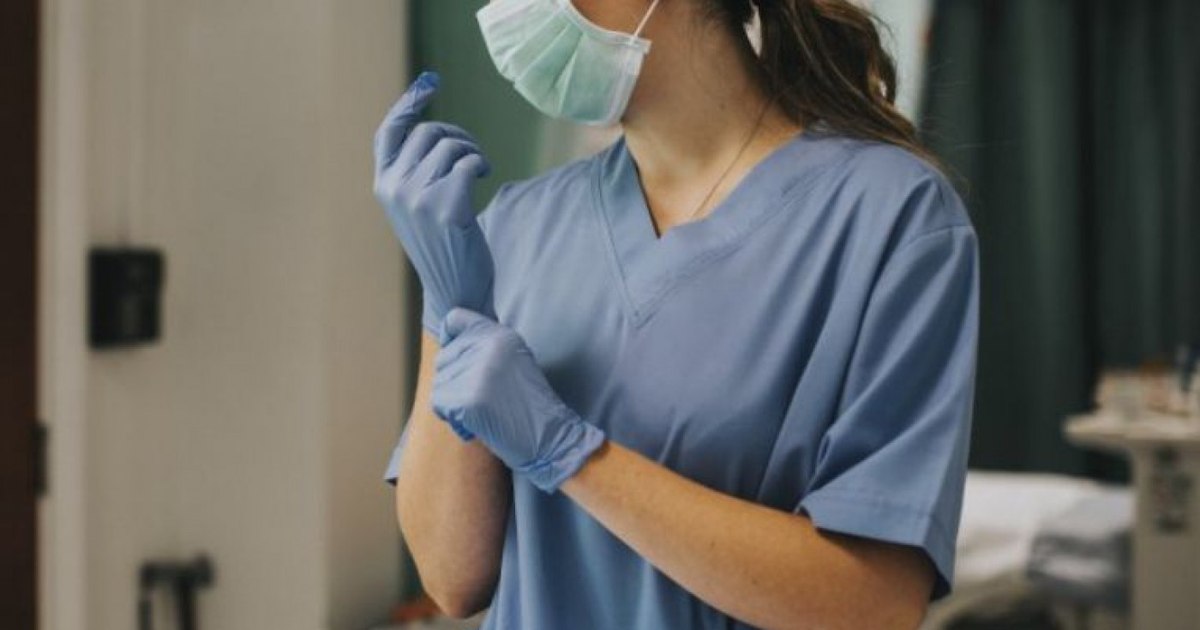
The exodus of Romanian doctors to hospitals and clinics abroad seems unstoppable. Their desire to leave for better is not to be judged, because the states outside offer them what our system probably won’t be able to do for a long time from now: decent wages and working conditions of the 11th century. And they, once they arrive in the “adoptive” countries, give their best. It is also the story of Stefania Rotaru, a nurse who works in a nursing home in Stavenhagen, Germany. The young woman achieved what would have been impossible for her in Romania: to be appreciated and respected not only by her colleagues at work, but also by the entire community.
Nurses, appreciated abroad. Photo: stiridiaspora.ro
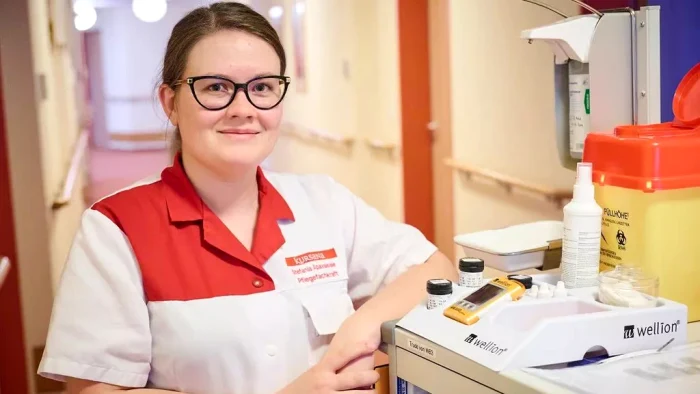
Stefania, a model employee in Germany. Source: mesageruldenord.ro
After only four years of activity, Stefania speaks fluent German and is appreciated by both patients and her colleagues, reports the German website nordkurier.de. “In the beginning, everyone had to speak very slowly to us so that we could understand,” said the young woman. But with time, they all managed to overcome these obstacles: “They did great,” said Bettina Jakobeit, director of the institution.
Originally from the north of Romania, Ștefania graduated from a nursing school, but could not find a job in the field, because “there are not many asylums in our house”, she explained. It is the reason why together with his friend, Radu, he emigrated to Germany. This, after they turned to a recruitment firm, which took care of all the bureaucratic and logistical aspects: “I took a German course, and then they took care of the documents, transport, rent – everything was ready. We just had to come and work“. Her nursing diploma was immediately recognized in Germany.
Stefania and Radu settled in Stavenhagen, where they got married. Currently, I live with the young woman’s sister, Iuliana, and her husband, and all three work at the Kursana-Domizil nursing home. Although everything was new at first, Stefania says she learned quickly with the help of her colleagues: “I learned something new every day. Most patients are very kind. They saw that we work well and they are happy with us.”
Stefania is now a nurse and, thanks to her skills, she was offered the position of nurse coordinator, after taking over the duties of head of department during holidays or in case of illness. “And everyone was pleased, because they offered me the position of deputy”, she further explained. In her new role, Stefania has several responsibilities, including organizing appointments, documenting treatments and monitoring the health status of the 40 patients on her ward. “I know that when Stefania is on duty, everything is under control. She is well-liked and knows exactly what patients need”says director Jakobeit. Currently, Kursana-Domizil employs six people from Romania, and their number will soon increase.
Recipe for success: empathy, kindness, dedication and love of people
Măriuca Ivan, the Founding President of the Crucea Alb-Galbenă Foundation, the creator of the nursing curriculum in Romania and the founder of the National Nursing Institute, told “Adevărul” that “to practice in the field of health care for the elderly, graduation from nursing school is necessary. Afterwards, students can train in the care of the elderly through continuing education courses”.
The Romanian nursing curriculum, Măriuca Ivan also stated, was designed in 1990, according to international standards, “so that medical assistants trained in nursing have the opportunity to have their studies abroad recognized. There were some European countries that also created, according to our model, later”.
The founder of the National Institute of Nursing thought and laid the foundations of the home care system for the elderly. “For home care of the elderly, we created, 34 years ago, the model that has remained an inspiration for this field. The most important thing for me is that the nurses who trained and were my students stayed with me at the Crucea Alb Galbenă Foundation and proved, through their practice, that nursing at home is community nursing”.
In order to work with the elderly, a medical assistant needs, in addition to a long-term education and empathy, goodwill, dedication and love for people, explains Măriuca Ivan. “Our nurses are also appreciated abroad, perhaps because Romanian women had a different family education on how to take care of their elderly and children. In Romania, most of the elderly are still cared for in the family, by female relatives. We also recognize that foreign countries offer better conditions to their elders, which also helps caregivers to capitalize on their knowledge in a friendly, friendly environment, not a hostile one.“, the president of the foundation also declared for “Adevărul”.
