

Although they learn a lot during school, being bombarded with impressive volumes of information, concepts and theories, Romanian students finish their 12 years of studies without having studied much. In other words, they learned, but they did it in vain, because in the end very many of them don’t know anything anymore. And it is not their fault, as much as it is the fault of the Romanian education system, stuck in outdated paradigms, believes Professor Marius Perianu, the coordinator of the Junior Olympic Team in Mathematics. The teacher puts his finger on the wound and explains the long series of mistakes that brought us to this point: Romanian students are functionally illiterate and go through school like a goose through water.
Romanian students have among the worst results in PISA 2022. Source: archive
Quantity does not mean quality. Teacher: “What a lot, it spoils”
School in Romania is compulsory up to grade 12 inclusive. Years in which students are given “Polish” theory without being taught how to put it into practice. There are also exceptions. Although commendable, they are too few. In general, mainstream education also involves 15, maybe even 20 subjects that students have to study year after year. It is far too much, believes the coach of the Olympians, mathematics teacher Marius Perianu, who is also the director of the best performing high school in Slatina: “Ion Minulescu” College.
The teacher warns: education is not in the number of subjects studied, but in the quality of teaching and assessment. According to him, we should prioritize quality, not quantity. “The education system that works today was designed 50 years ago, and little has changed since then. We went through some reforms, it is true, but they were not necessarily structural. 20 years ago, for example, students had, as now, 15-20 subjects”, the teacher explains the dramatic situation in which Romanian education is. As there are so many subjects, he also says, they are taught superficially, quickly. “I mean the small number of hours allocated to these subjects in the curriculum”, continued the teacher.
Bottomless shapes
The children, the teacher believes, are thus unnecessarily overworked. “The students’ effort is dissipated by learning, at the same time, 15 different things: biology, geography, history, logic, Romanian, mathematics, chemistry… year after year, from gymnasium to grade 12. The classes are two, maximum three per week”. Basically, they “pinch” a little here and there, without having time to get into the depth of things.
“We, in school, we want to create people developed in many directions. It’s like trying to raise big, beautiful fish in a very shallow lake. But nothing will grow there. We need to give students depth to develop. My point is that the model where we do a little bit of everything drains students of power. Basically, they don’t have time to deepen the information”, considers prof. Marius Perianu.
Time, he also says, would give the students the opportunity to repeat, practice, apply, put the theory into practice, correlate the information with each other. To reach their depth.
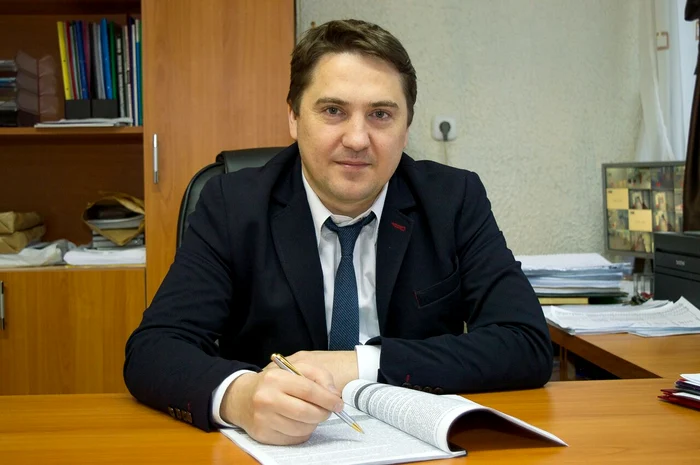
Marius Perianu, coordinator of the junior Olympic team in Mathematics
“We need a reorganization of the framework plans and decentralization of the system”
Professor Marius Perianu is of the opinion that until we think about a reform of the system, we can set up a new organization of the subjects and the time allocated to them. “Let’s take the 7th and 8th grade students as an example. Instead of having one hour of Geography and one hour of History, I can do two hours of Geography and no History in the 7th grade, and then, in the 8th grade, I can have two hours of History and no Geography. Absolutely nothing is lost. Not as a subject, not as a program, not as number of hours, not as teaching staff, not as norms. Instead, students would suddenly have two hours a week extra for other activities: to investigate better, to find something interesting, to get some active learning tasks, to work on certain projects”.
The teacher believes that this process would be simpler and faster than a revolution in the system. “When, after 12 years of schooling, students do not remember much of what they learned, the authorities should ask themselves where they went wrong. You have to ask yourself why the investment made in teachers, in the way of teaching, in assessment, in textbooks does not bring results. If we do a 12th grade survey and find that 95% of the kids don’t even know the names of five philosophers, we as a state are paying and spending some money for nothing.”
The reorganization of the system represents, at least for now, a lifeline, the teacher believes. You can bring artificial intelligence into the school, for example, by simply integrating it. “This does not mean changing the school curriculum. Small but important things can be implemented without revolutionizing the system. Let’s not forget that AI is just a tool.”
The organization proposed by Professor Marius Perianu could be thought of and implemented not at the national level, but by each individual educational unit, depending on its own needs. But that would mean decentralizing the system. “If the school had more decision-making power, it could be much more involved in the educational act. Directors could implement educational programs, get involved in different projects, organize themselves. Having the power to make decisions in your school and for your students would be a great addition to education. Stop depending on other factors. For example, maybe I want to do a laboratory or a welding workshop, but that’s not up to me. I need approval, funding, implementation. From this point of view, the schools are hands tied”, the teacher thinks.
About the usefulness of useless things
In the era of digitization, when artificial intelligence has become an important part of our lives, when technology develops at a dizzying speed, and what we knew yesterday is no longer relevant today, students learn concepts and notions at school that are perhaps even half a century old . “How do you teach them about the steam engine when they’re discussing cryptocurrencies?”, asked professor Andreia Bodea, director of the IL Caragiale National College from Bucharest, rhetorically. A question to which the Olympic coach has the answer. “Today’s technology has advanced so much that the school, no matter how much it wants to, cannot provide a child with the necessary resources to be involved in large-scale projects. Complex, elaborate things now involve information beyond the comprehension of students.” considers Professor Perianu. On the other hand, he says, in order to complete such a complex project, students and teachers would need robots, programs, machines, and equipment that the school does not have access to. “Therefore, all basic is taught and learned. Those old notions and concepts like the steam engine. We can do those. For this we have the necessary resources, and the students have the intellectual capacity, according to their age”.
Therefore, these outdated concepts, as we call them more and more often, would have their role if they were studied and deepened not only at the level of theory, but also at the level of practice. Professor Perianu firmly believes that if the students worked on this steam engine, if they were actively involved in its design, if they put their shoulder, if each one contributed as much as they could to its realization, they would be delighted, not they would not be bored for a moment and would not consider that they are doing something unnecessary.
The Olympic coach also specified that the Romanian school, before being demolished, burned to the ground and raised from its own ashes, should be reorganized. Because with small steps you can do great things.
