
UNESCO has prepared a study on the impact of civic education classes in secondary school on future adults in terms of their desire to participate in the vote and to be actively involved in political life.
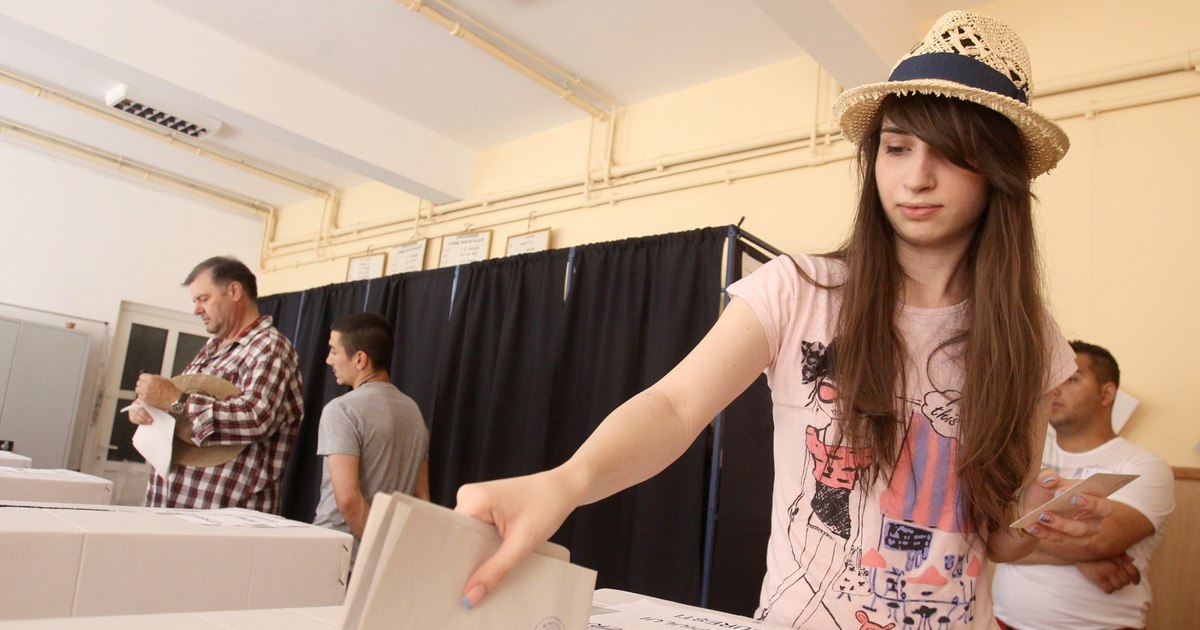
Girls are more interested in politics than boys. Mediafax photo
UNESCO’s latest report on education, released at the end of October, shows that civics classes in secondary school have no significant impact on future adults’ active participation in political life or willingness to vote. However, the results of the evaluations carried out by the International Civic and Citizenship Education Study identified correlations between the level of students’ civic knowledge and their desire to get involved in political decision-making, informs Edupedu.
According to the report, citizens’ involvement in political life is decreasing in states with democratic electoral systems. Specifically, globally, the participation rate in presidential and parliamentary elections has fallen from 77% in the 1960s to 67% after 2010.
The report also indicates that no links were identified between middle school civics courses and political participation. An analysis of nine studies of civic education programs shows that there are no significant effects of this subject on voting participation.
The case of Romanian students confirms this. They say they support democracy and say they want to vote, but they perform below average in terms of civic knowledge, according to the results of the international assessment carried out by the ICCS in 2022.
About 25% of Romanian students have low and very low skills, compared to the ICCS average of 14.2% for this segment of results. Almost 20% are at the highest level, compared to the international average of 30.6%.
Instead, civic education contributes to the formation of identity, capacity for action and self-efficacy of young people, say specialists. Positive effects on political participation are also determined by learning climates in which students feel comfortable.
However, the 2016 and 2019 ICCS (International Civic and Citizenship Education Study) assessments identified links between the level of civic knowledge and the political participation index.
“Students who study in schools that provide opportunities to learn and discuss political and social issues are more likely to adopt civic norms, such as participating in national elections, engaging in political discussions, protesting unjust laws, promoting human rights, and participating in the communities they belong to”, the report shows.
In Romania, girls are more interested in politics
According to the 2022 ICSS assessment data taken from the report, there are more girls than boys who would actively participate in politics, vote and read about the candidates.
As for Romania, the percentage of girls who were in the 8th grade in 2022 and who would be actively involved in political life is higher than that of boys. Thus, 52.3% of girls would participate actively in politics, being 0.3 percentage points above boys of the same age.
Romanian girls would be more involved than boys in the electoral process as well. 53.1% of girls would participate in elections and find out about the candidates, while 51.3% of boys would do so.
It should be noted that the discrepancies are not major and that Romania is at the top of the countries in terms of the expectations that teenagers get involved in political life and electoral processes, ranking third in both cases.
In addition, the desire to participate in elections is higher among students who have very good financial situations, the ICCS results also show.
In Romania, the difference between the intention to vote of students with very good financial situations is 53.8%, 3.5% higher than that of those in the opposite pole. At EU level, it is the country with the smallest disparities between students with very good financial possibilities and those with little financial possibilities, in terms of willingness to vote.
