
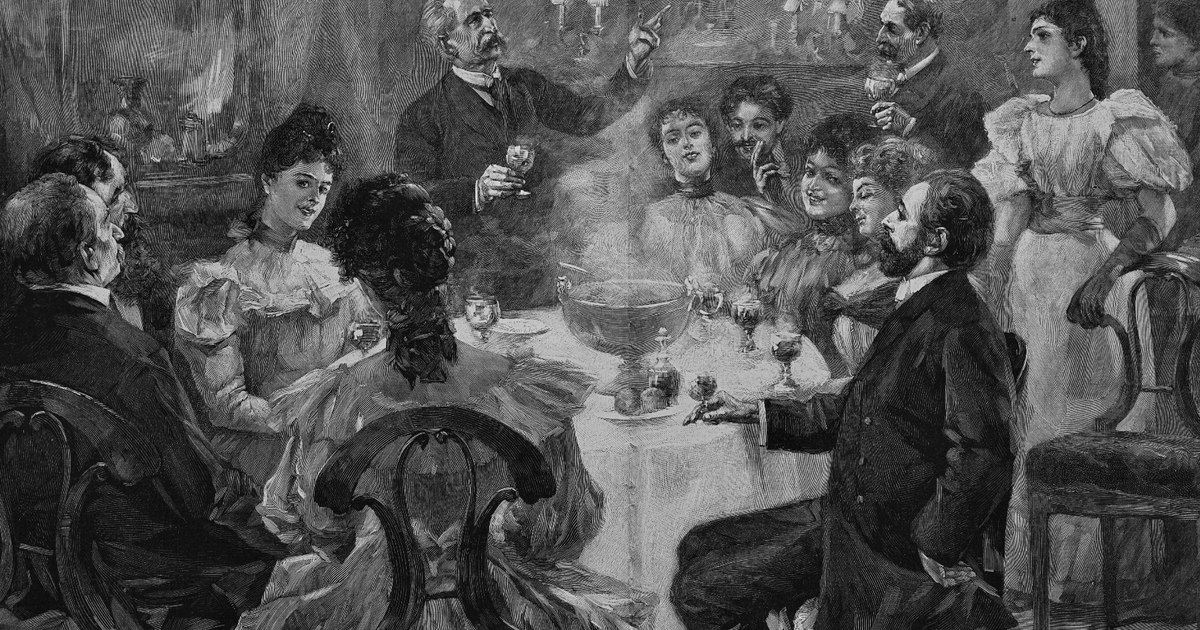
New Year’s Eve is a party that has no tradition among Romanians. It was only six decades ago that the population of Romania got to celebrate New Year’s Eve en masse. It is a fashion of French origin, adopted late by the noble families and to which the majority of the population did not have access.
New Year’s Eve is a party expected, today, by all Romanians, being an occasion of joy, fun and reunion with friends and relatives. Many Romanians spend substantial amounts to participate in New Year’s Eve parties or to organize such events. New Year’s Eve parties are held every year on TV with a lot of guests, especially showbiz stars. It seems that New Year’s Eve is a part of the Romanian tradition, but it is a recent import, to which the majority of the population had access only during the years of communism.
A French custom unknown to Romanians
New Year’s Eve is a custom of French origin, from the 16th century, and it coincided with the setting of the beginning of the new year on January 1, by Pope Gregory XIII. New Year’s Eve comes from the French word “reveille” and actually meant “awakening” or “staying awake”. Originally, it was a celebration attached to Christmas, where young couples danced and partied with food and drink in honor of the Nativity. After establishing the New Year on January 1, the New Year’s Eve party was moved by the French to December 31. Evidently, the custom spread throughout western Europe.
“New Year’s Eve was initially a purely soulful celebration. Men, women and children would gather in the churches around a cradle, representing the manger in which Jesus Christ was born, and stay there all night dancing and singing. Because this vigil was too tiring, the watchers were allowed to eat and drink to sustain their strength and enthusiasm. This is where the “Christmas Eve” was born, accompanied by plenty of food and drink“, explained the journalists from the “Adevărul” newspaper on December 24, 1894. There was no such celebration among Romanians. The word “New Year’s Eve” was not even known. On January 1, Romanians celebrated Saint Basil the Great and then Epiphany, deeply religious events.
The Romanian boyars became French and the New Year’s Eve began
New Year’s Eve arrived late in Romanian vocabulary and practices. Only in the middle of the 19th century, brought by young intellectuals, sons of nobles, tenants or rich merchants who went to study abroad. In fact, with the Frenchization of Romanian society and the step on the path of modernity, with the unification of the Principalities under Alexandru Ioan Cuza, New Year’s Eve also found its place in the homes of Romanians. Not of all Romanians, only of a very rich and cosmopolitan minority.
The word “Revelion” appears in the glassmaker Constantin Stamati’s dictionary of neologisms from 1851. By New Year, the Romanian boyars meant the meal after the New Year’s ball. But it was practiced only by the rich, but progressive, new-fashion families. Otherwise, the fashionable boyarism old and even the king, after the enthronement of Charles I, paid much more attention to the ball on January 6. These were large-scale balls organized until the beginning of the 20th century by the great boyar families, but also by the Royal House: the Șuțu, Grădișteanu, Știrbey and Ghica families.
New Year’s Eve, the party of the rich that the average Romanian could hardly dream of
New Year’s Eve managed to establish itself in front of the boyar balls only at the beginning of the 20th century. After 1916, flamboyant New Year’s Eves were organized for rich families instead of the boyar balls. In the pre-war period, but especially in the inter-war period, New Year’s Eve was a party exclusively for the rich. The common people could only watch the luxurious retinues that came to party at various mansions, palaces or palatial halls in the city, admiring the festival of expensive dresses of the ladies or the sober elegance of the gentlemen. In the slum people continued to see their troubles and poverty even in the night between years.
All this time, the elites competed in organizing New Year’s Eves, each one more lavish, with extraordinary luxury and opulence. The testimonies from that period are eloquent. “It had an expensive carriage, with beautiful thoroughbred horses, with a carriage in the shape of a carriage and with a harness at the back of the carriage, with branded livery and with a thoroughbred dog at its feet”wrote Victor Bilciurescu about the wealth of the Şuţu family displayed at the New Year’s Eve party. In fact, the people from the Șuțu family gave the most luxurious New Year’s Eves in their palace in the Colțea Hospital area. In turn, the Lahovary family was famous for organizing New Year’s Eves, where luxury was the watchword.
The New Year’s Eves of the Romanian elites could always compete with those of Western Europe. The parties started at 10 p.m. and lasted until the morning. Dances and all kinds of artistic surprises were organized for the guests, from live humorous moments, with top artists of the moment, to tarafurs and orchestras with staif, very sought after even at the international level. Obviously, in order to cope in the good world, the guests had to be up to date with the latest fashion in clothing, customs and western dances. Such parties were attended only by invitation. The dress code was appropriate, luxury and originality being important conditions.
“Fitted bodices and flared skirts advertising abundant yards and heavy silks – semi-tight, like fait, taffeta and moir. Cellophane, sequins and lamé – materials that reflect the light in violent reflections are of great effect. Sequins appear in tunics as dusk falls, then in dinner, theater and ball gowns, offering effects of pure aristocracy in dark shades such as: marron, dark purple or black”it is shown in the Magazine “Realitatea ilustrață” from the interwar period. The clothes, both for women and men, were either made at luxury tailors in the big cities, or brought directly, on order, from abroad. Jewelry was in the place of honor, at such parties, most of them imported. “The jewel is a pledge of love and power, a weapon of conquest and a symbol of wealth. For a modern elegance, it is the ultimate seal of chic and that secret perfection, which is called “upper class”. Jewels have a value from which credit, pleasure and vanity can be extracted at the same time”it appears in the same magazine.
Gold jewelry was worn, with diamonds, rubies, and other precious stones. There was no shortage of gala hats and shoes. The food was on par with the guests. That is, there was no shortage of luxurious recipes, usually French and German, with duck in orange sauce, roast turkey stuffed with chestnuts, Russian caviar and French champagne or cognac. There was no shortage of sweets of the best quality. The luxury restaurants of the capital, such as Capșa, the Kübler cafe, the Fialkowski cafe and the High-Life cafe, in turn organized luxurious, very expensive New Year’s Eves, intended especially for the middle class with a handshake.
Communism also put the proletariat at the New Year’s table
During the interwar period on New Year’s Eve, only Romanians had fun with staif. With the coming of the communists, New Year’s Eve became accessible to everyone. Obviously, the New Year’s Eves of nomenclaturists, party activists and PCR leaders were not compared to the workers’ New Year’s Eves. The New Year’s Eves of Ceaușescu and the pro-communist party were luxurious, with the best quality food, drinks and imported dishes, top musicians and entertainment to match. The workers were organized in workers’ canteens and cultural hostels. Obviously, there were also New Year’s Eves in the family, with friends. Since the 80s, New Year’s Eves were spent with food bought from relatives and meat or other products fraudulently brought from the countryside. In addition, on New Year’s Eve there were also artistic programs on TV, with actors and singers of the moment, interspersed with propaganda moments.
When, in fact, the Romanians celebrated the New Year
Traditional Romanians, i.e. those from the Middle Ages, but even later, until the 19th century, in the countryside, celebrated the New Year precisely in March. That’s why he walks with the plow through the middle of winter. The date of the New Year has been changed, but not the customs. On March 1, Romanians, like many other European peoples, in the past, celebrated the entry into the New Year. It was about the coming of spring and the beginning of a new agricultural year. On March 9, spring plowing began. Hence the hatred with the plow. It was a pagan custom since the beginning of time, later countered by Christianity and completely moved to the middle of winter with the adoption of the new calendar.
