
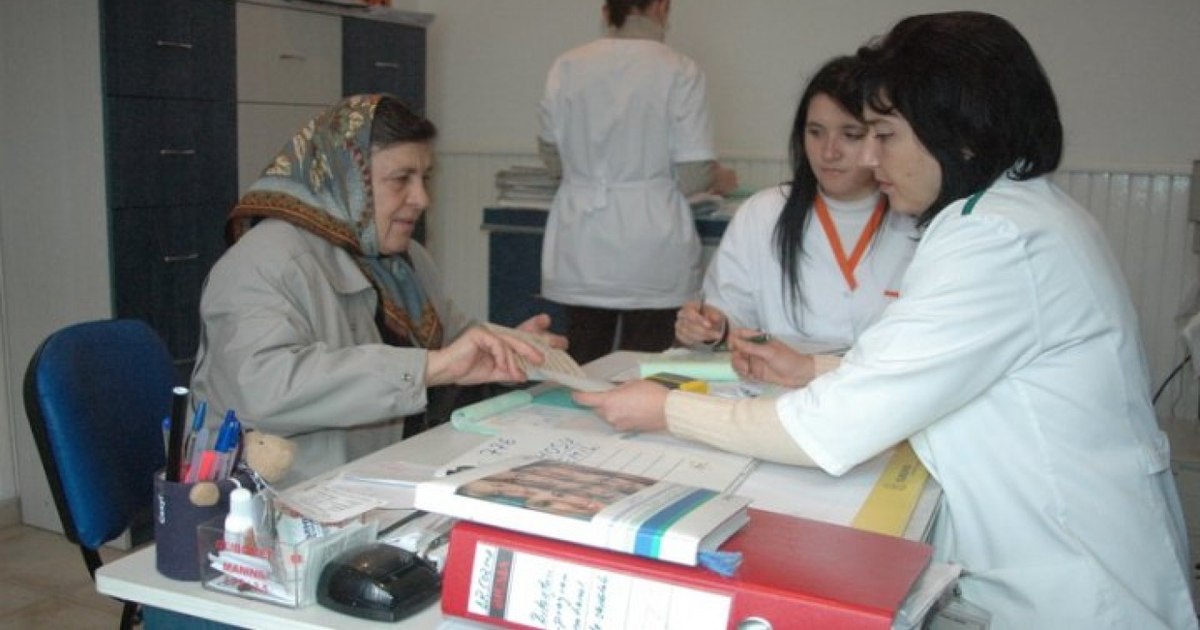
The ordinance – the little train hits the budget of family and specialist doctors. The austerity measures adopted in the Government meeting on Monday, December 30, cap the value settled for medical services. Specifically, family doctors will still charge 8 lei for the point per service, as before. As for the specialist doctors under contract with the insurance companies, they will still receive 5 lei per point per service. As for dentists, they also stay with the same money: 6,000 lei per month. However, the year 2025 comes with price increases on all levels.
Next year, many family practices risk closing. Archive
Sandra Alexiu: “There will be a very big financial pressure on the shoulders of family doctors”
Sandra Alexiu, president of the Bucharest-Ilfov Association of Family Physicians, told “Adevărul” that the already underfunded health system received another blow from the governors. “These austerity measures come despite international warnings that primary health care needs to be better funded. They also come in the context of the National Health Strategy which says that more will be invested in primary health care”, consider the specialist.
The increase in taxes, for example, will put a lot of financial pressure on the shoulders of family doctors, in the context in which their income will remain at the same level. “We pay rent for the premises where we operate, plus all the utilities necessary for a medical office to operate: water and electricity bills. Let’s not forget the contracts we also have to honor: medical waste pickup, for example. And, obviously, we also pay the salaries of the medical assistants we collaborate with”, also specified dr. Alexius.
The doctor accuses the fact that a lot of money enters the Health system, but it is not effectively distributed. “Because no one had the courage to think and implement a reform in the true sense of the word. A reform that clarifies how and where the money must go in the system, what must be eliminated and what must not”.
Sandra Alexiu testified that, once the authority’s ordinance is adopted, no one can think of an increase in points per capita and per service. “Good thing they didn’t lower them! We already had the money insured with great difficulty in the last quarter of this year. But even so, I had hope for the coming year. At the moment when primary medicine was spoken of as a national priority, naturally we hoped for the best. Not necessarily that the value of the points will increase, but that the system will receive an infusion of capital to bring it out of collapse. I’m referring to the human resource that provides primary care where it doesn’t exist, I’m referring to the permanent centers where there are no more doctors, to the decreasing number of medical staff working in the Romanian health system”.
Doctors, put in the position of choosing which patients to treat with priority
Dr. Sandra Alexiu is of the opinion that the austerity ordinance will make many family doctors eventually close their practices. “If they are no longer profitable, they will naturally close. You can’t work at a loss. We live with this money from one month to the next. There will be people who won’t have anything left to pay their nurses, utilities, waste collection, cleaning. We are very small private units. We will have to somehow optimize our activity“. Where and how will they get this money necessary for survival? “The prices of certain medical services not settled by the house will increase”, explained the specialist. Doctors could then be put in a position to choose which medical services have priority and which ones can wait. “Monitoring services for patients with certain chronic diseases and preventive services are better scored. Which means that doctors will prefer to do such consultations, to the detriment of regular, lower-paid consultations, which will be timed. These will be scheduled for later or when the doctors have time. These are patients with acute conditions or who come for certain referrals, certificates, documents, etc. These services will no longer be effective for us. Instead, we will choose services that bring more money to the office”.
What will happen to acute patients? They will be scheduled and wait for that appointment. “Or they will treat themselves, as I see on the Internet, or they will go to the guard room”, avesays Sandra Alexiu.
Specialist doctor: “Many doctors will give up the contract with the House”
Alina Ciocoiu, pediatrician and general secretary of the Professional Association of Outpatient Doctors, explained to News.ro that the capping of the values settled for medical services will also put in difficulty the specialized outpatient clinics, which will no longer be able to cover their expenses of operation.
“The expenses have increased a lot since this year. Next year we expect even bigger increases, for sanitary materials, for other appliances, consumables that we use every day in specialized offices, the prices will increase, we expect somewhere between 15 and 30%. Utilities and rent have increased between 30 and 40% for us since January 1. So, we expect a very difficult year”, says doctor Alina Ciocoiu. “We will not be able to afford to keep our offices in the same formula that we have today”, adds dr. Squirrel.
“From a consultation of 50 lei, as much as we receive today, the money left after deducting all expenses is somewhere around 20 lei per consultation. Very little. And from next year we will be left with even less if the point is not increased”, the doctor also specified.
This is the reason why many specialist doctors are thinking whether it is still worth keeping the commitment with the House to offer patients the freebies they need. “However, it will be very difficult for any patient to take money out of their pocket even if, let’s say, there will be colleagues who may leave the price of the consultation at 100 lei. In private, if you go, around 300, 400 is an average price”.
Conflicting measures. We say one thing, we do another
Conf. Univ. Dr. Marius Ungureanu, director of the Department of Public Health at Babes-Bolyai University in Cluj-Napoca, drew attention to the discrepancy between the objectives of the Governance program for the health system and the provisions contained in the Train Ordinance. It is about measures that go head to head, says Dr. Hungarian “We see the provisions related to the freezing of the value of the point for services, but, on the other hand, if we look in the government program, in the section dedicated to health, we see a series of objectives aimed specifically at strengthening primary and outpatient care. Either the two measures clash. We cannot aim to consolidate primary care and ambulatory care on the one hand, and at the same time negatively affect its appropriate financing”, said dr. Hungarian
“On the other hand, it’s only been a few weeks since launch OECD’s Health at a Glance report, where I saw some systemic problems of the health system in Romania: the very high burden of preventable, treatable deaths, and so on that are related to the good functioning of the primary and ambulatory healthcare system. So, we have all the arguments to see that we should invest more in the primary and ambulatory healthcare system, but this ordinance hits exactly in these two areas. From my point of view, it’s a curiosity to see how we will have better services at lower costs”, also specified dr. Hungarian
