
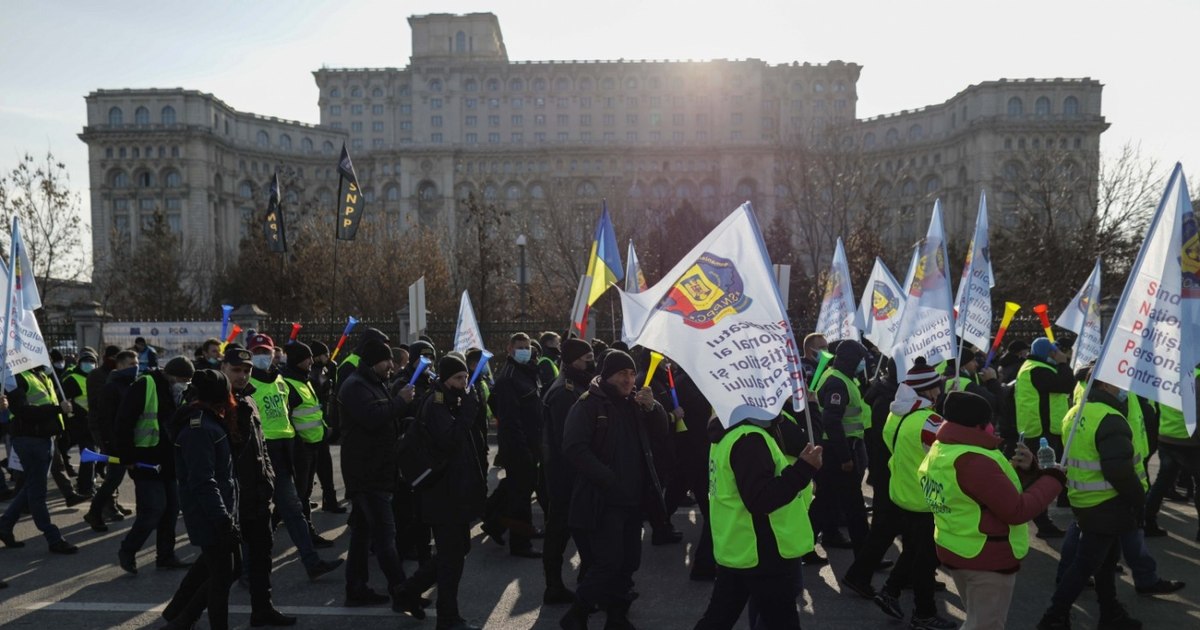
Police officers in several counties across the country have resumed protests, demanding the return of pay for overtime worked on weekends and public holidays, after the austerity order reduced their income by around 20%.
Police protests. Photo: Inquam Photos/Octav Ganea
Police officers from Mehedinți, Caraș Severin, Alba, Constanța and Mureș counties resumed protests on Tuesday, dissatisfied with the provisions of the austerity ordinance, according to G4media.
In Buzău, 70 police officers submitted reports to the County Inspectorate, in which they announce that they refuse to work overtime outside of the planned shifts, starting January 1. This decision will especially affect rural sections, where the activity will only take place from Monday to Friday, between 8 am and 4 pm.
The Europol Mureș union accused the local authorities of blocking the organization of a protest scheduled for Tuesday, in front of the headquarters of the County Police Inspectorate. “The chief inspector, desperate because he will have hundreds of police in front of the unit, used his relations with the mayor and conspired with him to reject the organization of the protest. According to law 60/1991, none of the stated reasons, provided by the chief inspector to the mayor, are likely to prohibit the constitutional right to organize public assemblies“, said the union, the cited source reports.
The leader of the Europol Union, Cosmin Andreica, explained to Radio Romania Actualităită that there is discrimination between police officers and other professional categories that continue to benefit from overtime pay. “We drew attention to the fact that there is discrimination between the other categories that ensure continuity 24/7, referring here to medical staff and social assistance staff who will continue to benefit from payment of hours worked on Saturdays and Sundays. In addition, I drew attention to the fact that while we have these cuts in hours, increases are still granted for exceptional work and special missions, a kind of awards, which reach up to 50% of the monthly salary, amounts that are collected with preponderance by the heads of the central apparatus of the MAI and by those from the other arms.”
Currently, discussions have begun between the leadership of the Ministry of Internal Affairs and the main trade union and professional organizations in the field to find solutions to the demands of the police.
