
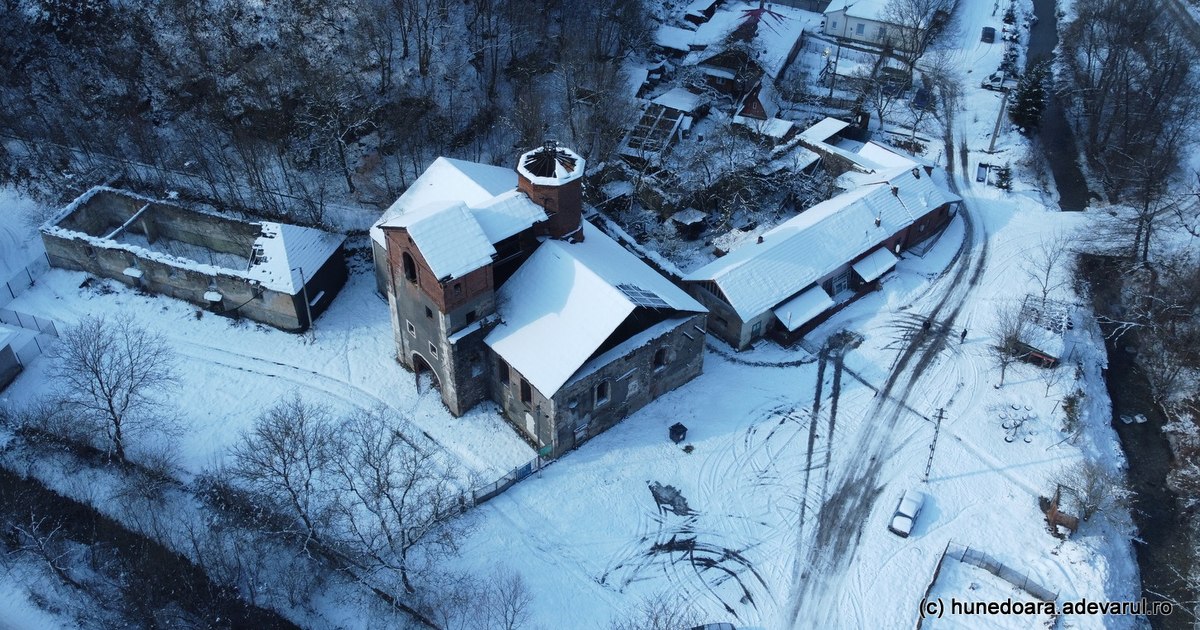
The Iron Road, the route used in the past centuries to transport iron ore from the Poiana Ruscă Mountains, has been completely asphalted and offers easier access to the tourist attractions in the Forest Land.
The furnace from Govâjdia, one of the attractions on the Iron Road. Photo: Daniel Guță. TRUTH
Modernized piece by piece, the road that connected the iron mines from Ghelari to Furnalul from Govâjdia in the past has become, with its complete asphalting at the end of 2024, an accessible route for travelers who want to explore the Forest Land of Hunedoara (video – The truth).
The old iron road, became the modern road
The Govâjdia furnace, built in the early 1800s, had become a landmark of the Forest Land in the 19th century.
Here, on the “iron road”, the wagons and later the wagons of iron ore extracted from the neighboring mines, from Ghelari – the latter, descended on an inclined plane of several hundred meters especially arranged for the descent of the ore.
Since the beginning of the 1900s, a mining railway connected Govâjdia with Huunedoara, passing under the hills through several tunnels, one almost 800 meters long.
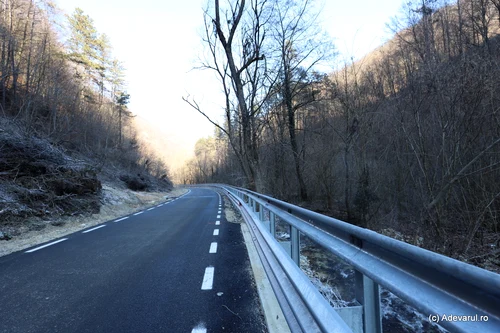
Image 1/12:
Hunedoara, the iron road Govajdia Ghelari 2025 January photo Daniel Guță (27) JPG
At Govâjdia, talc and dolomite extracted from the quarries and mines of Lelese, marble from the Alun quarry and logs extracted from the forests of the Runcului valley and from Vadu Dobrii arrived at Govâjdia.
The furnace from Govâjdia (video) was decommissioned in the years following the Great Union of December 1, 1918, after it had not been used during the war.
The Hunedoara – Govâjdia (Ghelari) railway was decommissioned in the 2000s, and the iron mines were closed at the same time. The marble and dolomite quarries were preserved, as was the furnace near them, but although the industry gradually disappeared and many locals left the Govâjdia area, it remained attractive due to its relief and its history.
In the last decade, several roads in the surroundings of the Govâjdia Furnace were modernized and facilitated the access of tourists to the isolated villages of the Poiana Ruscă Mountains.
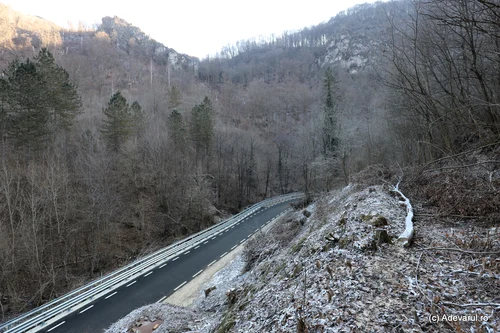
Image 1/9:
Hunedoara, the iron road Govajdia Ghelari 2025 January photo Daniel Guță (47) JPG
The Govâjdia – Ghelari road, also called the Iron Road, inaccessible to cars in the past has been rehabilitated piecemeal. The first sectors, which go up the Rețișoara valley, in the villages of Ghelari and Plopi, with a total length of about seven kilometers, were modernized in the years 2021 – 2022 (video)
The last pieces of road, recently asphalted
Recently, the sectors on the Nădrab valley were paved, which connect Furnalul from Govâjdia to the new road on the Rețișoara valley, but also to Lelese.
More than 14 million lei, including VAT, were allocated from the funding obtained through the “Anghel Saligny” National Program and from the budget of the Hunedoara County Council for the modernization of the last three unpaved sections of the road totaling about 4.5 kilometers.
Thus, travelers can travel on asphalt on the route Hunedoara – Govâjdia – Ghelari (25 kilometers) and on the route Hunedoara – Govâjdia – Lelese and Cerișor (30 kilometers). The road between Govâjdia and Runcu Mare was also modernized along almost its entire 12-kilometer distance, from the furnace to the picturesque village in the Forest Land.
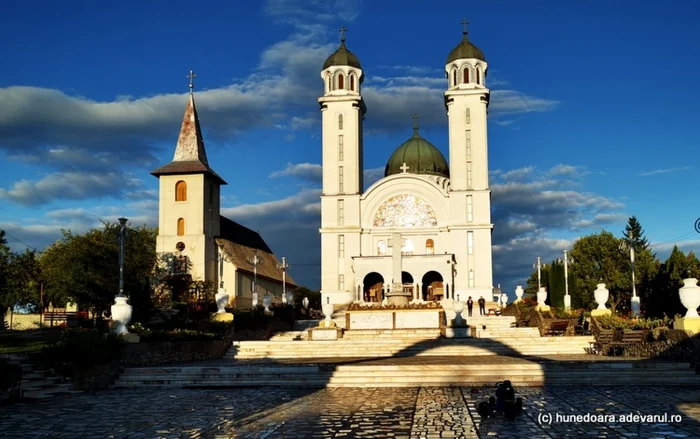
The Cathedral of Ghelari. Photo: Daniel Guță. TRUTH
“A few years ago, our journeys would stop at the furnace, from where we would turn back to Hunedoara, because from here we would have entered roads that were difficult to access. Now we have more options. We can go to Runcu Mare, a village with traditional houses over a century old, to Ghelari – where we can see the Pădurenilor cathedral and the huge quarry, in the other villages of the Pădurenilor Land, and we can go down, still on the road, towards Lake Cinciș and Hunedoara“, says a local woman from Hunedoara.
Although it has remained one of Hunedoara’s tourist attractions, the Furnalul in Govâjdia, which is over two centuries old, is awaiting restoration. Its furnace has been preserved intact and offers its visitors a living testimony of the iron industry of two centuries ago.
