
Romania is playing the past game through underfunding. Dozens of treasures of humanity lie under the ground or actually are destroyed by the passage of time because the Romanian state does not fund archaeological research. Numerous sites of great interest are unscrewed, becoming prey to archaeological poachers.
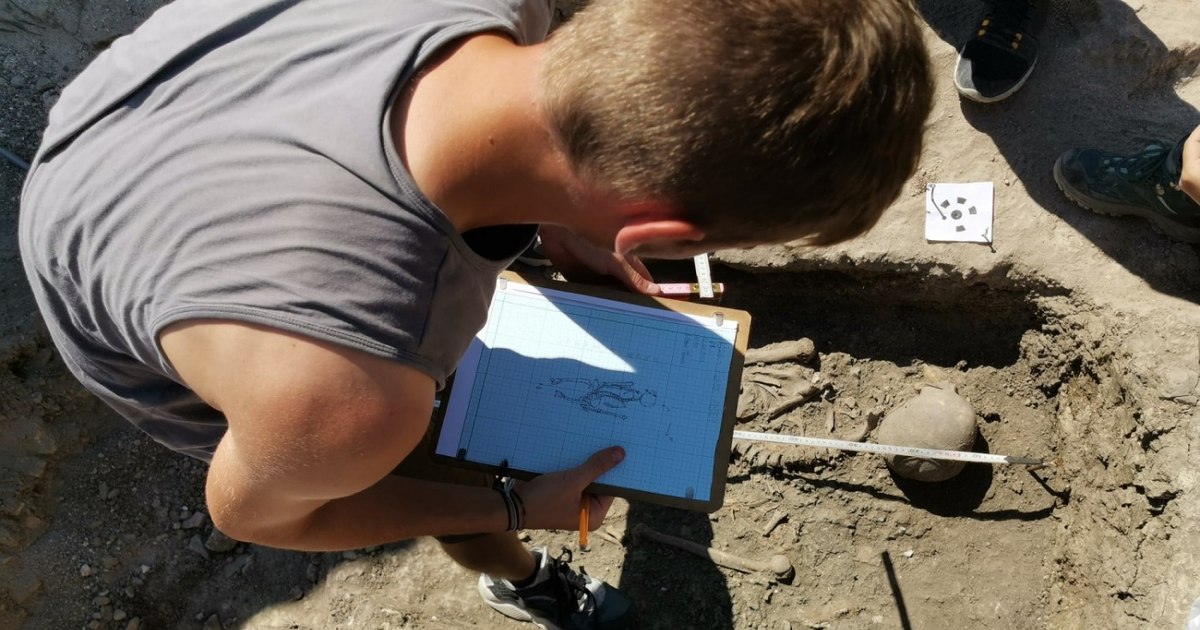
Archaeological excavations at the Cistercian monastery from Igriș Photo Adevărul
The theft of the Getic, golden, Coțofenești, but also the three Dacian bracelets is an incredible loss for the Romanian heritage. However, in Romania there is an equally large tragedy. And this is because our country has other “stolen” heritage treasures. But not by thieves or archaeological poachers, but the indifference of the Romanian state that does not invest enough in culture and, especially, in archaeological research.
These are thousands or tens of thousands of precious artifacts from a scientific point of view that are buried, without being brought to light. Under these conditions the Romanian heritage is poorer, perhaps with dozens of treasures and objects of invaluable value. In many areas of the country, the research has been based on detectors and collaborations with universities abroad, more interested in our past than the Romanian state.
An unexploited archaeological treasure
There are hundreds of sites in Romania with huge potential, which have been exploited only partially or not at all, being only archaeologically highlighted in museum repertoires. Most of the discoveries of great importance in Romania were made during the communist period, when the State Finance of large archaeological researches, especially in areas that served also party propaganda. Most beginnings of research on very interest sites, later abandoned in the 1990s, were done before 1989.
For more than three decades, in many counties there have been no important discoveries and the excavations have not been continued in open sites during the communist period. Many areas with huge potential lie unexploited, non -removal. A case of a manual is Botosani County, considered by the reputed archaeologist Mircea Petrescu Dâmbovița a true “El Dorado” of Romanian archeology, with sites with huge potential from the Paleolithic to the Middle Ages. At the same time, incredible artifacts were discovered here, including clay idols that surround the world. In Botoșani county, most of the large excavations were made during the communist period and on that occasion were brought to light, incredible objects and artifacts, unique in Romania, but also in Central-East Europe.
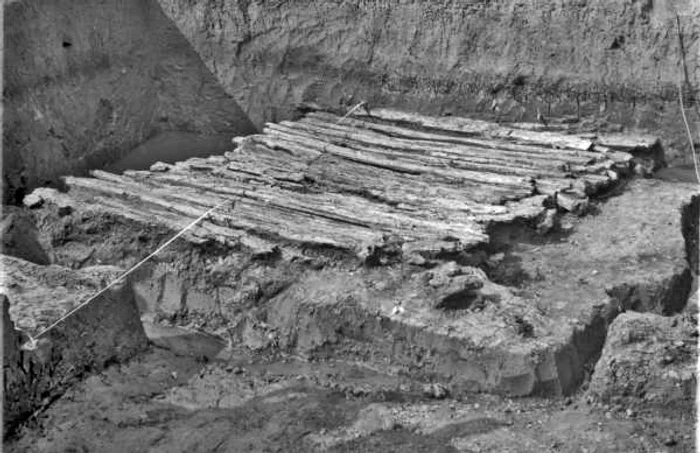
Lozna Lozna discoveries photo Museum of History
For example, in the 1970s, the reputed archaeologist Alexandru Păunescu discovered the great cemetery of mammals in Ripiceni, with the largest mammoth defams ever discovered in this part of Europe. Also in this site was found the oldest dwelling in the territory of Romania, a camp of Neanderthalian mammoth hunters. On the banks of the Prut were discovered traces of the first people, and in Hănești the complete skeleton of a young woman from that mysterious transition period from antiquity to the Middle Ages, on the territory of Moldova. In the 1970s, the Florescu spouses, reputed archaeologists from Iasi, managed to research only 10% of the huge Thracian-Gothic cities in Stâncești, the largest in Moldova. In the 10% researched they managed to get a wonderful gold treasure, probably the war prey in the struggles with the Scythians. In addition, the great settlements of the Cucuteni civilization were discovered, with its fascinating idols, but also the wonderful painted vessels.
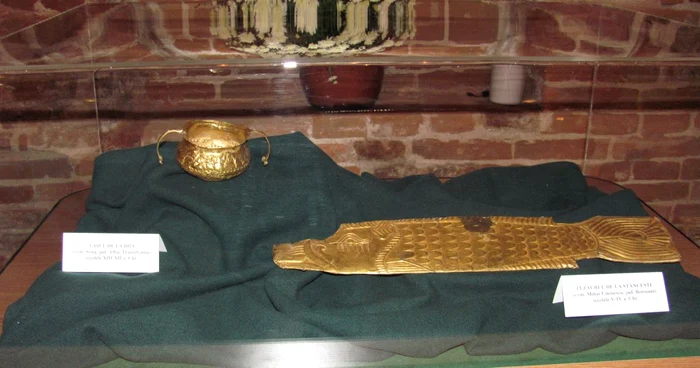
Treasury found at Stâncesti PHOTO Adevărul
Lozna was discovered by some workers in the peat a true lake village, with an incredible Dacian treasure from tools and iron weapons. The Lacustru village is unique on the territory of Romania. All these discoveries were made before 1989. After 1990, most of these sites of great importance remained unrighteous. On the banks of the Prut there are over 600 mounds, that is, mounds that hide graves, either from the Bronze Age, or from the period of migrations. These tombs could be empty or worthless, but at the same time they can hide special archaeological treasures. The Thracian-Gothic cities in Stâncești, those with the treasure, were researched only 10%, and since then no one has touched them. Other Dacian citizens or settlements either were partially investigated or not at all. Obviously, Botosani County is not a singular case. Many counties have archaeological treasures left under the ground.
The land of accidental discoveries and detectors
Many of the treasures we are proud of today are, in fact, the fruit of accidental discoveries. The helmet from Coțofenești was found by some children, the Getic Treasury from Băiceni was found by some peasants in a take, the Dacian treasure with tools and iron weapons from Lozna, found by the workers who were walking after the peat and the examples can continue. . In addition, detectors have become the main discoverers of treasures and valuable heritage objects, in our country. Last year, a Sibian who had just obtained the authorization for the use of the metal detector found 132 1700 years old coins at Apoldu de Sus. In 2020, a group of boxes with metal detectors found over 2500 400 -year -old coins. And the examples can continue.
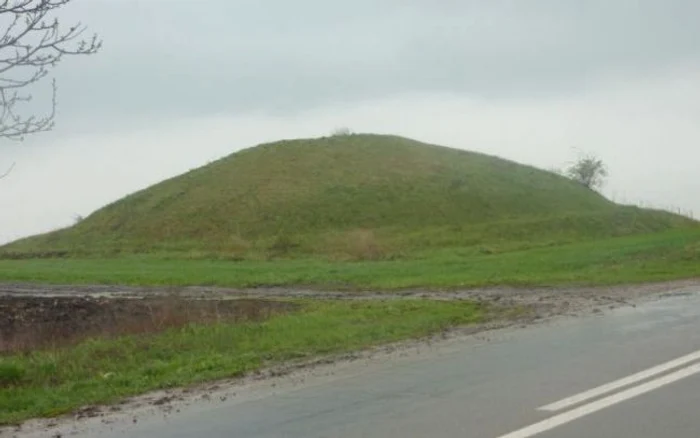
TUMUL BOTOȘANI County Photo Adevărul
“Many things are incidentally discovered. Think about this famous helmet has been accidentally discovered. Was not the result of a systematic action. Of course, at that time, let’s say, archeology was in its pioneering stage on the territory of Romania. But now there are many things by chance or by the action of detectors and not necessarily by an action based on the law and standards in the field ”states the historian Dănuț Huțu, a heritage specialist and the director of the Botoșani County Culture Directorate. In other words, sites allowed to lie are a real attraction for archaeological poachers, and many valuable objects instead of reaching museums following systematic research, they become trafficked on the black market. The case of Dacian bracelets is just an example.
“It is a cruel underfunding of this field”
And the main cause for this situation is the total lack of interest of the Romanian state towards one’s own history and towards one’s own heritage. Most of the specialists from the county museums are dedicated people who get to do research with small funds, but not to important objectives. For example, for the research of the fortresses from Stâncești, important funds and modern technology are needed. As well as in the case of the Lozna or other important sites. “It is a cruel underfill in these fields. The funds allocated to the county museums are ridiculous. National programs are the same. What to do research on a site, especially of importance or with great potential, if you have no money? You need apartment. Now we work with modern equipment to achieve results ”says Dănuț Huțu.
Many county museums resort to collaborations with universities from abroad to carry out research. I mean, we are lucky that foreigners are more interested in our heritage than the Romanian state. “The county museums make these excavations only through collaborations with the institutions from abroad. For example, we dig in partnership with Czech archaeologists, German archaeologists.“Adds Dănuț Huțu. Or, happy cases, there are collaborations with university in Romania that have the necessary equipment. This was the case of the site from Ripiceni, Botosani County, where with the help of magnetometric scans and other modern research was revealed a real Cucutenian proto-Oraș, with an impressive megastructure.
The same thing happened in Stăuceni, Botosani, where, through a collaboration with Friedrich Alexander University in Erlangen in Germany, the site was scanned geomagnetic. The lack of financing is doubled by low salaries in the field, which, instead of attracting specialists, drives them away. “Think that the formation of a specialist in the field, of an archaeologist who has the necessary skills is a long-term process. With a pay that is inferior to a taxi driver I do not think we can do much ”says Dănuț Huțu. There are also happy cases of museums in the country where funds were invested and the exhibitions were organized according to European standards. As there are happy situations in which archaeological excavation funds took place. But the situations are rare.
