
The Ministry of Education has announced that it assumes the role of a “Understand, prevent and correct” The problem of aging the population, a phenomenon that will be accentuated in the coming years. We are working on a national strategy, based on education and scientific knowledge.
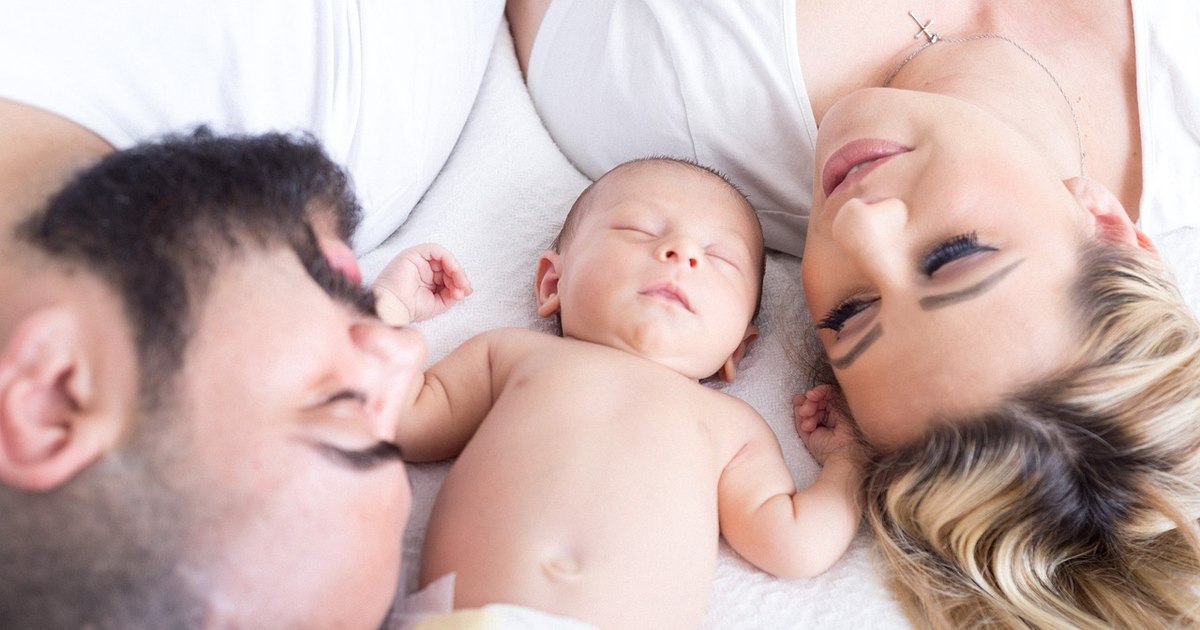
The Ministry of Education announces that they are working on a strategy to increase your photo: Pixabay
That is, after, the United Nations (UN) mentioned in the latest reports Romania among states at risk in terms of population aging, also UN urging societies in alert rhythm to use technology to improve productivity and stimulate learning Throughout life in order to prolong the professional life.
In this context, the Ministry of Education and Research has announced that it has taken note “with concern” by the UN communications, at the same time making public that it has requested a national strategy for “To understand, prevent and correct this social problem.” It will start, mention in the statement of the Ministry of Education and Research, from projects already in work, one of them being the national multidisciplinary project (medicine, anthropology, psychosociology, demography) “Family health and birth” (coordinated by Grigore Iuga), carried out Through the Academy of Medical Sciences, under the auspices of the Romanian Academy, in collaboration with a number of universities representative of the country.
“The way in which we will solve the situation of the health of the family and the birth (aging of the population) depend in the future the existence of our nation and its well -being. The first and most important plan (plan A) is the one directly related to improving family health and increasing birth. There are already good ideas, derived from scientific research, so I think we are in the phase where we can propose a new national strategy in this regard, including with the involvement of relevant authorities in the fields ”, said Minister Daniel David.
The minister also spoke about a “plan B”, necessary if the measures included in plan A do not work enough quickly. “As a secondary approach, starting from the observations of the” Draghi report “, I think we need a plan, carried out in parallel with the main plan (plan A) or as a safety plan, if the plan does not work with fast effects, and namely let’s compensate for a while the low birthday with innovative-competitive developments that will ensure, however, social well-being. As Minister of Education and Research I will support such steps both on the line of research-development-invitation and regarding the education of the population in this regard ”David said, according to the quoted source.
“Romania should look at what other countries have done”
Europe will register up to 2100 a 21% decrease in the population compared to 2020, the highest decline on any continent, all countries being confronted with the problem of aging the population. Romania loses a million people every ten years, foreseeing that in 2031 the number of elders will exceed that of young people in our country. In other countries, the implementation of various measures to stimulate birth was tried, but very few of them had the expected results, says the sociologist Robert Santa, for “Adevărul”. In Hungary, various facilities and benefits for families with at least three children have been granted to reductions to the purchase of a car or credit in advantageous conditions for buying a home and to salary deductions and more advantageous conditions for more mothers with Children, but the plan worked, says the sociologist. Meanwhile, the Hungarian economy has registered a bad evolution, and the situation was worse, access to a home becoming a problem.
Neither Poland, who relied on a system of consistent allowances for children, was not very successful. The Czech Republic, on the other hand, recorded much better results without dedicated programs, but with a very advantageous work market for employees, with an unemployment of only 2% and free places on the labor market exceeding 5%. “It is very rare to be so, it is huge, my intuition is that in fact the stability that this work market has created, totally advantageous for employees, could have contributed to birth. I tend to believe that you practically need higher economic stability for people who intend to have children ”, It is the conclusion of the sociologist.
Romania is in the situation where it does not have much time available, it draws the sociologist, registering a continuous decrease in the number of fertile age.
“These measures have an emergency, which is why from my point of view, Romania should look at what other countries have done and see what had an impact, what not to try to make a more appropriate mix. The fact that in almost all of Europe there has been a decrease in fertility in the last five years is another worrying phenomenon. It seems to be a Pan -European phenomenon and here we should see what happened. It is also cultural, it is also an economic decline, there are many aspects to research ”, Santa says.
Many of the aspects to consider are already almost irreversible, says the sociologist. “That is, the fact that at this moment you no longer have those great generations before 1989. You have fewer fertile women, because already people born after 1990 are 35 years old, so you already have fewer fertile people who They have children. Which is why the number of births decreases. You also have an indicator: fertility, how many children do the elderly people. It can be calculated, it must be 2.1 life to stabilize the population. And now in Romania, even though we have some reporting errors, it seems to be around 1.4 – 1.5 at most, which is why this is being discussed now ”, Complete Robert Santa.
How can birth birthday compensated by education
Plan B the Minister of Education and Research, Daniel David, speaks, can really bring changes that will compensate to some extent the decrease in birth. Sociologist Robert Santa appreciates the initiative of Minister David and explains why education has, from this point of view, a compensation role, if the correction of what is happening in school will be achieved.
In Romania, the number of students decreases from one generation to another, in addition to those that leave the school banks are not very well educated or qualified. Moreover, many children leave school early, some even before completing the mandatory cycle, so we have a very small number of young people with university studies, compared to the rest of Europe.
“Education does not help directly on the side of increasing birth, but it helps because the economic effect of decreasing birth is the aging of the population, which is why the basis of people paying taxes and the elderly population is narrowed, which needs medical insurance and pensions, tends To block you most of the tax space, which in turn will go to pensions. And then, if the population is more educated, the tax base is widened even to the same number of inhabitants, because they tend to occupy better jobs or create their own businesses who practically increase the volume of the economy and bring more money in the budget. Central and then you practically decrease from the pressure generated by pensions and geriatric medical care. And this is the way in which education can partially compensate for the aging of the population ”, Santa explained.
Plan B, in this context, would be the plan to increase the share of the educated population, which thus can better support the burden of aging than a less educated “Which pays fewer taxes and is generally less adaptable to more problematic economic contexts.”
The indicator that gives hope
The demographic situation is worrying at the level of the whole of Europe, which is why the specialists must quickly find the explanations, after which to create policies to encourage birth.
“In the last three years, almost all of Europe has had some very sudden decreases in birth that was already low. We see this in Poland, we see in the Baltic countries, the situation there is catastrophic -Latvia is from my point of view on the threshold, with less than a birth at two deaths -and the fact that you had this pandemic combo, Economic crisis, with inflation, the decrease of the real income that were eaten by this inflation, and later you had the conflict in Ukraine in the neighbors it seems to me that it would be could influence this. That is why I tend to believe that the feeling that there is no safety, or the safety of well -being, matters a lot ”, explains the sociologist.
Speaking strictly about Romania, many young people take into account the costs of raising a child, and our country is by no means friendly with young parents. Access to state -of -the -art nurseries is very cumbersome, and the costs in the private system are inaccessible to many families. There is no deduction system for various expenses, as is the case in other states, and the level of allowances is very low.
“Ironically, we consider the dependent population and pensioners and children. But while the pensioners benefit from a pension, we put the child entirely in the parent’s responsibility. So automatically a unfavorable economic context ”, explains Santa.
However, an indicator at which sociologists look at hope that things can be to some extent. This is the ideal number of children that young people wish.
“There are some studies that ask about the ideal number of children they want, then see how many children they make. In almost all developed countries in Europe, but also in Americas and even in Asia, you have a GAP. People want more children than they finally have, which denotes that there are a number of children who are not born for various reasons, who can be economical, can also be personal health, biological fertility. Because practically the number of children desired shows us the cultural dimension. And it has decreased in recent decades, but it is still 2 or over 2 in most countries. So we see that the cultural preference for many children has decreased, but not as much as the number of children really have ”, concluded the sociologist.
