
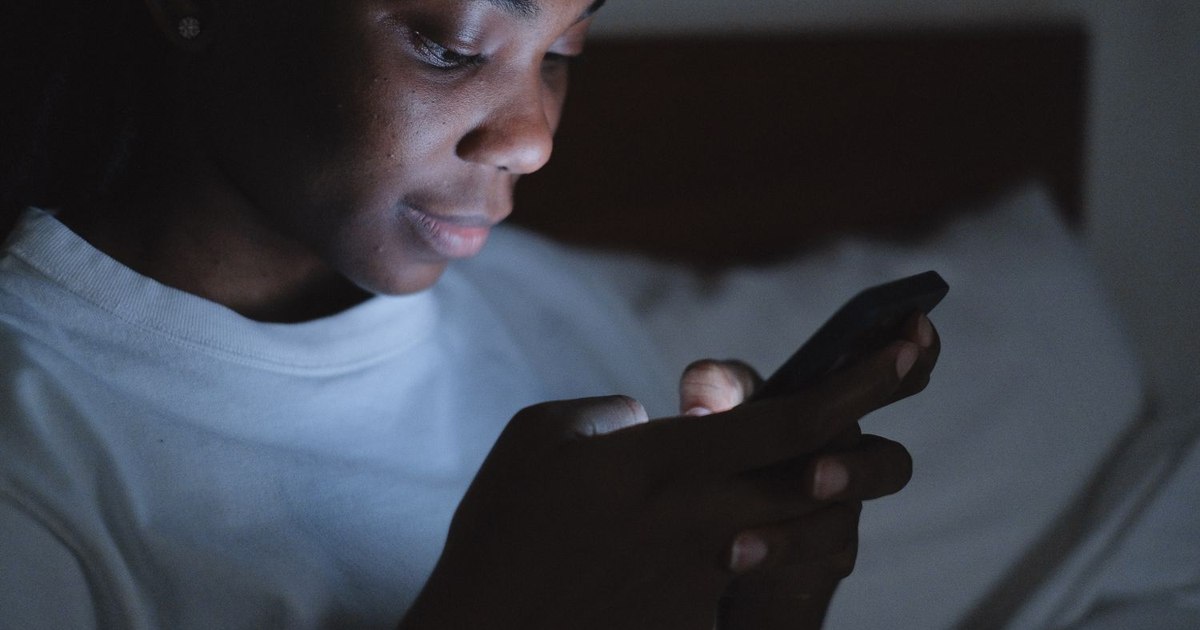
Every hour spent daily in front of a screen increases the risk of myopia by 21%, a new study by Korea researchers shows. Experts warn that young people should limit their use of digital devices and spend more time outdoors.
The time spent in front of the screens increases the chances of developing photo myopia: Archive
Myopia is caused by the excessive elongation of the eyeball and is an increasingly common condition. Research suggests that by 2050, about 40% of children and teenagers at global may suffer from this condition, according to The Guardian.
In addition to the genetic factors, the lack of time spent outdoor and prolonged concentration on the objects at a short distance – as is the case of using the screens – are important risk factors.
A large study, based on the analysis of 45 previous research and data on 335,524 participants, revealed the connection between the use of digital devices and myopia development. The equipment analyzed include mobile phones, game consoles and TVs.
Increased risk depending on the time spent on screens
The results of the study show that, for each additional hour of daily use of a screen, the risk of myopia increases by 21%. Moreover, in people who already suffer from this condition, the extra time in front of the screens is associated with a 54% increase in the chance of aggravation of myopia.
Professor Chris Hammond, a consultant ophthalmologist at King’s College London, emphasizes the major impact of these discoveries. “If the prevalence of myopia in children aged 12-13 in the UK is about 15%, research suggests that the use of one hour per day raises this risk to 18%, and at four hours a day, the risk reaches 27%“He explains.
The analysis also showed that, for a daily exposure of one hour to the screens, the risk of myopia increases by 5%, and for four hours a day, the risk is 97% higher.
Outdoor time, a protective factor
Although the study cannot prove that the time spent in front of the screens directly causes myopia, the researchers point out that reducing exposure to the external environment can contribute to this phenomenon. “Using screens occurs mainly inside, which leads to a lower exposure to the benefits of protection offered by natural light”, The report shows.
Professor Rupert Bourne at the University of England Ruskin emphasizes the importance of these conclusions for educational strategies and public health policies. “A more serious myopia increases the risk of eye diseases that can threaten vision. These discoveries should guide prevention measures globally“He says.
Experts recommend parents to limit children’s time on digital devices and encourage them to spend more time outside, where the eyes benefit from natural light and the gaze can be relaxed at a distance.
