
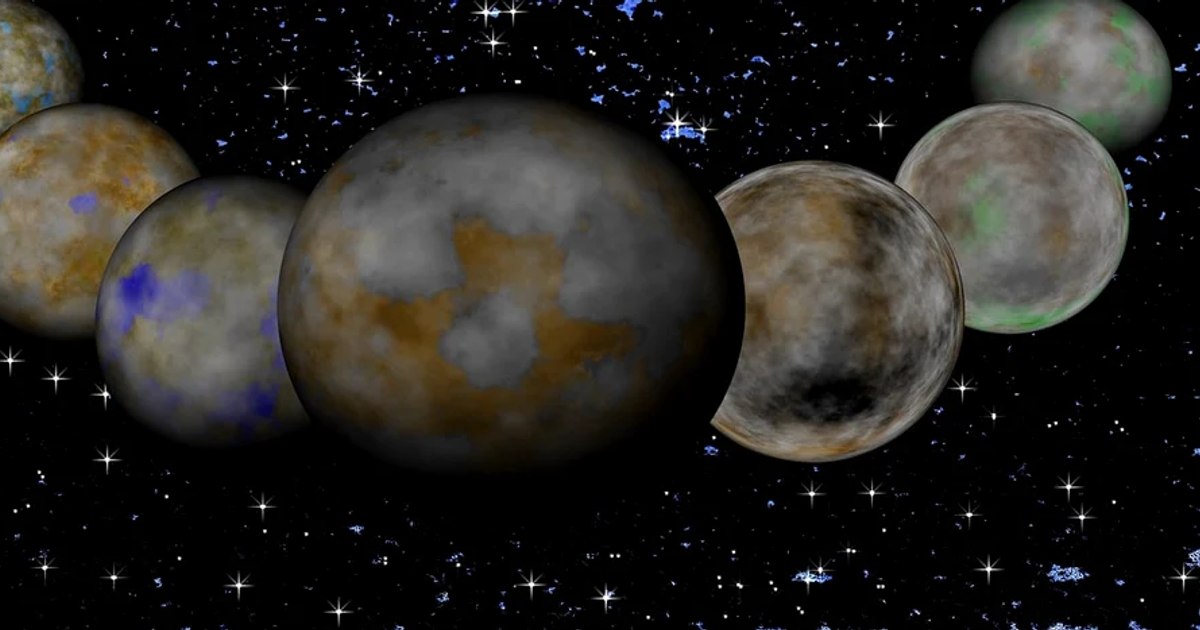
The observers of heaven will have a surprise this week, when seven planets – Mars, Jupiter, Uranus, Venus, Neptun, Mercury and Saturn will be visible for a short time on the evening sky.
Seven planets will be visible in the sky: Adevărul (archive)
This phenomenon, known as “planetary parade”, is a rare view and will be the last time that seven planets will be seen simultaneously so well by 2040.
The best chance of seeing as many planets will be immediately after sunset, Tuesday, Wednesday, Thursday and Friday.
Four of the planets – Mercury, Venus, Jupiter and Mars – will be visible to the naked eye. Saturn will be harder to see because it will be down in the horizon. You will need a telescope to observe the other two planets – uranus and Neptune, according to bBC.com.
A good view of the horizon and a serene sky will give the best chance of observing them all. However, the window to see all the seven planets will be very short.
Dr. Edward Bloomer, astronomer at Royal Observatory Greenwich, said: “It is a rare opportunity to have seven planets in a practical convenient place to look for them. “
As the sun sets, Saturn and Mercury will set too, which will make them particularly difficult to see.
“You have only a few minutes after sunset to surprise them before they descend below the horizon. After that, you will be able to see clearly Venus, Jupiter and Mars for a much longer period of time ”, added Dr. Bloomer.
The planets in our solar system orbite around the sun in about the same flat plane as the Earth.
As they orbite at speeds and distances from the Sun, there are times when they seem to align from the perspective of the earth, creating a spectacular visual show, although the planets remain separated from great distances in space.
Venus and Jupiter will be the easiest to see due to their brightness, while Mars will have a distinct reddish hue.
“Uranus is technically visible to the naked eye, but you need a perfect view and ideal conditions”, explains Dr. Bloomer.
In order to increase your chances of seeing as many planets, Dr. Bloomer advises you to go to a location with a clear view of the horizon and a minimal light pollution.
“If you just get out of the kitchen in the back garden, it will take time to adapt to light levels. Give yourself a little time – your eyes need about half an hour to adapt completely ”, said Dr. Bloomer.
“Avoid looking at the phone, feel comfortable and make sure you have an unobstructed view of the horizon.”
While this is an interesting opportunity, Dr. Bloomer encourages people to make a habit of looking at the night sky.
“See how things change,” he said, adding that the observation of heaven is “A chance to attend the continuous mechanics of the solar system at work ”.
Will the sky be clear enough to see them?
While the weather is still quite unstable today, clearer and calmer conditions are expected at the end of the week.
Tuesday evening will start with clear sky, but the clouds and rain will come from the west later.
On Wednesday night through Thursday, the sky will generally be more cloudy, with rains.
Until Thursday, expect a drier and clearer view of the night sky. It is best earlier during the evening, because fog and fog stains can be formed later at night.
On Friday, the high pressure is expected to dominate, maintaining dry conditions for the majority, with serene time intervals. Shortly after sunset is the most favorable, because fog and fog stains can develop later.
